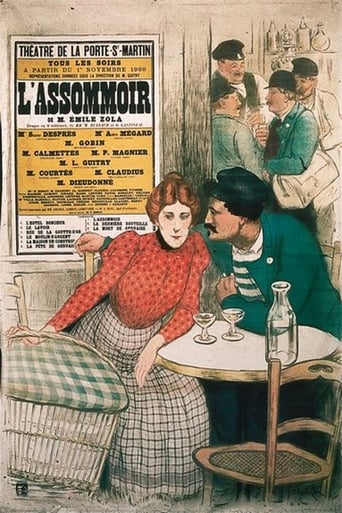
Mansuelle
Actor
- Active
- 1909-1909
Films 1
About Mansuelle
Mansuelle is a very obscure screen actor from the silent era whose documented film career is presently known only through a single surviving credit: a 1909 appearance in L'Assommoir, the French adaptation of Émile Zola's novel. Because the historical record for many early film performers is fragmentary, especially for minor players in one-reel productions and literary adaptations from the 1900s, little biographical information about Mansuelle has been preserved in widely accessible film references. His name appears in early cinema filmographies associated with this production, but no reliable evidence has surfaced regarding his birth, death, family background, training, or later career. The available record suggests he worked during the formative years of narrative filmmaking in France, when companies were adapting major literary works for short-format exhibition. As with many performers of the period, his contribution likely lay in helping establish the style and credibility of early screen acting before the rise of more famous stars. Beyond this single verified credit, his life and career remain largely undocumented, making him one of the many lost or nearly lost figures of cinema's earliest years.
More about Mansuelle
On screen
No detailed description of Mansuelle's acting style survives in the historical record. As an actor in a 1909 silent production, his performance would almost certainly have relied on the expressive conventions of early screen acting: clear facial expression, measured gesture, and stage-derived physical readability to communicate character and emotion without synchronized sound. Any fuller assessment would require locating and analyzing the film itself or related production documentation.
In film history
Mansuelle's cultural impact lies less in celebrity than in historical presence: he is part of the generation of performers who populated the first decade of narrative cinema and helped give early film adaptations their dramatic form. Even when individual biographies are lost, these actors collectively contributed to the language of screen performance at a time when filmmakers were translating theater and literature into a new visual medium. His credit in L'Assommoir places him within the important French tradition of adapting major literary works for film, a practice that helped legitimize cinema as a serious storytelling art. For historians, names like Mansuelle are valuable because they map the labor and personnel of early film production beyond the marquee stars. In that sense, he is part of the broader cultural foundation upon which later silent-era stardom was built.
Later reputation
Mansuelle's lasting legacy is archival rather than celebrity-based: he survives in film history as a named participant in one of the earliest phases of French silent cinema. His presence in L'Assommoir documents the involvement of working actors in the transition from stage-oriented performance to cinematic acting. Although he does not appear to have left a larger body of credited work, his record is still significant because every surviving name from the period helps reconstruct the development of film production practices and cast networks. For scholars of silent cinema, such obscure credits are essential evidence of how the industry functioned before star systems and comprehensive publicity records became standard. Mansuelle therefore endures as a small but meaningful trace of cinema's formative years.
Influence
There is no direct evidence that Mansuelle influenced later actors or directors in a documented, identifiable way. His broader influence is best understood indirectly through the early acting traditions of which he was a part: restrained but readable silent performance, literary adaptation, and ensemble storytelling in short-form cinema. Performers like him contributed to the professionalization of screen acting and the establishment of conventions that would be refined by more prominent stars in the following decade. His historical importance is thus collective and foundational rather than personal and individually traceable.
Off screen
No dependable information has been located concerning Mansuelle's personal life. His marriages, family background, education, residence, and later-life circumstances are not documented in the commonly available sources that preserve early cinema personnel records. This lack of detail is not unusual for minor silent-era performers, particularly those active only briefly or in supporting roles. At present, his off-screen life remains unknown.
Credits
- Appeared in the 1909 film adaptation L'Assommoir, an early screen version of Émile Zola's novel.
- Worked during the foundational silent-film period when French cinema was developing literary and dramatic adaptations for the screen.
- Represents one of the many early film performers whose credits survive even when personal biographical details do not.
Roles
- Unnamed or undocumented role in L'Assommoir (1909)
Films
- L'Assommoir (1909)
Notes
- Mansuelle is known today primarily because of a single 1909 film credit rather than a large surviving body of work.
- His documented film, L'Assommoir, was based on a major novel by Émile Zola.
- He worked during the earliest years of narrative film, when many productions were still short, stage-like, and heavily literary in subject matter.
- No reliable biographical information about his birth or death has been widely preserved in standard reference sources.
- He is an example of the many silent-era performers whose names survive even though their personal histories do not.
- His filmography indicates activity only in 1909, suggesting either a very brief screen career or incomplete surviving records.
Questions
Who was Mansuelle?
Mansuelle was a very obscure silent-era actor known from an early French film credit. The surviving record identifies him in L'Assommoir (1909), but little else about his life or career has been preserved.
What films is Mansuelle best known for?
He is best known for L'Assommoir (1909), an early screen adaptation of Émile Zola's novel. No additional verified film credits are currently associated with him in the available historical record.
When was Mansuelle born and when did he die?
His birth and death dates are not currently documented in accessible reference sources. Likewise, his birthplace and other personal details remain unknown.
What awards did Mansuelle win?
No awards or formal honors are known for Mansuelle. That is not unusual for early silent-era performers, especially those whose careers were brief or poorly documented.
What was Mansuelle's acting style?
There is no direct surviving description of his acting style. As a 1909 silent-film performer, he would have worked within early screen conventions that relied on expressive gesture and facial clarity to communicate without spoken dialogue.
Why is Mansuelle still important to film history?
Mansuelle matters because he is part of the surviving personnel record of cinema's formative years. Even obscure credited performers help historians reconstruct the development of early film production, casting, and acting traditions.