
Films
1 film
About Vladimir Nemolyayev
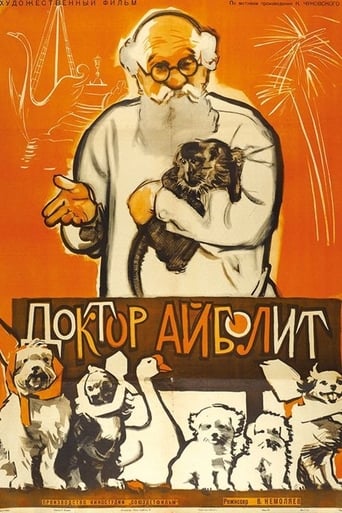
Soviet film director active during the late 1930s, primarily known for his work in children's cinema during the Stalin era. His most notable and possibly only major directorial work was the 1938 adaptation of 'Doctor Aybolit,' based on the beloved children's book by Korney Chukovsky. The film was part of the Soviet Union's efforts to create quality children's entertainment that aligned with socialist values while maintaining artistic merit. Nemolyayev's approach to the material demonstrated an understanding of how to translate literary works for the screen while making them accessible to young audiences. His career appears to have been brief, with documented activity concentrated primarily around 1938, which was not uncommon for directors working in specialized genres during this period of Soviet cinema. The film itself became a classic of Soviet children's cinema, though Nemolyayev himself remains a relatively obscure figure in film history.
The Craft
Behind the Camera
Nemolyayev's directing style for Doctor Aybolit emphasized clarity and accessibility for young audiences, using visual storytelling techniques that could engage children while maintaining the educational and moral values emphasized in Soviet children's programming. His approach combined elements of fantasy with grounded storytelling, creating a balance between entertainment and the ideological requirements of the era.
Milestones
- Directed Doctor Aybolit (1938)
- Adapted Korney Chukovsky's classic children's work for the screen
- Contributed to Soviet children's cinema tradition
Best Known For
Must-See Films
Working Relationships
Studios
Why They Matter
Impact on Culture
Vladimir Nemolyayev's contribution to Soviet cinema, while limited in scope, represents an important aspect of the Soviet film industry's approach to children's entertainment during the 1930s. His adaptation of Doctor Aybolit helped establish a template for literary adaptations aimed at young audiences, balancing entertainment value with educational and ideological messaging. The film's enduring popularity in Soviet culture demonstrates how even directors with brief careers could create works that resonated across generations.
Lasting Legacy
Nemolyayev's legacy is primarily tied to his single major work, Doctor Aybolit, which remains a significant example of Soviet children's cinema from the late 1930s. While the director himself is not widely remembered in film history, his contribution to adapting beloved Russian children's literature for the screen helped preserve these stories for future generations. The film serves as an important cultural artifact representing Soviet approaches to children's entertainment during a pivotal period in the country's history.
Who They Inspired
As a director with a limited documented filmography, Nemolyayev's direct influence on other filmmakers is difficult to trace. However, his work on Doctor Aybolit contributed to the broader tradition of Soviet children's cinema that would influence subsequent generations of directors working in family entertainment and literary adaptations. The film's success demonstrated the viability of adapting classic Russian children's literature for the screen, a practice that would continue throughout the Soviet era.
Off Screen
Very little documented information is available about Vladimir Nemolyayev's personal life, which is not uncommon for Soviet-era directors who worked in specialized genres or had brief careers. His limited filmography suggests he may have been primarily active in children's programming or educational films rather than mainstream cinema.
Did You Know?
- Doctor Aybolit is based on a character created by writer Korney Chukovsky, often compared to Doctor Dolittle in Western literature
- The film was made during the height of Stalin's purges, yet focused on light children's entertainment
- The character of Doctor Aybolit became
- The film was part of a broader Soviet initiative to create quality children's programming that aligned with socialist values
- Despite its age, the film remained popular in Soviet and post-Soviet territories for decades
- The name 'Aybolit' is a play on words in Russian, roughly meaning 'ouch, it hurts' - appropriate for a doctor
- Very little is known about Nemolyayev's other work, suggesting this may have been his only major film
Frequently Asked Questions
Who was Vladimir Nemolyayev?
Soviet on YTB.my.
What films is Vladimir Nemolyayev best known for?
Titles linked here include Doctor Aybolit (1938).
When was Vladimir Nemolyayev born and when did he die?
Unfortunately, specific birth and death dates for Vladimir Nemolyayev are not well-documented in available historical records, which is not uncommon for Soviet-era directors with limited filmographies.
What awards did Vladimir Nemolyayev win?
There are no documented awards or honors specifically attributed to Vladimir Nemolyayev, which was typical for many Soviet directors working in specialized genres during this period.
What was Vladimir Nemolyayev's directing style?
Nemolyayev's directing style emphasized clarity and accessibility for young audiences, using visual storytelling techniques that could engage children while maintaining the educational and moral values emphasized in Soviet children's programming of the era.