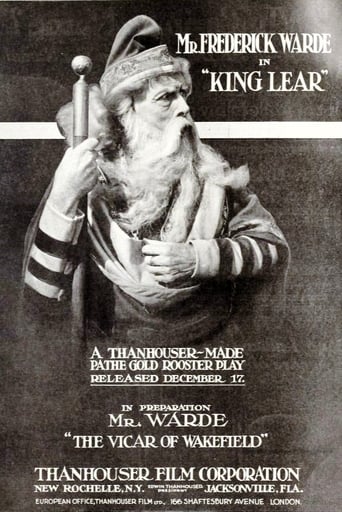

Films
1 film
About Lorraine Huling
Lorraine Huling appears once in this catalog: King Lear (1916). Her career appears to have been extremely brief, spanning only the year 1916, which was not uncommon for many early film actors who either moved on to other professions or returned to stage work. The 1916 King Lear was one of many Shakespeare adaptations produced during the silent era when studios sought to bring literary classics to the screen. Huling was part of the supporting cast in this ambitious production, which was typical for many actresses of her generation who filled ensemble roles in prestige pictures. Like many performers from this period, detailed records of her life and career are scarce, as the film industry was still in its early stages and comprehensive documentation was not yet standard practice. Her brief appearance in film history represents the countless actors who contributed to early cinema but whose careers were fleeting.
The Craft
Milestones
- Appeared in the 1916 silent film adaptation of Shakespeare's King Lear
Best Known For
Iconic Roles
Must-See Films
Why They Matter
Impact on Culture
Lorraine Huling represents the countless actors who contributed to early cinema during its formative years but whose careers were brief and largely undocumented. Her participation in the 1916 King Lear places her within the context of early American cinema's efforts to adapt classical literature for the screen, a trend that helped establish film as a legitimate artistic medium. While her individual impact may be minimal, collectively, actors like Huling formed the foundation of the film industry's workforce, enabling the production of ambitious literary adaptations that pushed the boundaries of what cinema could achieve as an art form.
Lasting Legacy
Lorraine Huling's legacy is primarily as a representative figure of the anonymous supporting actors who populated silent films. Her brief career highlights the transient nature of early film work, where many actors appeared in only one or two films before disappearing from historical records. The 1916 King Lear adaptation itself stands as an example of early cinema's literary ambitions, and Huling's participation, however minor, connects her to this important chapter in film history. Her story illustrates the vast number of performers who contributed to cinema's development but whose names have been lost to time.
Who They Inspired
As a supporting actress with only one known film credit, Lorraine Huling's direct influence on subsequent generations of actors is difficult to trace. However, like many early film performers, she contributed to the development of acting techniques for the silent medium, where expression had to be conveyed without dialogue. Her work in a Shakespeare adaptation places her among the pioneers who helped establish that complex literary works could be successfully translated to cinema, paving the way for future adaptations of classical material.
Off Screen
Very little is documented about Lorraine Huling's personal life, which was common for many supporting actors in the silent era who did not achieve star status.
Did You Know?
- Lorraine Huling's entire known film career consists of a single year - 1916
- She appeared in one of the earliest film adaptations of Shakespeare's King Lear
- The 1916 King Lear was a silent film, requiring actors to convey emotion through gesture and expression alone
- Many actors from the silent era with brief careers like Huling's often returned to stage work or left entertainment entirely
- Film documentation was minimal in 1916, making it difficult to trace complete filmographies for supporting actors
- The 1916 King Lear was part of a trend of literary adaptations that helped establish cinema's artistic legitimacy
Frequently Asked Questions
Who was Lorraine Huling?
Screen credits include the 1916 adaptation of Shakespeare's King Lear. Her career appears to have been extremely brief, spanning only the single year of 1916, with no other known film credits to her name.
What films is Lorraine Huling best known for?
Titles linked here include King Lear (1916).
When was Lorraine Huling born and when did she die?
Unfortunately, specific birth and death dates for Lorraine Huling are not documented in available historical records. This lack of personal information is common for many supporting actors from the silent era who did not achieve star status and whose lives were not extensively recorded.
What awards did Lorraine Huling win?
There are no records of Lorraine Huling receiving any awards or nominations for her work in film. During the early silent film era of 1916, the major award systems we know today, such as the Academy Awards, had not yet been established.
What was Lorraine Huling's acting style?
Specific details about Lorraine Huling's acting style are not documented, which is typical for supporting actors from this period. As a performer in a 1916 silent Shakespeare adaptation, she would have used the exaggerated gestures and facial expressions characteristic of silent film acting to convey emotion without dialogue.