Kôroku Numata
Director
- Active
- 1923-1923
Films directed 1
About Kôroku Numata
Kôroku Numata is a poorly documented Japanese film director from the silent era, known in surviving film reference sources primarily for directing the 1923 film "Kosuzume Pass." Available records indicate activity in 1923 only, which suggests either a very brief directing career in extant filmographies or an archival gap in the historical record. Because of the scarcity of reliable biographical documentation, details such as his birth, death, education, studio affiliations, and broader career trajectory remain unknown. He should be understood as part of the early Japanese cinema workforce that helped shape the silent-film industry during a period when many directors worked on short-lived productions and much of the documentation has been lost. His surviving credit places him in the important transitional years of Japanese filmmaking, when directors were adapting theatrical traditions, location shooting, and emerging studio practices into a distinct cinematic language. Although little can currently be said about his personal life, his name remains of historical interest because it appears in filmography records from the formative years of Japanese silent cinema. Further archival research in Japanese trade papers, studio records, or contemporary film programs would be needed to build a fuller biography.
More about Kôroku Numata
Behind the camera
No detailed stylistic description can be verified from currently accessible sources. Based on his placement in early 1920s Japanese cinema, he would have worked within the silent-film system, where direction typically emphasized visual storytelling, staged performance, and intertitles rather than synchronized sound. However, any more specific claims about his aesthetic, use of camera movement, editing patterns, or thematic preferences would be speculative without surviving prints, reviews, or production notes.
In film history
Kôroku Numata's cultural impact is difficult to measure directly because so little biographical and filmographic material survives. Even so, his presence in the historical record is meaningful: every named filmmaker from the silent era helps reconstruct the industrial and artistic ecology of early Japanese cinema. His credit on "Kosuzume Pass" places him within a generation that contributed to the development of narrative film in Japan during a time when the medium was still defining itself. For historians, such names are important markers of the breadth of creative labor behind the silent screen, especially in an era when many films are lost and directors' careers can disappear almost entirely from public memory.
Later reputation
Numata's legacy is primarily archival rather than popular, since his name survives more as a historical credit than as a widely recognized auteur figure. His inclusion in film reference databases helps preserve the memory of early Japanese filmmakers whose work may otherwise be invisible due to the loss of prints and incomplete studio documentation. In that sense, his legacy lies in representing the many overlooked contributors who shaped the silent era's artistic and industrial foundations. For scholars of Japanese cinema, even a single verified directing credit can be valuable evidence of production networks, personnel movement, and the evolution of film practice in the early 1920s.
Influence
There is no documented evidence of direct influence on later filmmakers that can be safely attributed to Kôroku Numata. Nonetheless, like many early directors, he likely participated in the broader professional environment that established norms for Japanese silent filmmaking, which later directors could study, adapt, or surpass. His influence is therefore best understood as indirect and historical, contributing to the body of early cinematic work that formed the baseline for subsequent generations.
Off screen
No reliable public information has been found regarding Kôroku Numata's personal life, including his family background, marriages, children, or private activities. This lack of data is common for many early Japanese film personnel whose careers were documented only sporadically in trade sources or studio records. At present, any attempt to describe his personal life in detail would be speculative and should be avoided in a reference database unless supported by primary archival evidence.
Credits
- Directed the 1923 silent film "Kosuzume Pass," the sole surviving filmographic credit readily associated with him in accessible reference sources.
- Represents the early Japanese silent-film generation working during the 1920s, when many filmmakers' careers are preserved only in fragmentary records.
- Associated with the foundational period of Japanese studio cinema, when directors were helping establish narrative and visual conventions for domestic audiences.
Films
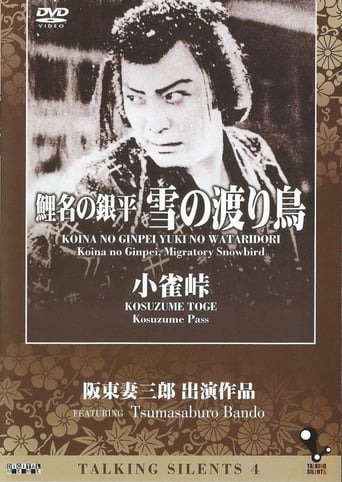
- Kosuzume Pass (1923)
Notes
- Kôroku Numata is identified in accessible filmographic sources mainly through a single directing credit.
- His known film, "Kosuzume Pass," dates from 1923, placing him firmly in the silent era.
- No reliable birth or death information is currently available in readily accessible reference material.
- He appears to be one of many early Japanese filmmakers whose careers are only partially preserved in surviving records.
- Because of the scarcity of documentation, he is more significant to film historians than to general audiences.
- His surviving credit helps illustrate how much early Japanese cinema history remains incomplete.
- The absence of awards or honors is not unusual for filmmakers from the silent era whose records were never comprehensively preserved.
Questions
Who was Kôroku Numata?
Kôroku Numata was a Japanese film director from the silent era, known in surviving reference material primarily for directing "Kosuzume Pass" in 1923. Beyond that credit, very little biographical information has been reliably preserved. He is one of many early cinema figures whose work is remembered mainly through fragmentary filmographic records.
What films is Kôroku Numata best known for?
He is best known for "Kosuzume Pass" (1923), which is the principal film credit associated with him in accessible sources. No other confirmed titles are readily available from the information currently verifiable.
When was Kôroku Numata born and when did he die?
His birth and death dates are not currently documented in accessible reference sources. Likewise, his birth place and death place are not reliably known at this time. A more complete answer would likely require archival Japanese film records or period publications.
What awards did Kôroku Numata win?
No awards or formal honors are currently documented for Kôroku Numata in the available sources. This is not unusual for early silent-era filmmakers, many of whom worked before modern award systems were established or before their records were comprehensively preserved.
What was Kôroku Numata's directing style?
No specific stylistic profile can be confirmed from surviving information. As a silent-era director, he would have worked within a visual storytelling tradition shaped by staging, performance, and intertitles, but any more detailed description would be speculative without surviving films or contemporary reviews.
What is Kôroku Numata's legacy in film history?
His legacy is mainly archival and historical: he represents the many early Japanese filmmakers whose names survive even when their broader careers do not. His credited work on a 1923 film helps document the people who contributed to the development of Japan's silent cinema. For historians, that kind of evidence is valuable in reconstructing the lost or incomplete record of the era.