Films
1 film
About Kate Tyndall
Actress of the early British silent film era,: career, though remarkably brief, placed her at the forefront of cinematic storytelling during its formative years. Her sole credited screen appearance was in the 1913 science-fiction film 'A Message from Mars,' one of the earliest feature-length films produced in Britain and a significant adaptation of a popular stage play. Tyndall was cast as the female lead, Minnie Templer, a character central to the film's moral and fantastical narrative about a Martian's intervention to reform a selfish man. This role required her to convey a wide range of emotions using the broad, expressive gestures characteristic of silent-era performance, making her a key figure in bringing the story to life for early cinema audiences. Despite her compelling performance and the film's historical importance, Tyndall's film career appears to have been confined to this single production, a common occurrence for many actors of the period who transitioned from stage to the new medium of film. Her work in 'A Message from Mars' remains her sole legacy, a snapshot of a talented actress captured at the dawn of British cinema history. The reasons for her departure from the screen after this promising debut are unknown, but she represents the countless early film talents whose contributions were significant yet fleeting.
The Craft
On Screen
Kate Tyndall's acting style was emblematic of the silent era, relying heavily on expressive facial expressions, gestures, and body language to convey emotion and narrative to the audience without the aid of spoken dialogue. In 'A Message from Mars,' her performance likely embodied the theatrical tradition from which many early film actors came, using broad yet nuanced movements to portray her character's innocence, compassion, and eventual romantic connection. This style was essential for communicating complex character arcs and moral themes in early cinema, where subtlety could be lost on the screen.
Milestones
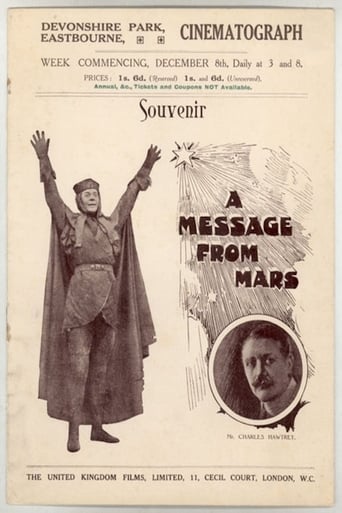
- Starred as Minnie Templer in 'A Message from Mars' (1913), one of Britain's earliest feature films.
Best Known For
Iconic Roles
Must-See Films
Working Relationships
Studios
Why They Matter
Impact on Culture
Kate Tyndall's cultural impact is intrinsically tied to her role in 'A Message from Mars,' a film that holds a significant place in the history of British cinema as one of the first full-length features. As the female lead, she was a central figure in a production that helped establish the viability of feature filmmaking in Britain, moving the industry beyond short subjects. Her performance contributes to the film's value as a time capsule of early 20th-century theatrical acting styles adapted for the screen, providing modern audiences with a direct link to the performance techniques of the era. While she did not have a long career to build a lasting legacy, her work in this film ensures her place in the historical record as a contributor to the foundational development of cinema in the United Kingdom.
Lasting Legacy
The legacy of Kate Tyndall is that of a cinematic pioneer, a representative of the first generation of actors who brought stories to life on the silver screen. Her sole surviving work, 'A Message from Mars,' is studied by film historians for its early use of science-fiction themes and its status as a landmark in British film production. Tyndall herself serves as a symbol of the many early actors whose careers were ephemeral but whose work collectively laid the groundwork for the future of the film industry. Her name is forever inscribed in film history as the star of a significant early feature, ensuring she is remembered not for a long list of roles, but for one highly important and enduring one.
Who They Inspired
Due to her extremely brief filmography, there is no documented evidence of Kate Tyndall directly influencing other actors or directors. Her influence is instead passive and historical, residing within the performance she gave in 'A Message from Mars.' Actors and filmmakers who study the film today can observe the acting conventions of the period, with Tyndall's portrayal of Minnie Templer serving as a prime example of how leading women were presented on screen in 1913. Her work stands as an educational artifact, influencing modern understanding of early cinematic performance rather than shaping the careers of her contemporaries.
Off Screen
Very little is documented about the personal life of Kate Tyndall, a common challenge for researchers studying early film personalities who were not major stars. Her career appears to have been exceptionally brief, consisting of a single known film role, suggesting that acting may not have been her lifelong profession. There are no publicly available records regarding her family, marital status, or life outside of her work on 'A Message from Mars'. The lack of biographical information means she remains a somewhat enigmatic figure, known only through her preserved on-screen work.
Education
Unknown
Did You Know?
- 'A Message from Mars' (1913) is the only film credit for Kate Tyndall, making her a one-film actress.
- The film she starred in was an adaptation of a popular stage play by Richard Ganthony, which had been a major hit in London and on Broadway.
- Her co-star in the film was Charles Hawtrey, a hugely famous stage actor of the era, making her part of a significant theatrical-to-film crossover production.
- The film's premise, involving a Martian visiting Earth to teach a lesson, makes it one of the very first science-fiction feature films ever made.
- The original film was considered lost for many years, but a copy was discovered and restored, allowing modern audiences to see Tyndall's performance.
- The role of Minnie Templer required her to portray a character who is both a moral center and a romantic interest, a dual role common in melodramas of the time.
- The film was produced by the London Film Company, one of Britain's most important early production studios.
Frequently Asked Questions
Who was Kate Tyndall?
British actress from the silent film era, known exclusively for her role as Minnie Templer in the 1913 feature film 'A Message from Mars.' Her career appears to have been confined to this single, historically significant production, making her a notable yet enigmatic figure from the dawn of British cinema.
What film is Kate Tyndall best known for?
Kate Tyndall is solely known for her performance in the 1913 British science-fiction film 'A Message from Mars.' The film is historically important as one of Britain's earliest feature-length productions, and her role as the female lead places her at the center of this cinematic milestone.
When was Kate Tyndall born and when did she die?
Born Unknown; died Unknown.
What awards did Kate Tyndall win?
Kate Tyndall did not receive any known awards or nominations for her work. The major film awards, such as the Academy Awards, were not established until the late 1920s, well after her brief and only known film appearance in 1913.
What was Kate Tyndall's acting style?
Kate Tyndall's acting style was characteristic of the silent era, drawing heavily from theatrical traditions. Her performance relied on expressive gestures, body language, and facial expressions to convey emotion and drive the narrative, as was necessary for communicating with audiences in the absence of synchronized sound.