J.B.S. Haldane
Actor
Born: November 5, 1892 in Oxford, England Died: December 1, 1964 Active: 1910s-1960s (scientific career), 1940 (film appearance) Birth Name: John Burdon Sanderson Haldane
Films
1 film
About J.B.S. Haldane
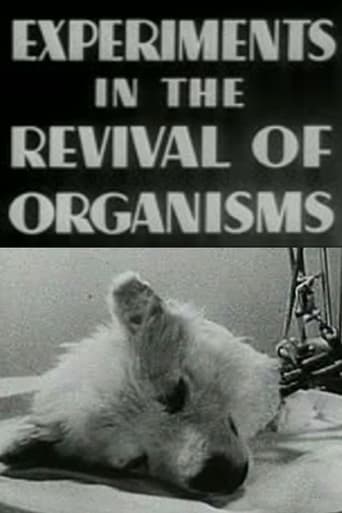
John Burdon Sanderson Haldane — renowned British geneticist, evolutionary biologist, and science communicator who made significant contributions to population genetics and the modern synthesis of evolutionary theory. Born into a prominent scientific family, Haldane was educated at Eton and Oxford, where he developed his passion for biology and mathematics. He served in World War I before returning to academic research, eventually becoming a professor at University College London and later Cambridge University. Haldane — prolific writer of both scientific papers and popular science articles, known for his ability to make complex scientific concepts accessible to the general public. His appearance in 'Experiments in the Revival of Organisms' (1940) was as a scientific expert and narrator, not as a traditional dramatic actor. A committed Marxist, Haldane eventually moved to India in 1957, where he continued his research and became an Indian citizen. Throughout his career, he was known for his brilliant intellect, controversial opinions, and witty personality.
The Craft
On Screen
Not applicable - appeared as scientific expert/narrator rather than dramatic actor
Milestones
- Pioneered work in population genetics
- Co-founded the modern synthesis of evolutionary theory
- Wrote over 400 scientific papers
- Authored popular science books including 'Daedalus' and 'What is Life?'
- Served as Professor of Genetics at University College London
- Moved to India and established the Genetics and Biometry Laboratory
- Appeared as scientific expert in 'Experiments in the Revival of Organisms' (1940)
Best Known For
Iconic Roles
Must-See Films
Accolades
Won
- Fellow of the Royal Society (1932)
- Royal Medal (1952)
- Darwin Medal (1956)
- Linnean Society's Darwin-Wallace Medal (1958)
Nominated
- Nobel Prize nomination for Physiology or Medicine (multiple nominations)
Special Recognition
- Foreign Member of the USSR Academy of Sciences
- Honorary Fellow of the Indian Academy of Sciences
- Multiple honorary degrees from universities worldwide
Working Relationships
Worked Often With
Why They Matter
Impact on Culture
Haldane's impact on science and culture extended far beyond his brief film appearance. As one of the architects of the modern synthesis, he fundamentally changed our understanding of evolution and genetics. His popular science writing made complex scientific ideas accessible to the general public, influencing generations of scientists and science communicators. His Marxist political views and willingness to challenge established scientific and social norms made him a controversial but influential figure in 20th-century intellectual life. His work in 'Experiments in the Revival of Organisms' represented his commitment to public education about scientific advances.
Lasting Legacy
Haldane's lasting legacy in science includes fundamental contributions to population genetics, the concept of genetic load, and the mathematical foundations of evolutionary theory. He is remembered as one of the three founders of the modern synthesis, along with Fisher and Wright. His popular science writing set a standard for making complex science accessible, and his wit and intellectual courage continue to inspire scientists and writers. The Haldane Lecture series and various scientific prizes continue to honor his contributions to biology.
Who They Inspired
Haldane influenced generations of evolutionary biologists, geneticists, and science communicators. His mathematical approach to evolutionary theory laid groundwork for modern population genetics and molecular evolution. His popular science writing influenced later science communicators like Carl Sagan and Richard Dawkins. His willingness to engage with political and ethical questions about science influenced the field of bioethics and the public understanding of science.
Off Screen
Haldane was known for his unconventional lifestyle and strong political convictions. He was married twice, first to Charlotte Burghes and later to Helen Spurway, both of whom were scientists and collaborators. He had no children. Haldane — committed Marxist and atheist, which often put him at odds with the British establishment. His personal experiments included self-experimentation with dangerous substances to understand their effects, and he famously wrote about the experience of being gassed in World War I. He was known for his wit, often engaging in public debates and writing satirical pieces.
Education
Eton College, New College Oxford (Degree in Mathematics and Natural Science)
Family
- Charlotte Burghes (1926-1945)
- Helen Spurway (1945-1964)
Did You Know?
- He once said 'My own suspicion is that the universe is not only queerer than we suppose, but queerer than we can suppose'
- He conducted self-experiments including entering pressure chambers and exposing himself to toxic gases
- He predicted the existence of 'test-tube babies' in his 1924 essay 'Daedalus'
- He was a polyglot who could speak multiple languages including Russian
- He wrote science fiction stories under the pseudonym 'J.B.H.'
- He once calculated that the ideal number of fingers would be 8 instead of 10
- He was known for his eccentric behavior, including attending meetings in bare feet
- He was a member of the Communist Party of Great Britain until 1950
- His sister Naomi Mitchison was also a famous writer and scientist
- He moved to India in 1957 and became an Indian citizen in 1961
In Their Own Words
I have no doubt that in reality the future will be vastly more surprising than anything I can imagine
The universe is not only queerer than we suppose, but queerer than we can suppose
I am quite sure that our views on evolution would be very different had biologists studied genetics and natural selection before cytology
Now my own suspicion is that the universe is not only queerer than we suppose, but queerer than we can suppose
Teleology is like a mistress to a biologist: he cannot live without her but he's unwilling to be seen with her in public
Frequently Asked Questions
Who was J.B.S. Haldane?
British geneticist, evolutionary biologist, and science communicator who made fundamental contributions to population genetics and evolutionary theory. He was one of the founders of the modern synthesis and appeared as a scientific expert in the 1940 film 'Experiments in the Revival of Organisms'.
What films is J.B.S. Haldane best known for?
Titles linked here include Experiments in the Revival of Organisms (1940).
When was J.B.S. Haldane born and when did he die?
Born November 5, 1892; died December 1, 1964.
What awards did J.B.S. Haldane win?
Haldane received numerous scientific honors including the Royal Medal (1952), Darwin Medal (1956), and was elected a Fellow of the Royal Society in 1932. He also received the Darwin-Wallace Medal from the Linnean Society in 1958.
What was J.B.S. Haldane's scientific contribution?
Haldane — pioneer in population genetics and one of the founders of the modern synthesis of evolutionary theory. He made fundamental contributions to understanding natural selection, genetic variation, and the mathematical basis of evolution.