June MacCloy
Actor
Born: June 2, 1909 in Sturgis, Michigan, USA Died: May 5, 2005 Active: 1928-1941 Birth Name: June Mary MacCloy
Films
1 film
About June MacCloy
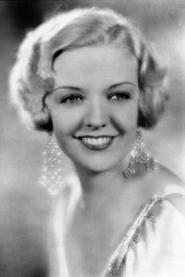
Statuesque American actress and singer: the transition from the late vaudeville era to the Golden Age of Hollywood. Born in Michigan and raised in Ohio, she began her professional journey as a teenage singer in New York, notably performing in George White's 'Scandals' and Earl Carroll's 'Vanities' before her mother famously forced her to quit due to revealing costumes. Her deep, resonant contralto voice and glamorous appearance caught the attention of Paramount Pictures, leading to her film debut in the 1930 musical 'Reaching for the Moon' alongside Douglas Fairbanks. Throughout the 1930s, she balanced a career in motion picture shorts and features with successful stints as a touring band singer for renowned orchestras. Despite her significant screen presence and vocal talent, she often found herself in supporting roles or short films, including several directed by the then-disgraced Roscoe 'Fatty' Arbuckle. She is perhaps most widely remembered today for her final major screen role as the saloonkeeper Lulubelle in the Marx Brothers' 1940 comedy 'Go West.' Following her marriage to architect Neal Wendell Butler in 1941, MacCloy chose to retire from the entertainment industry to focus on her family life in California.
The Craft
On Screen
MacCloy was known for her 'statuesque' and glamorous screen presence, often playing sophisticated, flirtatious, or tough-talking characters. Her most defining artistic trait was her deep, masculine baritone/contralto singing voice, which allowed her to perform successful male impersonations early in her career and gave her a unique 'sultry' edge in talkies.
Milestones
- Featured performer in George White's 'Scandals' (1928) at the Apollo Theater
- Signed a $12,000 contract with Paramount Pictures in 1930
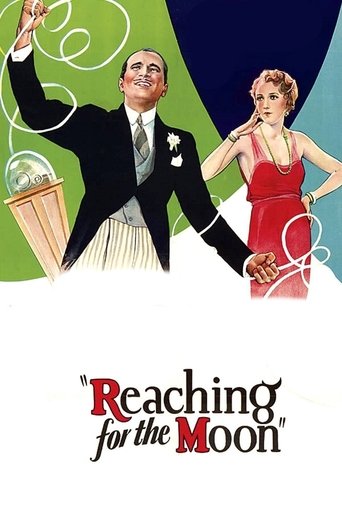
- Feature film debut in 'Reaching for the Moon' (1930) with Douglas Fairbanks
- Starred in the RKO-Pathé 'Gay Girls' comedy short series (1930-1932)
- Appeared in Florenz Ziegfeld's final Broadway production 'Hot-Cha!' (1932)
- Memorable performance as Lulubelle in the Marx Brothers' 'Go West' (1940)
Best Known For
Iconic Roles
Must-See Films
Accolades
Special Recognition
- Recognized as the first woman from Toledo, Ohio to appear in a 'talking' motion picture
Working Relationships
Worked Often With
Studios
Why They Matter
Impact on Culture
June MacCloy represented the 'glamour girl' archetype of the early 1930s, but her unconventional voice challenged the standard feminine vocal expectations of the era. She was a pioneer for women from the Midwest entering the nascent 'talkie' industry, specifically noted as a trailblazer for Toledo-born performers. Her participation in early Technicolor shorts like 'Good Morning, Eve!' (1934) places her at the forefront of cinematic color experimentation.
Lasting Legacy
While she retired early, MacCloy's legacy is preserved through her memorable interactions with comedy legends like the Marx Brothers. She is a significant figure for film historians studying the 'Pre-Code' era and the transition of vaudeville stars into Hollywood. Her longevity—living to the age of 95—allowed her to serve as a living link to the Ziegfeld and Fairbanks eras for modern researchers.
Who They Inspired
Her deep vocal style influenced the 'sultry' archetype that would later be perfected by actresses like Lauren Bacall. She also influenced the perception of 'male impersonation' in mainstream variety entertainment through her early stage work.
Off Screen
MacCloy's personal life was frequently covered by gossip columnists during her height of fame. She was married four times, including a brief marriage to Wilbur Guthlein and a divorce from Schuyler Schenck in 1933. She finally found lasting stability with architect Neal Wendell Butler, whom she married in December 1941; the couple shared a deep passion for jazz music and remained together until his death in 1985.
Education
Graduate of Scott High School in Toledo, Ohio
Family
- Wilbur Guthlein (?-1931)
- Schuyler Schenck (1931-1934)
- Claude Harrison (dates unknown)
- Neal Wendell Butler (1941-1985)
Did You Know?
- Her mother forced her to quit the 'Vanities' because the costumes were too 'skimpy'.
- She was originally slated for the role in 'Reaching for the Moon' that was rumored to be considered for a then-unknown Ginger Rogers.
- She worked with Vincente Minnelli early in her career and reportedly described him as a 'sadistic nut' and a perfectionist.
- She sang for notorious gangster Lucky Luciano in New York nightclubs.
- She appeared in three short films directed by Roscoe 'Fatty' Arbuckle while he was working under the pseudonym 'William Goodrich'.
- She was a talented male impersonator on stage, famously mimicking Broadway star Harry Richman.
- In 'Go West', she is the recipient of one of Groucho Marx's most famous pick-up lines regarding a couch.
In Their Own Words
Vamoosh, you goose! (As Lulubelle in 'Go West', responding to Groucho Marx)
Fatty Arbuckle was a peach of a guy. (Reflecting on her director in later years)
The biggest compliment was when the dancers stopped in front of the orchestra when I started to sing. (Regarding her career as a band singer)
Frequently Asked Questions
Who was June MacCloy?
Prominent American actress and singer active during the 1930s. She was known for her tall, glamorous stature and a uniquely deep contralto voice that made her a standout in both musical films and Broadway revues.
What films is June MacCloy best known for?
Titles linked here include Reaching for the Moon (1930), Go West (1940).
When was June MacCloy born and when did she die?
Born June 2, 1909; died May 5, 2005.
What awards did June MacCloy win?
While she did not win major competitive awards like an Oscar, she was highly regarded by critics of her time and is honored in film history as a pioneer of the early 'talkie' era and a notable Ziegfeld performer.
What was June MacCloy's acting style?
Her style combined the sophisticated 'glamour girl' aesthetic of the 1930s with a sharp, comedic timing. Her deep voice allowed her to play 'sultry' roles and even perform as a male impersonator on the vaudeville stage.
Why did June MacCloy retire from acting?
She retired in 1941 following her marriage to architect Neal Wendell Butler. She chose to leave the limelight to raise her two children and lead a private life in California, though she remained a lifelong jazz enthusiast.