Henry Lawley
Actor
- Active
- 1900-1900
Films 1
About Henry Lawley
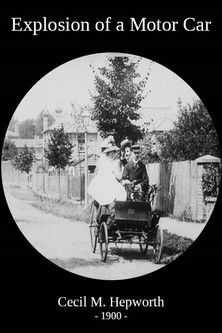
Henry Lawley is a very obscure early film performer whose name survives primarily in connection with the 1900 British short film Explosion of a Motor Car, one of the earliest comic-motion pictures to feature an automobile mishap as its central gag. Because he belongs to the earliest years of cinema, the surviving record on him is extremely limited, and no reliable biographical source has preserved a fuller career history, personal background, or later film work. He is best understood as part of the anonymous or semi-anonymous acting personnel who appeared in turn-of-the-century actuality films, trick films, and comic shorts before film crediting became standardized. His surviving screen presence places him among the pioneers of very early film performance, when actors were often drawn from stage, music hall, or local amateur circles and were rarely documented in detail. There is no dependable evidence that he developed a sustained screen career beyond this period, and his name does not appear prominently in the standard histories of silent-era stardom. As a result, Henry Lawley is historically significant less as a major celebrity than as a traceable figure from cinema's formative years, illustrating how much of early film labor remains only partially documented. Any additional biographical details about his birth, death, nationality, or personal life are currently unverified in available reference sources.
More about Henry Lawley
On screen
No detailed contemporary description of Henry Lawley's acting style has survived, but his work in a 1900 film would almost certainly have relied on broad, highly legible physical expression suited to silent-film comedy. Performances in this era were typically exaggerated by modern standards, with clear body language, simplified gestures, and emphasis on visual clarity rather than psychological nuance. If Lawley appeared in Explosion of a Motor Car in a comic or mechanical context, his acting would likely have been functional and expressive, helping the gag read instantly to audiences. Because no reviews or detailed production accounts reliably preserve his performance, any more specific characterization would be speculative.
In film history
Henry Lawley's cultural impact is primarily archival and historical rather than celebrity-based. As a credited or identifiable participant in one of cinema's earliest surviving comic shorts, he helps demonstrate how film was already evolving in 1900 toward narrative gags, mechanical spectacle, and short-form entertainment. His presence in the historical record is valuable to researchers because it adds a human name to a period in which many performers were left uncredited or lost to time. In that sense, he represents the thousands of early screen artists whose contributions helped establish cinematic performance as a distinct art form, even when their individual careers were not widely documented. For film historians, figures like Lawley are important evidence of the first generation of screen actors, especially in British cinema, where records from the turn of the century are often fragmentary.
Later reputation
Henry Lawley's legacy lies in his connection to the earliest surviving phase of film acting, before the star system and formal screen crediting became common. While he was not a major named star in the way later silent-era figures became, his documented presence in an 1900 film gives him a small but real place in cinema history. His name is part of the fragile paper trail that allows modern databases and historians to reconstruct the beginnings of motion-picture performance. The fact that so little is known about him is itself representative of the period, when many contributors to early film were not systematically recorded. For this reason, he is best remembered as a historical footnote of value to archival scholarship rather than as a widely celebrated public personality.
Influence
There is no direct evidence that Henry Lawley influenced later actors or directors in any documented way. His importance is indirect: he participated in a style of early screen performance that informed the conventions later refined by silent-film comedians and dramatic performers alike. The broad, readable acting methods required in 1900 shorts helped establish the basic vocabulary of silent cinema, including physical clarity, visual timing, and ensemble gag construction. In that broader sense, he belongs to the foundational generation whose work made later screen acting possible.
Off screen
No reliable information has been preserved about Henry Lawley's personal life, including marriages, family background, education, or later occupation. Early-film performers were often documented only through production records, trade references, or surviving filmographies, and in his case those records are too sparse to reconstruct a personal biography with confidence. There is no verified evidence regarding spouse, children, or private life, and any such details would be speculative.
Credits
- Appeared in the 1900 early British comic short Explosion of a Motor Car
- Represents one of the identifiable performer names attached to cinema's earliest years
- Associated with the very first phase of screen comedy built around visual gag construction and mechanical mishap
- Documented screen activity places him among the earliest recorded actors in film history
- His surviving credit demonstrates the transition from stage-style performance to the compressed, visual acting of early cinema
Roles
- Performer in Explosion of a Motor Car
Films
- Explosion of a Motor Car (1900)
Notes
- Henry Lawley is primarily known today because of a single early film credit rather than a long documented career.
- Explosion of a Motor Car (1900) places him among the very earliest identifiable film actors in surviving cinema records.
- His film association comes from the first years after motion pictures became a public entertainment medium.
- No reliable evidence has surfaced for his birth date, death date, or personal background.
- He is an example of how many early British film performers remain obscure despite participating in historically important productions.
- Because early film credits were inconsistent, even identifiable names like Lawley can be difficult to research beyond a single title.
- His surviving credit is especially useful to historians studying the earliest comic and trick-film traditions.
Questions
Who was Henry Lawley?
Henry Lawley was an early film actor known from the 1900 short Explosion of a Motor Car. Very little survives about his personal life or career, so he is mainly remembered as one of the identifiable performers from cinema's earliest years.
What films is Henry Lawley best known for?
He is best known for Explosion of a Motor Car (1900), the only film credit currently associated with him in the available record. No other verified screen appearances are reliably documented.
When was Henry Lawley born and when did he die?
His birth and death dates are not currently verified in available reference sources. The historical record for many turn-of-the-century performers is fragmentary, and Henry Lawley is one of those early figures whose life details remain unknown.
What awards did Henry Lawley win?
No awards or formal honors are documented for Henry Lawley. This is not unusual for performers active in 1900, when the modern awards culture had not yet developed.
What was Henry Lawley's acting style?
There is no detailed contemporary criticism of his performance style, but early film acting in 1900 generally relied on broad physical expression and clear visual gestures. If he appeared in a comic short, his performance would have been shaped by the needs of silent cinema and straightforward visual storytelling.
What is Henry Lawley's legacy in film history?
His legacy is historical and archival: he is one of the names attached to the first generation of screen performers. Even though little is known about him, his credited presence helps document the emergence of acting in early cinema.