Helen Holly
Actor
- Active
- 1921-1921
Films 1
About Helen Holly
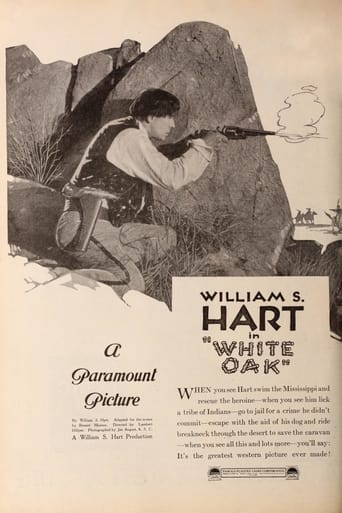
Helen Holly appears in surviving film records as a very early screen performer whose documented motion-picture credit is the silent western White Oak (1921). Beyond that single confirmed credit, there is little reliably verifiable biographical information in commonly consulted classic-cinema reference sources, which suggests that she was likely a minor or short-lived performer whose career did not extend into the sound era or into widely publicized stardom. Because the silent-film industry often left incomplete records, especially for supporting players and one- or two-film performers, details such as her birth, death, family background, and training are not currently established with confidence. The available evidence places her activity in the early 1920s, during a period when many regional and independent productions employed local or briefly contracted actors. Her presence in White Oak indicates participation in the silent western cycle that was popular with audiences of the time, but no broader filmography has been securely attributed to her. As a result, Helen Holly remains a historically intriguing but obscure figure from the silent era, remembered primarily through a single documented screen appearance rather than a sustained public career.
More about Helen Holly
In film history
Helen Holly’s cultural importance lies less in an individually documented star persona than in what her surviving credit reveals about silent-era production practices. Performers like Holly helped populate the thousands of films made during the 1910s and 1920s, especially genre pictures such as westerns that relied on large casts of dependable but often unbilled or minimally publicized actors. Her known association with White Oak places her within the broader ecosystem of early Hollywood and regional filmmaking, where many careers were brief, local, or poorly preserved in archival records. For film historians, names like Helen Holly are reminders that classic cinema was built not only by marquee stars but also by a wide supporting labor force whose contributions are often difficult to reconstruct.
Later reputation
Helen Holly’s legacy is archival and historical rather than celebrity-driven. She stands as one of many silent-era performers whose names survive in credits even when personal documentation has not, making her a small but real part of the record of early American cinema. In film history terms, her surviving credit contributes to our understanding of the breadth of talent involved in silent western production and the fragility of performer documentation from the period. If additional records ever emerge from trade papers, studio paperwork, or local archives, her profile could be expanded, but at present her legacy is that of a documented yet elusive screen participant.
Influence
There is no verifiable evidence that Helen Holly directly influenced later actors or filmmakers in a documented, traceable way. Her significance is better understood as representative of the many early performers whose work supported the development of screen genres and acting conventions in silent cinema. In that sense, she participated in the collective foundation on which later Hollywood acting styles and genre performance traditions were built.
Off screen
No reliable personal-life information has been securely verified for Helen Holly in the available classic-cinema record. Her marriages, family background, and private life do not appear to be documented in standard film reference sources that are readily available for this period. This lack of information is common for performers who worked briefly or in minor capacities during the silent era, when publicity materials often focused on leads and left supporting players largely unrecorded.
Credits
- Confirmed screen appearance in the silent western White Oak (1921)
- Participation in early 1920s silent-era production during the height of the American western film cycle
- Represents the many lesser-documented performers whose work survives primarily through film credits and trade references
Roles
- Role in White Oak (1921) not securely documented in surviving sources
Films
- White Oak (1921)
Notes
- Helen Holly is currently best documented through a single confirmed film credit rather than a large body of surviving work.
- Her known film, White Oak (1921), belongs to the silent western tradition that was especially popular in the early 1920s.
- Many silent-era supporting performers like Holly have sparse archival footprints because studio publicity tended to emphasize stars over secondary cast members.
- The survival of her name in film records helps historians reconstruct cast lists for productions that might otherwise seem incomplete.
- Her career appears to have been confined to 1921, at least in currently verified sources.
- No widely accepted biographical profile, interviews, or studio publicity campaign has been securely tied to her.
Questions
Who was Helen Holly?
Helen Holly was a silent-era film actor best known, in surviving records, for appearing in White Oak (1921). Little else about her life and career has been securely documented in readily available classic-cinema reference sources.
What films is Helen Holly best known for?
Her only securely identified screen credit is White Oak (1921). No additional films have been confidently verified in the surviving record used for classic-cinema research.
When was Helen Holly born and when did she die?
Her birth and death dates are not currently available from reliable, verifiable sources. The same is true of her birthplace, which has not been securely established.
What awards did Helen Holly win?
No awards or nominations have been found for Helen Holly in the available historical record. This is not unusual for early silent-era performers whose work was often undocumented outside cast listings.
What was Helen Holly's acting style?
Her acting style cannot be reliably described from surviving evidence because no detailed reviews, performance profiles, or accessible film analyses have been securely linked to her. Like many silent-film actors, she would have worked within the visual, expressive style typical of the era, but specifics are not documented.
What is Helen Holly's legacy in film history?
Her legacy is primarily archival: she represents the many lesser-known performers who helped build silent cinema but left only thin documentary traces. For historians, her credit in White Oak contributes to a fuller understanding of the cast and production culture of early westerns.