Films
1 film
About Fred W. Boardman
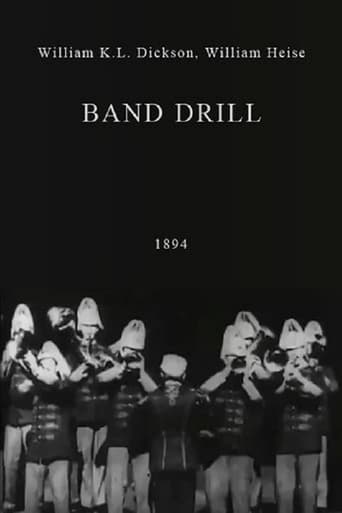
The 1894 film Band Drill is the only title linked here for Fred W. Boardman. A period when film was transitioning from a technological novelty to a nascent art form. His entire known film career consists of a single appearance in the 1894 short film 'Band Drill,' produced by the Edison Manufacturing Company. This places him among the first generation of performers to ever be captured on motion picture film for public exhibition. Like many actors of this pioneer era, he was not a trained stage actor seeking fame, but more likely a participant or performer recruited for these experimental 'actualities' and short scenes. 'Band Drill' itself was a brief film showcasing a military band performing maneuvers, typical of the simple, documentary-style subjects that fascinated early audiences. Boardman's contribution represents a snapshot of this foundational moment in film history, before the concept of movie stars or even professional film actors had emerged. His legacy is tied not to a body of work, but to his participation in the dawn of a new medium that would revolutionize entertainment.
The Craft
Milestones
- Appeared in 'Band Drill' (1894), one of the earliest surviving motion pictures produced in America
Best Known For
Must-See Films
Working Relationships
Studios
Why They Matter
Impact on Culture
Fred W. Boardman's cultural impact is not derived from personal achievement or influence, but from his representation of the anonymous participants who populated the first motion pictures. His appearance in 'Band Drill' serves as a tangible link to the very beginning of film history, a time when the medium was purely experimental. He is part of the foundational fabric of cinema, representing the ordinary people who, by chance, became the first subjects ever recorded for moving images, thereby setting the stage for the century of cinema that would follow.
Lasting Legacy
The legacy of Fred W. Boardman is that of a pioneer by circumstance. His name is preserved in film history not for a celebrated career, but for being one of the first individuals captured on celluloid. He stands as a symbol for the countless anonymous faces of early cinema, whose brief moments on film constitute the bedrock of the entire industry. His work is a historical artifact, a primary document from the birth of a new art form.
Who They Inspired
As an actor from the first year of American commercial film production, Fred W. Boardman had no direct influence on subsequent actors or filmmakers. His influence is passive and historical; he is part of the evidence that demonstrates the origins and evolution of film performance. Future generations of actors and historians look to figures like him to understand the humble beginnings of the cinematic arts.
Off Screen
Virtually no personal information is available about Fred W. Boardman. Like many individuals who participated in the earliest motion pictures, he was likely an ordinary person rather than a professional entertainer, and his life outside of this single film appearance remains undocumented in historical records.
Did You Know?
- He appeared in only one known film, 'Band Drill' (1894), making him a one-film actor from the dawn of cinema.
- 'Band Drill' was produced by the Edison Manufacturing Company, the studio of inventor Thomas Edison.
- The film was shot at the Black Maria, Edison's film studio in West Orange, New Jersey, the world's first motion picture production studio.
- Actors in this era were typically uncredited and were paid a small, flat fee for their participation, as the concept of film stardom did not yet exist.
- His entire film career lasted for less than a year, confined to the year 1894.
- Films from 1894 were not projected on large screens but were viewed individually on a device called the Kinetoscope.
- He is part of a very small group of individuals whose film work dates back to the 19th century.
Frequently Asked Questions
Who was Fred W. Boardman?
American He represents the first generation of individuals ever captured on motion picture film for public exhibition.
What films is Fred W. Boardman best known for?
Titles linked here include Band Drill (1894).
When was Fred W. Boardman born and when did he die?
The birth and death dates for Fred W. Boardman are unknown and not documented in historical records, which is common for non-professional participants in early films.
What awards did Fred W. Boardman win?
Fred W. Boardman did not receive any awards or nominations. The first Academy Awards ceremony would not be held for another 35 years after his sole film appearance.
What was Fred W. Boardman's acting style?
His acting style cannot be determined, as 'Band Drill' was a non-narrative 'actuality' film. He was likely a participant or performer rather than a traditional actor, and the film simply documented the band's maneuvers without dramatic performance.