Films
1 film
About William Cushing
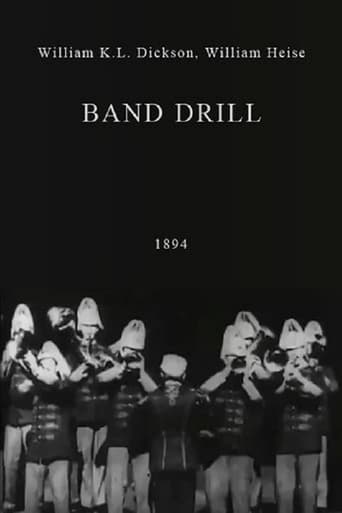
William Cushing was one of the actors of the earliest days of cinema, appearing during the experimental period of motion picture development in the 1890s. He was featured in 'Band Drill' (1894), an Edison Manufacturing Company production directed by William K.L. Dickson and William Heise, which showcased military band members performing synchronized drills. This film was created during the infancy of motion pictures at Edison's Black Maria studio, the world's first film production facility. Like many performers of this era, Cushing was likely recruited from local theatrical or military circles rather than being a professional film actor, as the concept of 'film actors' had not yet been established. His appearance in this historical document represents one of the earliest documented performances in cinema history, predating the emergence of film stars by several years. The film itself was only about 30 seconds long and was part of Edison's efforts to demonstrate the commercial potential of motion pictures. Cushing's career, like that of many early film participants, appears to have been limited to this single appearance during cinema's experimental phase.
The Craft
On Screen
As a performer in the earliest days of cinema, William Cushing's acting style would have been rooted in theatrical traditions, with exaggerated movements necessary to be visible in the primitive film technology of 1894. The performances in Edison's early films were typically staged for the camera with broad gestures and clear, visible actions, as subtle expressions could not be captured by the equipment of the era. His performance in 'Band Drill' would have been primarily physical, demonstrating military precision and synchronized movement rather than dramatic interpretation.
Milestones
- Appeared in 'Band Drill' (1894), one of Edison's earliest motion pictures
- Participated in the birth of narrative cinema at the Black Maria studio
- One of the first individuals ever captured on motion picture film
Best Known For
Iconic Roles
Must-See Films
Accolades
Special Recognition
- Recognized as one of cinema's earliest performers in historical film archives
Working Relationships
Worked Often With
Studios
Why They Matter
Impact on Culture
William Cushing represents the very beginning of film performance, participating in cinema's transition from technological novelty to artistic medium. His appearance in 'Band Drill' is historically significant as it captures one of the earliest examples of humans performing specifically for motion picture cameras. This film, along with others from Edison's Black Maria studio, helped establish the foundation for narrative cinema and demonstrated that synchronized human movement could be effectively captured and reproduced on film. Cushing and his fellow performers in these early films were unwitting pioneers who helped prove that motion pictures could document and preserve human performance, paving the way for the entire film industry that would follow.
Lasting Legacy
William Cushing's legacy lies in his participation in one of cinema's earliest surviving films, making him part of the foundation of film history. While he never achieved fame or recognition in his lifetime, his image captured in 'Band Drill' now serves as a valuable historical document of the birth of cinema. He represents the thousands of anonymous performers who contributed to early film experiments and helped establish motion pictures as a viable medium for entertainment and art. His work, though brief, is preserved in film archives and studied by cinema historians as an example of performance in the medium's infancy.
Who They Inspired
As an actor from the very earliest days of cinema, William Cushing's direct influence on later performers is difficult to trace, but he was part of the generation that established the basic vocabulary of film performance. The work of Cushing and other early Edison performers demonstrated that human movement and action could be effectively captured on film, influencing subsequent developments in screen acting. His participation in military-themed content also helped establish early genre conventions that would evolve throughout cinema history.
Off Screen
Very little is known about William Cushing's personal life, which is typical for performers from the earliest days of cinema who were not considered celebrities in their time. Like many individuals who appeared in Edison's experimental films, he was likely a local resident of West Orange, New Jersey, or possibly a member of an actual military band recruited for the demonstration. The concept of film stardom did not exist in 1894, and performers were treated more as subjects for technological demonstration than as artists.
Did You Know?
- 'Band Drill' (1894) was filmed at Edison's Black Maria studio, the world's first dedicated film production facility
- The film was only approximately 30 seconds long, typical of Edison's early productions
- William Cushing was likely not a professional actor but rather someone recruited for the demonstration
- The film was shot on 35mm film using Edison's Kinetograph camera
- Early Edison films like 'Band Drill' were designed to be viewed individually on Kinetoscopes, not projected for audiences
- Cushing appeared in cinema during the same year that the first commercial motion picture exhibition took place
- The film was part of Edison's efforts to demonstrate the commercial potential of motion pictures
- Like most early film performers, Cushing was probably paid only a small fee for his participation
- The military drill format was chosen because it provided clear, synchronized movement ideal for early film technology
- No copy of 'Band Drill' is known to survive, making Cushing's performance lost to history except in written records
Frequently Asked Questions
Who was William Cushing?
Screen credits include 'Band Drill' (1894), one of the Edison Manufacturing Company's first motion pictures. He was one of the performers captured on film during cinema's experimental period at the Black Maria studio.
What films is William Cushing best known for?
Titles linked here include Band Drill (1894).
When was William Cushing born and when did he die?
Unfortunately, specific birth and death dates for William Cushing are not known, which is common for performers from the 1890s who were not considered celebrities and for whom detailed records were not maintained.
What awards did William Cushing win?
William Cushing did not receive any formal awards, as the concept of film awards did not exist in 1894. His recognition comes primarily from his place in cinema history as one of the earliest film performers.
What was William Cushing's acting style?
Cushing's acting style would have been rooted in theatrical traditions with broad, exaggerated movements necessary to be visible in the primitive film technology of 1894. His performance in 'Band Drill' was primarily physical, demonstrating military precision rather than dramatic interpretation.