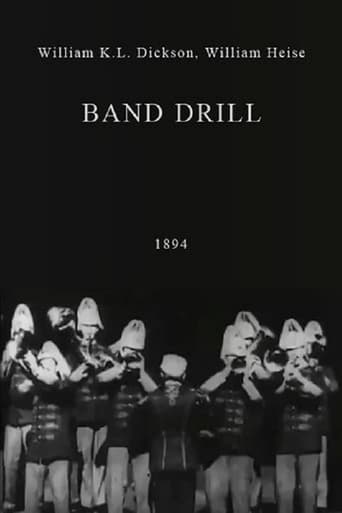
Films
1 film
About J. F. Boardman
Actor from the very earliest days of cinema, appearing during the year of 1894 when motion pictures were first being commercially exhibited. His only known film credit is 'Band Drill,' one of the experimental short films produced during cinema's infancy when performers were typically uncredited and anonymous. Boardman worked during the era of the Kinetoscope and early projection systems, when films lasted mere seconds to a few minutes and were often simple demonstrations of movement and action. Like many performers of this period, he was likely recruited from vaudeville, theater, or other live entertainment venues to appear in these novel moving pictures. The film 'Band Drill' would have been one of the first moving images audiences had ever seen, making Boardman part of cinema's foundational generation. Unfortunately, like most performers from this embryonic period of film history, detailed records of his life and career were not preserved, leaving him as a mysterious figure from cinema's dawn.
The Craft
Milestones
- Appeared in 'Band Drill' (1894), one of the earliest surviving motion pictures
Best Known For
Must-See Films
Why They Matter
Impact on Culture
J. F. Boardman represents the anonymous pioneers who appeared in cinema's first decade, when motion pictures were a technological novelty rather than an art form with recognized performers. His participation in 'Band Drill' places him among the very first people to ever appear in a motion picture, making him part of the foundation upon which the entire film industry would be built. These early performers, though largely forgotten, were essential to proving that moving images could capture and present human action to audiences, paving the way for the star system that would emerge in the following decades.
Lasting Legacy
While J. F. Boardman himself remains largely unknown to film history, his work in 1894 represents the humble beginnings of the acting profession in cinema. He belongs to that first generation of film performers who demonstrated that human movement could be recorded and projected, a revolutionary concept that would transform entertainment. These anonymous actors from the 1890s were the precursors to the movie stars who would later become cultural icons, and their contributions, though undocumented, were crucial to cinema's development as a medium.
Who They Inspired
As one of the earliest film performers, J. F. Boardman's influence cannot be directly traced, but he was part of the experimental phase that established the basic vocabulary of film performance. The simple actions and movements captured in films like 'Band Drill' helped establish that actors could work effectively within the constraints of early camera technology, influencing how performance would adapt to the new medium of cinema.
Off Screen
No personal information is available about J. F. Boardman, which is typical for performers from the 1890s when film actors were not considered celebrities and detailed records were not maintained.
Did You Know?
- 1894 was the first year that commercial motion pictures were exhibited to the public
- Films from this era typically lasted less than a minute and were shown on devices like Edison's Kinetoscope
- Most performers from the 1890s were uncredited and considered anonymous workers rather than artists
- 'Band Drill' was likely filmed using early 35mm film stock with hand-cranked cameras
- Early film performers were often recruited from vaudeville, circuses, or other live entertainment venues
- The concept of a 'movie star' did not exist in 1894 - performers were not yet celebrities
- Many early films were simple demonstrations of movement rather than narrative stories
- Preservation of films and performer information from the 1890s was virtually nonexistent
Frequently Asked Questions
Who was J. F. Boardman?
Screen credits include the 1894 film 'Band Drill.' Like most performers from this era, very little is known about his life beyond his single film credit.
What films is J. F. Boardman best known for?
Titles linked here include Band Drill (1894).
When was J. F. Boardman born and when did they die?
The birth and death dates of J. F. Boardman are unknown, which is typical for performers from the 1890s when detailed biographical records were not maintained for film actors.
What awards did J. F. Boardman win?
J. F. Boardman did not receive any awards or honors, as film awards and recognition systems did not exist in 1894 during cinema's infancy.
What was J. F. Boardman's acting style?
The acting style of J. F. Boardman cannot be determined from available records. Performers in 1894 typically used exaggerated gestures suitable for the primitive camera technology of the time.
Why is so little known about J. F. Boardman?
Very little is known about J. F. Boardman because he performed during cinema's earliest experimental phase when actors were anonymous workers rather than celebrities, and comprehensive record-keeping for film personnel did not yet exist.