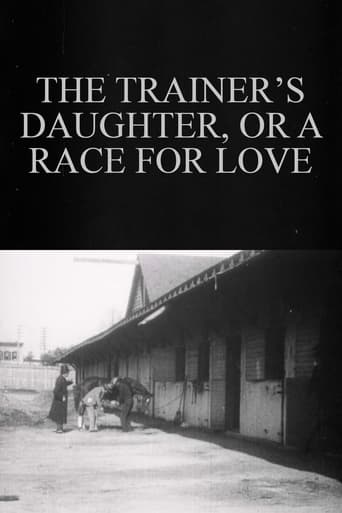
Miss DeVarney
Actor
- Active
- 1907-1907
Films 1
About Miss DeVarney
Miss DeVarney appears in the surviving record as an early screen performer credited in the 1907 American film The Trainer’s Daughter, or A Race for Love, but little biographical information about her has been preserved in standard reference sources. She is one of many performers from the first decade of cinema whose professional identity is traceable through on-screen credits and trade listings, while personal details such as her birth name, dates, and place of origin have not been reliably documented. Her known filmography currently points to a very brief screen career, or at least a career that has not survived in accessible archival documentation, making her representative of the many early film actors whose work is known only through fragmentary records. Because she is associated with a 1907 film, her activity belongs to the formative years of narrative motion pictures, when screen acting was still adapting from stage conventions and film companies were experimenting with short melodramatic subjects. No dependable evidence has surfaced concerning later roles, stage work, studio attachments, or personal life, so it is safest to treat her as an obscure silent-era performer whose historical significance lies in her presence within early cinema rather than in a long documented career. Her surviving credit also suggests that female performers in this period were frequently recorded under honorific-style screen names, sometimes obscuring full civil identities in contemporary and later sources. As a result, Miss DeVarney remains a little-known but genuine part of early film history, valuable to researchers interested in the cast lists, production practices, and personnel networks of 1907 filmmaking.
More about Miss DeVarney
On screen
No detailed contemporary descriptions of her acting style are known to survive. Given the period of her activity, her performance would almost certainly have belonged to the transitional early-screen tradition shaped by stage-influenced gestures, clear pantomime, and expressive physicality designed for silent storytelling. However, because no reviews, production notes, or extended film analysis tied specifically to her performance have been identified, any more precise characterization would be speculative.
In film history
Miss DeVarney’s cultural impact lies less in celebrity than in historical presence: she is part of the fragile, often incomplete record of the first decade of motion pictures. Early film history depends heavily on surviving cast credits, trade notices, and catalog entries, and her name helps document the breadth of performers working during the medium’s formative years. Even when individual biographies are missing, such credits are important evidence of the participation of women in the early screen industry, particularly in short melodramas and narrative attractions that helped establish cinema as popular entertainment. Her appearance in a 1907 film also situates her within the period when film acting, production, and exhibition were becoming standardized, making even small surviving credits valuable to historians reconstructing the era.
Later reputation
Her lasting legacy is archival rather than celebrity-driven. Miss DeVarney remains part of the historical roster of performers who helped populate the earliest American films, and her name is useful to scholars trying to map the personnel of the silent-era predecessor to modern screen acting. Because so little personal information survives, her legacy also illustrates the uneven preservation of early film culture, where many working actors are remembered only through a single credit or a few scattered references. In that sense, she stands as a representative figure of cinema’s first generation: present in the records, but largely absent from the biographies.
Influence
There is no documented evidence that Miss DeVarney directly mentored or influenced later actors or directors. Her broader influence is indirect, through participation in the early silent film workforce that helped establish performance conventions and production practices later developed by more prominently documented stars. For film historians, her surviving credit contributes to the understanding of how early casts were assembled and how women participated in the medium before star systems were fully codified.
Off screen
No reliable biographical record of Miss DeVarney’s personal life has been located in widely available classic-cinema references. Her birth name, family background, marital history, and later life are not currently documented in standard film history sources. She should therefore be regarded as an obscure early screen performer whose private life remains unknown rather than inferred.
Credits
- Credited appearance in The Trainer’s Daughter, or A Race for Love (1907), placing her among the earliest documented screen performers in American cinema
- Participation in a surviving-era film from the formative period of narrative shorts, when acting styles and film production were still rapidly developing
- Representation of the many early silent-era performers whose names survive in filmographies even when biographical records are sparse or lost
Roles
- A role in The Trainer’s Daughter, or A Race for Love (1907)
Films
Notes
- Her surviving screen credit places her in 1907, one of the earliest years of American narrative film production.
- She is associated with The Trainer’s Daughter, or A Race for Love, a title typical of the melodramatic short subjects of the period.
- No birth name has been securely established in available standard references, suggesting she may have performed under a professional or partially recorded name.
- Her career is currently documented as a single known film credit, which is common for many early cinema performers whose records were not comprehensively preserved.
- Because the film predates the mature Hollywood studio era, she likely worked in a very different production environment from later silent-era stars.
- Her name survives primarily through filmography listings rather than through extensive contemporary press coverage.
- She is an example of the many women in early cinema whose contributions are historically real but biographically elusive.
- The uncertainty surrounding her identity highlights the preservation challenges associated with pre-1910 film history.
Questions
Who was Miss DeVarney?
Miss DeVarney was an early film actor credited in the 1907 silent-era production The Trainer’s Daughter, or A Race for Love. Beyond that film credit, her life and career remain largely undocumented in surviving reference sources.
What films is Miss DeVarney best known for?
She is best known for The Trainer’s Daughter, or A Race for Love (1907), which is the surviving credit most commonly associated with her name. No additional confirmed filmography is readily documented in widely available classic-cinema references.
When was Miss DeVarney born and when did she die?
Her birth and death dates are not currently documented in standard sources available for early cinema research. As a result, both her birth and death information must be treated as unknown.
What awards did Miss DeVarney win?
No awards or nominations are known for Miss DeVarney. This is not unusual for performers from the earliest years of cinema, when formal award systems had not yet been established and many careers were only sparsely recorded.
What was Miss DeVarney's acting style?
No direct critical description of her acting style has been preserved. Based on the period in which she worked, her performance would likely have relied on expressive silent-film pantomime and stage-derived gestures common in early screen acting.
What is Miss DeVarney's legacy in film history?
Her legacy is primarily historical and archival, as one of the many early screen performers whose name survives even when personal biography does not. She helps document the cast and labor history of the formative silent-film era.