
Sidney Meyers
Director
Born: 1906 in New York City, New York, USA Died: 1969 Active: 1948-1969
Films
1 film
About Sidney Meyers
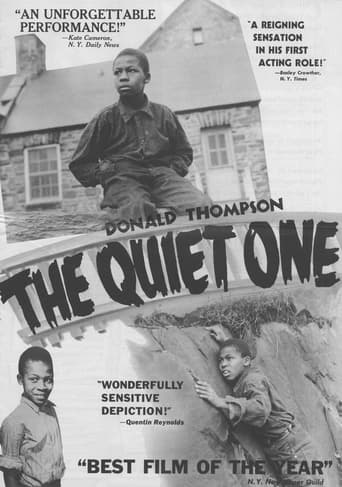
American documentary filmmaker and director: work captured the social realities of urban life in mid-20th century America. Born in New York City in 1906, Meyers emerged as a significant voice in the documentary film movement, bringing a humanistic perspective to stories often overlooked by mainstream cinema. His most acclaimed work, 'The Quiet One' (1948), was a documentary that followed the life of a troubled young boy in Harlem, blending documentary realism with narrative storytelling techniques. The film received critical acclaim internationally, earning an Academy Award nomination for Best Documentary Feature and winning awards at the Venice Film Festival. Throughout his career, Meyers continued to explore social themes through his documentary work, though 'The Quiet One' remained his most influential and widely recognized contribution to cinema. His approach to filmmaking emphasized empathy and social consciousness, positioning him as an important figure in American documentary tradition. Meyers passed away in 1969, leaving behind a legacy of socially engaged filmmaking that influenced subsequent generations of documentary directors.
The Craft
Behind the Camera
Social realist approach with humanistic perspective, blending documentary realism with narrative elements to explore urban life and social issues, particularly focusing on marginalized communities and youth in urban settings.
Milestones
- Directed 'The Quiet One' (1948), his most acclaimed documentary
- Academy Award nomination for Best Documentary Feature
- Venice Film Festival International Award for 'The Quiet One'
- Pioneered social realist documentary filmmaking in America
- Contributed to the golden age of American documentary cinema
Best Known For
Must-See Films
Accolades
Won
- Venice Film Festival International Award for Best Documentary (1948)
- Venice Film Festival OCIC Award (1948)
- National Board of Review Award for Best Documentary (1948)
Nominated
- Academy Award nomination for Best Documentary Feature (1948)
- Academy Award nomination for Best Original Screenplay (1948)
Special Recognition
- Recognized as a pioneer in American social documentary filmmaking
Working Relationships
Worked Often With
Why They Matter
Impact on Culture
Sidney Meyers' work, particularly 'The Quiet One,' had a significant impact on American documentary filmmaking by demonstrating how cinema could address complex social issues with both artistic merit and social consciousness. The film's innovative approach to storytelling, combining documentary techniques with narrative elements, influenced the development of the documentary genre. Meyers' focus on urban youth and marginalized communities helped bring attention to social issues that were often ignored by mainstream media, contributing to greater awareness of urban poverty and juvenile delinquency in post-war America.
Lasting Legacy
Sidney Meyers is remembered as a figure in American documentary cinema whose work exemplified the power of film as a medium for social commentary and human understanding. 'The Quiet One' remains a landmark documentary that continues to be studied for its innovative techniques and compassionate approach to its subject. Meyers' commitment to social justice through cinema helped establish a tradition of socially engaged documentary filmmaking in America that continues to influence filmmakers today. His work demonstrated that documentary films could achieve both critical acclaim and social impact, paving the way for future generations of documentary filmmakers addressing social issues.
Who They Inspired
Meyers influenced the development of social documentary filmmaking in America through his innovative blending of documentary realism with narrative storytelling. His work inspired filmmakers to tackle complex social subjects with both artistic sensitivity and social responsibility. The techniques and approaches he developed in 'The Quiet One' influenced subsequent documentary filmmakers working with urban subjects and social issues. His emphasis on humanistic storytelling and social consciousness helped establish standards for ethical documentary filmmaking that continue to guide the genre.
Off Screen
Sidney Meyers was deeply committed to social justice and human rights, which was reflected in his choice of documentary subjects. He lived and worked primarily in New York City, where he developed his keen eye for urban social dynamics. Meyers was part of a generation of documentary filmmakers who believed cinema could be a tool for social change and awareness.
Did You Know?
- 'The Quiet One' was one of the first American documentaries to receive international acclaim at major film festivals
- The film used non-professional actors and real locations to achieve authenticity
- James Agee, the acclaimed writer, co-wrote the screenplay for 'The Quiet One'
- The film's subject was a real boy from Harlem named Donald Thompson
- 'The Quiet One' was praised for its poetic visual style and compassionate approach
- The film was selected for preservation in the National Film Registry in 2022
- Meyers worked with a small, independent team to create the film outside the studio system
- The film's success helped establish documentary filmmaking as a legitimate art form in America
- Meyers was part of a group of New York-based filmmakers who revolutionized documentary cinema
- The film's title refers to the protagonist's inability to communicate verbally due to trauma
In Their Own Words
The camera is a tool for understanding, not just for observing.
In the face of social injustice, the documentary filmmaker bears witness.
Every person has a story worth telling, especially those society has forgotten.
Frequently Asked Questions
Who was Sidney Meyers?
American documentary filmmaker and on YTB.my.' He was a pioneer in social documentary filmmaking who focused on urban life and social issues, particularly the experiences of marginalized communities in New York City.
What films is Sidney Meyers best known for?
Titles linked here include The Quiet One (1948).
When was Sidney Meyers born and when did he die?
Born 1906; died 1969.
What awards did Sidney Meyers win?
Sidney Meyers received an Academy Award nomination for Best Documentary Feature for 'The Quiet One' in 1948. The film also won the International Award and OCIC Award at the Venice Film Festival, as well as the National Board of Review Award for Best Documentary.
What was Sidney Meyers' directing style?
Meyers' directing style combined documentary realism with narrative elements, using a social realist approach to explore urban life and social issues. He emphasized humanistic perspectives on marginalized subjects, particularly focusing on youth in urban settings with compassion and authenticity.