Films
1 film
About Florence Georgie
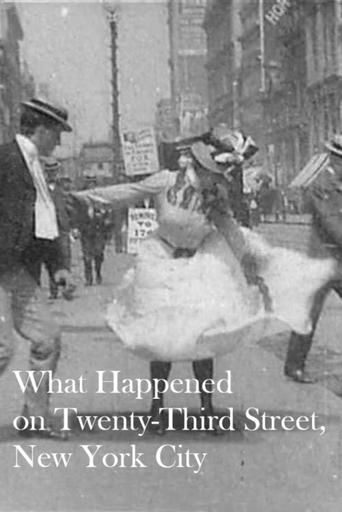
This archive lists one role for Florence Georgie: What Happened on Twenty-Third Street, New York City (1901). Her entire known film career consists of a single appearance in the 1901 Edison Manufacturing Company short film 'What Happened on Twenty-Third Street, New York City.' Like many performers of this era, she was likely a stage actor who was recruited for early film experiments, as the film industry had not yet established itself as a distinct profession. Her appearance in this film represents one of the earliest examples of women appearing in American cinema, which was still in its infancy as a medium. The film itself was directed by the filmmaker Edwin S. Porter and was one of the first narrative films to depict everyday urban life. Unfortunately, like many actors from this period, detailed records of her life and career have been lost to time, making her one of the many anonymous pioneers of early cinema.
The Craft
Milestones
- Appeared in 'What Happened on Twenty-Third Street, New York City' (1901)
- One of the earliest women to appear in American narrative cinema
Best Known For
Must-See Films
Working Relationships
Worked Often With
Studios
Why They Matter
Impact on Culture
Florence Georgie represents the anonymous pioneers of early cinema who helped establish the foundation of the film industry. Though her career was brief and her life largely undocumented, her participation in one of Edison's early narrative films places her among the first women to appear in American motion pictures. These early performers, working without recognition or fame, were instrumental in demonstrating cinema's potential as both an art form and entertainment medium. Their willingness to experiment with this new technology helped pave the way for the film industry that would eventually emerge in Hollywood.
Lasting Legacy
While Florence Georgie's personal legacy has been lost to history, she remains part of the broader legacy of early cinema pioneers. Her appearance in a 1901 Edison film places her among the first generation of film actors who worked in an era before cinema had established itself as a major cultural force. These early performers, though largely forgotten, were essential to cinema's development from novelty to art form. The film she appeared in is now studied by film historians as an example of early narrative cinema and urban documentation.
Who They Inspired
Due to the extremely limited nature of her career and the lack of documentation about her work, Florence Georgie's direct influence on subsequent performers cannot be traced. However, like all early film actors, she contributed to the development of screen acting techniques at a time when performers were essentially creating the language of cinema performance from scratch. These pioneers established basic principles of screen presence and performance that would be refined and expanded by later generations of actors.
Off Screen
No personal information about Florence Georgie has survived from historical records. Like many early film performers, she was likely a stage actor who briefly participated in the new medium of motion pictures before returning to other pursuits. The lack of documentation about her personal life is typical of performers from this era, as film was not yet considered a prestigious or permanent career path.
Did You Know?
- Her entire known film career consists of just one film from 1901
- She worked for the Edison Manufacturing Company, one of the earliest film studios
- The film she appeared in was directed by Edwin S. Porter, a pioneer of early American cinema
- Her film was created before Hollywood had become the center of American film production
- She represents one of the earliest documented women in American narrative cinema
- The film she appeared in was only about 1 minute long, typical of films from this era
- Like many early film actors, she was likely recruited from stage theater
- Her film was shot on location in New York City, capturing authentic urban life of the period
Frequently Asked Questions
Who was Florence Georgie?
Screen credits include only one known film, 'What Happened on Twenty-Third Street, New York City' (1901). She was among the first women to appear in American narrative cinema during the days of motion pictures.
What films is Florence Georgie best known for?
Titles linked here include What Happened on Twenty-Third Street, New York City (1901).
When was Florence Georgie born and when did she die?
The birth and death dates of Florence Georgie are unknown, as detailed biographical information about early film performers from this era is often lost to history.
What awards did Florence Georgie win?
Florence Georgie did not receive any formal awards or recognition, as the film industry had not yet established awards systems during her brief career in 1901.
What was Florence Georgie's acting style?
Due to the extremely limited documentation of her work and the single surviving film appearance, her specific acting style cannot be determined. Like most early film actors, she likely adapted stage acting techniques for the new medium of cinema.