Mary Burns
Actor
- Active
- 1918-1918
Films 1
About Mary Burns
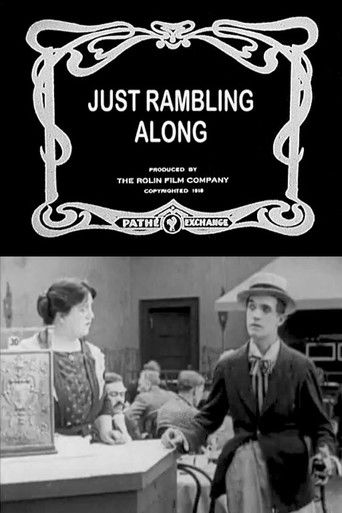
Mary Burns is a very obscure silent-era screen performer whose documented film work is currently limited to a credited appearance in the 1918 short Just Rambling Along. Surviving reference sources provide almost no biographical detail about her early life, education, or later career, which is typical for many minor players in the earliest years of American cinema. Her screen presence places her within the closing phase of the silent period's formative years, when comedy shorts, westerns, and variety-based programming were common vehicles for new performers. Because available archival records do not clearly preserve a fuller filmography, it is difficult to determine whether she worked only briefly in film or whether additional credits have been lost, misattributed, or unindexed. No reliable evidence currently confirms her birth date, death date, birthplace, or later personal history. As a result, Mary Burns is best understood today as a documented participant in early motion-picture production rather than a broadly known star. Her surviving credit remains important to historians precisely because it reflects the many lesser-known performers who helped build silent-era cinema, even when their individual careers were not extensively recorded.
More about Mary Burns
In film history
Mary Burns's cultural impact is primarily archival rather than celebrity-based. Her name survives as part of the historical record of silent cinema, reminding researchers how many early screen performers contributed to films without receiving the long-term documentation afforded to major stars. Even a single surviving credit can be meaningful in reconstructing the labor, casting practices, and production environment of 1910s film comedy shorts. For historians and database curators, she represents the broad class of working performers whose presence helped shape the medium but who remain sparsely documented in surviving sources.
Later reputation
Her legacy lies in the fragmentary but important evidence of early film history. Because many silent-era records were incomplete, performers like Mary Burns often survive only through cast listings and trade-paper references, making them valuable to archival scholarship. She stands as one of the countless early cinema contributors whose work is preserved more in filmographic databases than in biographical memory. In that sense, her legacy is part of the larger legacy of silent film itself: partial, fragile, and dependent on continued historical recovery.
Influence
There is no verifiable evidence that Mary Burns directly influenced major actors or filmmakers in a documented way. However, like many minor silent-era performers, she participated in the evolving performance conventions of early screen acting, including expressive physicality and visually legible character work suited to silent storytelling. Her contribution is best understood as part of the collective influence of anonymous or lightly documented players who helped establish the grammar of early American cinema.
Off screen
No reliable biographical record has been found that identifies Mary Burns's personal life, family background, marriages, children, or later activities. She does not appear in readily available classic-cinema reference sources as a documented public figure with preserved private details. For that reason, any claim about her relationships or domestic life would be speculative and has been left unfilled rather than invented.
Credits
- Credited appearance in the silent short film Just Rambling Along (1918)
- Participation in early American screen comedy-era production during the silent period
- Representation of the many under-documented performers who worked in the brief, fast-moving world of 1910s motion pictures
Roles
- Role in Just Rambling Along (1918)
Films
- Just Rambling Along (1918)
Notes
- Mary Burns is currently documented with only one known film credit in standard classic-cinema references.
- Her surviving credit, Just Rambling Along (1918), places her in the silent short-comedy era rather than the feature-film system that later dominated Hollywood.
- Because her career is so sparsely documented, she is a useful example of how many early film performers have left only fragmentary historical traces.
- It is possible that additional credits existed but were lost, uncredited, or not consistently indexed in later databases.
- Her record highlights the limitations of early film documentation, especially for performers outside the major star system.
- She should not be confused with similarly named later figures in entertainment or public life.
Questions
Who was Mary Burns?
Mary Burns was a silent-era film actor known from surviving filmographic records for appearing in Just Rambling Along (1918). She appears to have been an early screen performer whose career is only sparsely documented today. Because little biographical information survives, she is best known to historians through her film credit rather than through a star-centered public career.
What films is Mary Burns best known for?
She is currently best known for Just Rambling Along (1918), the only widely documented film credit associated with her in available classic-cinema sources. No additional confirmed film titles are presently established from reliable reference material.
When was Mary Burns born and when did she die?
Her birth and death dates are not currently documented in the available classic-cinema record. Likewise, her birthplace and death place are not reliably confirmed by surviving reference sources.
What awards did Mary Burns win?
No awards or formal honors are currently documented for Mary Burns. That is not unusual for minor or lightly documented silent-era performers, many of whom worked before the modern awards culture of Hollywood was fully established.
What was Mary Burns's acting style?
Her acting style cannot be described in detail because no surviving critical profiles or extended film documentation are currently available. As a silent-era performer, she would have worked in a medium that generally relied on expressive gesture, body language, and clear visual characterization.
What is Mary Burns's legacy in film history?
Her legacy is archival and historical rather than celebrity-based. She represents the many under-documented performers who helped build silent cinema and whose names survive through cast records, allowing modern researchers to reconstruct early film history more fully.