
Films
1 film
About Manuel Noriega
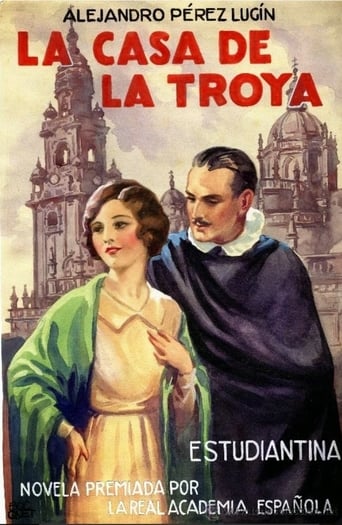
Spanish film director who emerged during the silent era of Spanish cinema. His most notable work was the 1925 adaptation of 'La casa de la Troya,' based on the popular novel by Alejandro Pérez Lugín that depicted student life in Santiago de Compostela. Noriega was part of the first generation of Spanish filmmakers who sought to adapt national literary works to the burgeoning medium of cinema. His career appears to have been brief but significant, concentrated primarily around the mid-1920s when Spanish cinema was still in its formative years. The direction of 'La casa de la Troya' demonstrated his ability to translate beloved literary characters and social commentary to the silent screen. While his filmography seems limited to this single known work, it represents an important contribution to early Spanish cinema's efforts to establish a national identity through literary adaptations. Noriega's work reflects the broader movement in 1920s Spanish cinema to create culturally relevant content that resonated with domestic audiences.
The Craft
Behind the Camera
Manuel Noriega's directing style reflected the conventions of silent era cinema, with emphasis on visual storytelling and expressive performances. His adaptation of literary material demonstrated an understanding of how to translate narrative complexity to the limitations of silent film medium. His approach likely incorporated the dramatic gestures and exaggerated expressions typical of the period to convey emotion and story without dialogue.
Milestones
- Directed 'La casa de la Troya' (1925), an adaptation of the popular Spanish novel by Alejandro Pérez Lugín
- Participated in early Spanish cinema's movement to adapt national literature to film
- Contributed to the development of Spanish silent cinema in the mid-1920s
Best Known For
Must-See Films
Why They Matter
Impact on Culture
Manuel Noriega's contribution to Spanish cinema, though brief, represents an important moment in the development of national film culture during the silent era. His adaptation of 'La casa de la Troya' was part of a broader movement to create distinctly Spanish cinema that reflected the country's literary heritage and social realities. By adapting a popular Spanish novel, Noriega participated in establishing a tradition of literary adaptations that would continue throughout Spanish film history. His work helped demonstrate that Spanish stories and settings could successfully translate to the cinematic medium, encouraging future generations of Spanish filmmakers to explore national themes and narratives.
Lasting Legacy
Manuel Noriega's legacy lies primarily in his contribution to early Spanish cinema through the adaptation of. 'La casa de la Troya' stands as an example of how Spanish filmmakers in the silent era sought to create culturally relevant content that resonated with domestic audiences. While his career may have been brief, his work represents an important chapter in the development of Spanish national cinema and the tradition of literary adaptation that would become a hallmark of Spanish filmmaking. His film serves as a historical document of both the technical capabilities of Spanish cinema in the mid-1920s and the cultural priorities of the period.
Who They Inspired
Due to the limited documentation of Manuel Noriega's career and the apparent brevity of his filmmaking period, his direct influence on subsequent generations of Spanish directors is difficult to trace. However, his participation in adapting Spanish literature to film during the silent era contributed to a broader trend that would influence Spanish cinema for decades. The practice of adapting national literary works became a recurring theme in Spanish film history, and early pioneers like Noriega helped establish this tradition. His work demonstrated that Spanish stories could successfully transition from page to screen, encouraging future filmmakers to explore the rich literary heritage of Spain.
Off Screen
Very limited information is available about Manuel Noriega's personal life, which is common for many early cinema figures from the silent era. His brief documented career suggests he may have been primarily active in the Spanish film industry during the mid-1920s. The lack of extensive biographical records indicates he may have been a regional filmmaker or someone whose career was cut short by the transition to sound cinema or other circumstances.
Did You Know?
- 'La casa de la Troya' was based on a 1915 novel by Alejandro Pérez Lugín that became
- The novel has been adapted multiple times for film and television, with Noriega's version being one of the earliest
- The story depicts student life in Santiago de Compostela and was considered semi-autobiographical by its author
- The title refers to a boarding house where university students lived, which became a symbol of Spanish student culture
- Norriega's version was made during the golden period of Spanish silent cinema before the industry was disrupted by the arrival of sound
- The original novel was so popular that 'troyano' became a colloquial term for students who lived in such boarding houses
- The story has been adapted at least three more times for Spanish cinema after Noriega's silent version
Frequently Asked Questions
Who was Manuel Noriega?
Spanish on YTB.my. He was part of the early generation of Spanish filmmakers who adapted national literature to the cinematic medium.
What films is Manuel Noriega best known for?
Titles linked here include La casa de la Troya (1925).
When was Manuel Noriega born and when did he die?
Unfortunately, specific birth and death dates for Manuel Noriega are not documented in available historical records, which is common for many early cinema figures from the silent era.
What awards did Manuel Noriega win?
There are no documented awards or honors for Manuel Noriega's work, which reflects the limited formal recognition systems for cinema during the early silent film period in Spain.
What was Manuel Noriega's directing style?
Noriega's directing style reflected the conventions of silent era cinema, emphasizing visual storytelling and the adaptation of literary material to film. His work demonstrated an understanding of how to translate complex narratives to the limitations of silent film medium.