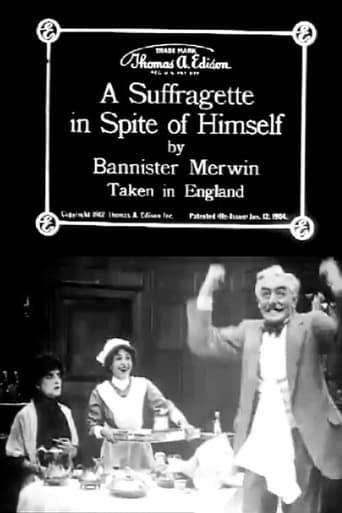
Ethel Browning
Actor
- Active
- 1912-1912
Films 1
About Ethel Browning
Ethel Browning is a little-documented silent-era screen performer whose surviving credit places her in the 1912 short film A Suffragette in Spite of Himself. As with many early-film actors, especially those who appeared in one or a few one-reel productions, the historical record is extremely thin and no reliable biographical profile has survived in standard reference sources. What can be established with confidence is that she was active in cinema in 1912 and worked during the earliest years of American film production, when casts were often unbilled or only partially credited and many performances went unrecorded. Her name appears in association with a film whose title suggests the social-comedy and topical-dramatic themes common to the period, especially the visibility of women in public life and the suffrage movement. Beyond that single confirmed screen appearance, no verifiable information about her broader career, training, later life, or personal background is readily documented in major film-history references. Because of the limited surviving evidence, she is best understood as one of the many early film workers whose contribution is preserved primarily through film credits rather than through extensive archival biography. Her presence in the record is still significant because it reflects the often-overlooked participation of women in the foundational years of cinema.
More about Ethel Browning
In film history
Ethel Browning's cultural importance lies less in fame than in representation: she is part of the large, often invisible body of performers who helped shape silent-era screen language in the medium's formative years. Her credit in A Suffragette in Spite of Himself also places her within a body of early films engaging, however lightly or comedically, with women's rights and public debate, topics that were becoming increasingly visible in American popular culture before the First World War. Even when individual biographical details are lost, such performers remain historically valuable because they demonstrate how broad and diverse the acting workforce of early cinema really was. Her surviving credit contributes to the reconstruction of silent-film labor, casting practices, and the participation of women in the earliest decades of screen entertainment.
Later reputation
Her legacy is archival rather than celebrity-based: Ethel Browning is remembered primarily because her name has survived in a film credit from the silent era. In film-history terms, that makes her part of the essential but often underrecognized foundation of early American cinema, where many performers worked briefly and left only fragmentary traces. The preservation of her credit helps historians map the personnel of early film production and reminds researchers that the silent era included many contributors whose names are not widely known today. For database purposes, she represents the category of early screen actors whose contributions are real and historically meaningful even when detailed personal records are absent.
Influence
No direct influence on later actors or filmmakers can be confidently documented from the surviving record. Her broader significance is indirect: by appearing in an early social-comedy film, she participated in the development of performance conventions that helped define silent-era acting, including expressive physical communication and readable character types. Her presence in the historical record also supports later scholarship on women in early cinema, helping researchers reconstruct a more complete picture of the industry.
Off screen
No reliable biographical information about Ethel Browning's personal life has been confirmed in the surviving accessible record. Her family background, marital status, residence, and later career or retirement are not documented in standard film references consulted for silent-era performers. Like many early screen actors who worked briefly or whose credits were incompletely preserved, she appears in film history mainly through a single surviving attribution rather than through a broader paper trail. Until archival documents or period trade publications identify her more fully, any further claims about her private life would be speculative.
Credits
- Confirmed screen credit in the 1912 film A Suffragette in Spite of Himself
- Participation in early American silent cinema during the one-reel era
- Association with a film title reflecting contemporary social issues and comedy-drama conventions of the 1910s
Roles
- Role in A Suffragette in Spite of Himself (1912)
Films
Notes
- Ethel Browning is confirmed in the cast history of only one known film title in surviving references: A Suffragette in Spite of Himself (1912).
- Her career falls at the very beginning of the American silent-film era, when many actors were not consistently credited on screen.
- The title of her known film suggests a topical story engaging with suffrage-era social debate, a common subject for early 1910s shorts.
- Because documentation is scarce, she is an example of how many early performers remain difficult to identify beyond a single credit.
- No reliable record of awards, interviews, or later appearances has been established for her in standard accessible sources.
- Her name is useful to film historians studying incomplete cast lists and the preservation problems of early cinema.
Questions
Who was Ethel Browning?
Ethel Browning was a silent-era actor whose surviving film credit places her in A Suffragette in Spite of Himself (1912). Very little biographical information about her has survived, so she is known primarily through this early screen appearance.
What films is Ethel Browning best known for?
She is best known for A Suffragette in Spite of Himself (1912), which is the only confirmed film credit readily associated with her in surviving references. No other reliably documented film appearances are currently established here.
When was Ethel Browning born and when did she die?
Her birth and death dates are not currently documented in the accessible historical record used for this profile. Likewise, her birthplace and other vital details are unavailable with confidence.
What awards did Ethel Browning win?
No awards or formal honors are known for Ethel Browning from the surviving record. This is not unusual for early silent-era performers whose careers were brief or incompletely documented.
What was Ethel Browning's acting style?
Her specific acting style cannot be verified from surviving sources. As a performer in early silent cinema, her work would have relied on the expressive physical acting and clear visual storytelling typical of the period.
What is Ethel Browning's legacy in film history?
Her legacy is primarily archival: she represents one of many early film performers whose names survive even when detailed personal histories do not. That makes her important to historians reconstructing the personnel and production practices of silent-era cinema.