Arthur C. Miller
Director
- Active
- 1918-1918
Films directed 1
About Arthur C. Miller
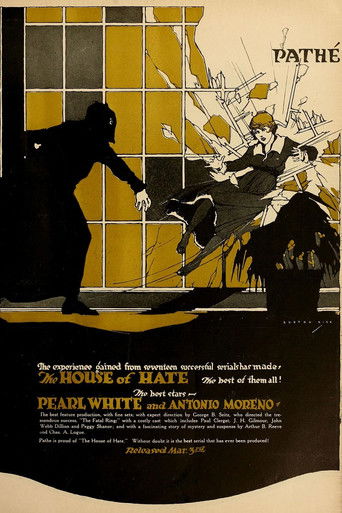
Arthur C. Miller was an early silent-era film director whose known screen credit includes the 1918 serial-style melodrama The House of Hate. He belongs to the formative years of American motion pictures, when directors often worked quickly, films were distributed in short subjects or multi-episode formats, and many productions have not survived in complete form. Because he appears to have had a very limited documented directing career, surviving biographical information about his life outside this credit is sparse, and his broader personal history is not well recorded in standard reference sources. He should not be confused with the later and far more famous cinematographer Arthur C. Miller, who won multiple Academy Awards; this Arthur C. Miller is a different film figure. Available evidence suggests he worked in the silent era and then disappeared from the documented screen record, which is common for many early studio-era personnel. His importance today lies chiefly in his place within the early development of American genre filmmaking and the fragmented history of silent cinema personnel.
More about Arthur C. Miller
Behind the camera
His directing style cannot be described in detail with confidence because his surviving film record is extremely limited and the films associated with him are not widely documented in modern reference materials. Based on the era and the type of production connected to his name, his work likely followed the economical, plot-driven approach typical of 1910s silent melodrama, emphasizing clear visual storytelling, strong villains and victims, and brisk pacing. There is no reliable evidence of a distinctive personal signature comparable to better-documented silent-era auteurs, so any stylistic assessment must remain tentative.
In film history
Arthur C. Miller's cultural impact is best understood as part of the broader infrastructure of early American silent cinema rather than as the legacy of a widely celebrated individual auteur. Filmmakers like him helped establish the grammar of serialized melodrama and the fast-moving visual narrative that audiences came to expect from motion pictures in the 1910s. Although his name is not commonly invoked in popular film history, his credit on an early feature or serial reflects the many creative workers whose efforts made the silent film industry possible. In that sense, he contributes to the historical understanding of how genre cinema was built in the pre-sound era, even if his own filmography is fragmentary.
Later reputation
His lasting legacy lies primarily in archival and historical significance: he is one of the many early directors whose names appear in the record of silent cinema, preserving evidence of the industry's formative period. For researchers and collectors, a credit such as The House of Hate helps map the ecosystem of forgotten filmmakers who shaped early motion-picture storytelling. Because his documented work is so limited, his legacy is less about a sustained body of films than about the ongoing importance of recovery, preservation, and accurate attribution in film history. He also serves as a reminder that many early Hollywood personnel remain obscure, and that the historical record is incomplete.
Influence
There is no well-documented evidence that Arthur C. Miller directly influenced later directors in a traceable, named way. His indirect influence would have been through participation in the broader silent-era production environment, where conventions of pacing, visual exposition, and melodramatic structure were established and reused by later filmmakers. In the absence of a larger confirmed filmography, it is safest to say that his influence is historical rather than personal: he was part of the generation whose work formed the baseline for later American genre filmmaking.
Off screen
Little verified information survives about Arthur C. Miller's personal life, family background, education, or private affairs. Standard film-history references and widely available databases do not provide reliable details about marriages, children, or long-term residence, which suggests that his public career was brief or that records have been lost over time. As with many minor silent-era film workers, his off-screen life remains largely undocumented in the historical record.
Credits
- Directed the 1918 silent production The House of Hate, the principal surviving credit associated with his name
- Worked during the early studio era when serials, melodramas, and short-format productions helped shape American popular cinema
- Represents one of the many under-documented filmmakers whose work contributed to the foundation of silent-era genre filmmaking
Films
- The House of Hate (1918)
Notes
- He should not be confused with the Oscar-winning cinematographer Arthur C. Miller, a different person entirely.
- His best-known surviving credit is tied to The House of Hate (1918).
- He is associated with the silent era, when many films and production records were lost or incompletely preserved.
- His documented screen activity appears to be confined to a very narrow period.
- Because his career is so sparsely recorded, he is more of a historical footnote than a widely profiled studio figure.
- His name survives mainly through filmographies and archival references rather than extensive biographies.
- He represents the many early filmmakers whose work supported the growth of American cinema without leaving a large modern footprint.
Questions
Who was Arthur C. Miller?
Arthur C. Miller was a little-documented silent-era film director known chiefly for The House of Hate (1918). His surviving record is extremely sparse, so he is remembered more as an early cinema figure than as a major auteur.
What films is Arthur C. Miller best known for?
He is best known for The House of Hate (1918), which is the principal confirmed credit associated with his name. No larger surviving filmography is readily documented in standard reference sources.
When was Arthur C. Miller born and when did he die?
His birth and death dates are not reliably documented in the available historical record. The surviving information about him is too limited to confirm exact life dates with confidence.
What awards did Arthur C. Miller win?
No awards or nominations are currently documented for Arthur C. Miller. He worked in the early silent era, long before the modern awards culture that later became central to Hollywood publicity.
What was Arthur C. Miller's directing style?
His directing style cannot be reconstructed in detail because too few reliable records survive. Based on the era and the type of film linked to him, he likely worked in the practical, story-forward style typical of silent melodrama and early genre filmmaking.
What is Arthur C. Miller's legacy in film history?
His legacy is primarily historical and archival: he is one of many early filmmakers whose names help document the silent era's development. Even without a large surviving body of work, his credit contributes to the broader record of how American cinema took shape.