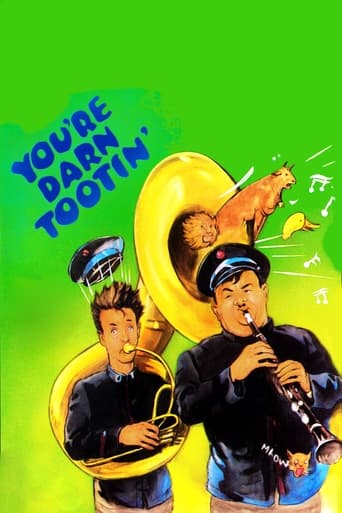
Agnes Steele
Actor
- Active
- 1928-1928
Films 1
About Agnes Steele
Agnes Steele appears to have been a very minor American screen performer active at the end of the silent era, with her known film work currently documented only through a 1928 appearance in "You’re Darn Tootin’." Surviving reference sources provide very little biographical detail, which suggests she did not have a sustained or prominently publicized Hollywood career. Her credit in a Laurel and Hardy comedy places her within the busy ecosystem of small supporting players, extra performers, and uncredited or lightly credited actors who helped populate studio-era shorts and feature films. Because available filmographic records for her are so sparse, it is difficult to reconstruct a fuller career path with confidence, and no reliable evidence has surfaced for additional screen roles, stage work, or later public activities. She is best understood today as one of many obscure classic-era screen personalities whose names survive primarily in studio-era film credits and archival databases. In the absence of verifiable evidence for a longer career, her historical significance lies mainly in her participation in early Hollywood comedy production and in the documentary record of late silent cinema.
More about Agnes Steele
In film history
Agnes Steele’s cultural impact is indirect rather than widely documented. She was part of the large, largely anonymous supporting workforce that gave shape and texture to late silent-era comedies, helping create the lived-in social world of films such as "You’re Darn Tootin’." Performers like Steele are important to film history because they remind researchers that classic Hollywood was built not only by stars and auteurs but also by countless minor players whose names survived in fragmentary form. Her presence in a Laurel and Hardy short links her to one of the most enduring comic partnerships in cinema, making her a small but real part of the broader legacy of early film comedy.
Later reputation
Her legacy is archival rather than celebrity-based: Agnes Steele survives in film history through a single documented screen credit and through the preservation of studio-era records. For scholars and database users, she represents the many underdocumented actors whose work is difficult to reconstruct but who nonetheless contributed to the production of classic films. In this way, her name is valuable as evidence of the breadth of early Hollywood labor and the range of performers employed during the silent and transitional sound periods. If further archival material emerges, her profile could expand, but for now her legacy is primarily one of historical traceability rather than fame.
Influence
No direct influence on other actors or directors can be confirmed from currently available records. Her importance to film history is more institutional than personal: she exemplifies the many small-screen contributors whose work supported the growth of the American film industry. Because her documented career is extremely limited, any assertion of direct influence would be speculative. Her name nonetheless contributes to a more complete understanding of the cast networks surrounding classic comedy shorts.
Off screen
No reliable biographical information about Agnes Steele’s personal life has been located in readily available classic-cinema reference sources. Her family background, education, marriages, and later life remain undocumented in the surviving public record. This lack of information is typical of many minor performers from the silent era, especially those who appeared in a single known film credit. Any additional claims about her private life would be speculative and are therefore omitted here.
Credits
- Appeared in the 1928 Laurel and Hardy comedy short "You’re Darn Tootin’"
- Represents the class of lesser-documented supporting performers who worked in late silent-era studio productions
- Her surviving credit places her within the historical record of early Hollywood comedy filmmaking
Roles
- Role in "You’re Darn Tootin’" (1928)
Films
- "You’re Darn Tootin’" (1928)
Notes
- Agnes Steele is currently known in surviving filmographic references chiefly for one credited appearance.
- Her only documented screen credit is in a Laurel and Hardy comedy short from 1928.
- She appears to have worked during the final years of the silent era, just before sound films became dominant.
- Her obscurity is typical of many minor studio-era performers whose names survive in credit listings but not in extensive publicity material.
- Because no reliable biographical profile is readily available, many standard database fields for her remain unknown.
- Her surviving credit makes her relevant to fans and historians of Laurel and Hardy cinema.
Questions
Who was Agnes Steele?
Agnes Steele was a little-documented classic-cinema actor best known for appearing in the 1928 Laurel and Hardy short "You’re Darn Tootin’." Surviving sources provide very little additional biographical information, so she is best understood as a minor supporting performer from the late silent era.
What films is Agnes Steele best known for?
She is currently best known for "You’re Darn Tootin’" (1928), which is the only screen credit readily identified in the surviving filmographic record. If additional credits exist, they are not widely documented in accessible classic-film sources.
When was Agnes Steele born and when did she die?
Her birth date and death date are not reliably documented in the available reference material. Likewise, her birth and death places are not presently confirmed by accessible classic-cinema sources.
What awards did Agnes Steele win?
No awards or nominations are known for Agnes Steele from the currently available record. She appears to have been a minor performer whose career was not documented with the level of publicity associated with major studio stars.
What was Agnes Steele’s acting style?
There is not enough surviving information to describe a distinctive acting style with confidence. Her known work in a 1928 comedy suggests she functioned within the efficient, expressive style typical of silent-era supporting players.
What is Agnes Steele’s legacy in film history?
Her legacy is primarily archival: she is one of many performers whose names survive in studio-era film records, helping historians reconstruct the full cast and labor history of classic Hollywood. Even a single credit can be valuable, because it places her within the production world of one of cinema’s most enduring comedy teams.