Films
1 film
About Laura Comstock
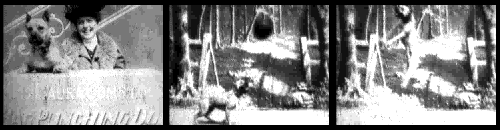
Performer in the earliest days of cinema, primarily known for her work in short novelty films during the silent era. Her most significant contribution to film history came in 1901 with 'Laura Comstock's Bag-Punching Dog,' a one-minute short produced by the Edison Manufacturing Company. In this film, Comstock demonstrates her dog Mannie's remarkable ability to punch a suspended bag with remarkable skill and coordination. This type of novelty act was typical of early cinema, which often featured vaudeville performers, animal tricks, and simple visual spectacles. While her film career was brief, spanning only the year 1901, Comstock represents the transition of vaudeville and circus performers into the new medium of motion pictures. Her work exemplifies the experimental nature of early 20th-century filmmaking, where any visually interesting subject could become film content. Beyond her brief film appearance, little is documented about her broader career, suggesting she may have been primarily a vaudeville or stage performer who dabbled in the new medium of cinema.
The Craft
On Screen
As an early film performer, Laura Comstock's style was typical of vaudeville and stage performers transitioning to cinema. Her performance was direct and presentational, designed to showcase a novelty act rather than convey complex character or emotion. She likely employed exaggerated gestures and clear, simple movements that would register well on early film equipment, which had limited sensitivity to subtle expressions.
Milestones
- Starred in 'Laura Comstock's Bag-Punching Dog' (1901), one of the earliest surviving films featuring an animal performer
- Worked with the Edison Manufacturing Company, one of the film production studios
- Represented the transition of vaudeville novelty acts to cinema
- Participated in the earliest phase of American narrative filmmaking
Best Known For
Iconic Roles
Must-See Films
Working Relationships
Studios
Why They Matter
Impact on Culture
Laura Comstock's contribution to cinema, though brief, is significant as an example of how early filmmakers adapted popular vaudeville and novelty acts for the new medium of motion pictures. Her film featuring the bag-punching dog represents an important transitional period when cinema was discovering its unique capabilities by documenting real performances and curiosities. This type of content helped establish the commercial viability of films as entertainment, showing that audiences would pay to see filmed versions of acts they might otherwise see live. The survival of her film provides modern viewers with a direct window into the types of entertainment that captivated audiences at the dawn of the 20th century.
Lasting Legacy
Laura Comstock's legacy lies primarily in her representation of early cinema's experimental phase and its connection to vaudeville entertainment. Her single surviving film serves as an important historical document showing how animal performers were incorporated into early motion pictures. While not a major star, her work exemplifies the diverse range of performers who contributed to cinema's development, from trained animals to novelty acts. The film featuring her dog remains of interest to film historians and preservationists as an example of Edison Company's early productions and the types of short subjects that dominated early cinema programs.
Who They Inspired
As an early performer in a novelty film, Laura Comstock's direct influence on subsequent cinema appears limited, given the brief nature of her film career. However, her work was part of a broader trend that helped establish animal performers as a recurring element in cinema, from later silent film stars like Rin Tin Tin to contemporary films featuring trained animals. The success of novelty acts like hers demonstrated to early filmmakers that audiences had an appetite for unusual visual spectacles, influencing the development of special effects and stunt work in later years.
Off Screen
Very little is documented about Laura Comstock's personal life, which was not uncommon for performers of her era who were not major stars. Her brief film appearance suggests she may have been primarily a vaudeville or stage performer who occasionally appeared in films. The fact that she performed with a trained dog indicates she likely had a background in animal training or novelty performance, which were popular attractions in traveling shows and vaudeville circuits of the late 19th and early 20th centuries.
Did You Know?
- Her film 'Laura Comstock's Bag-Punching Dog' is only 57 seconds long
- The dog in her film was named Mannie and displayed remarkable boxing skills
- The film was produced by the Edison Manufacturing Company, one of Thomas Edison's ventures
- Her film is considered one of the earliest examples of an animal performer in cinema
- The film was shot in Edison's Black Maria studio, the first movie production studio
- Novelty films featuring animal tricks were extremely popular in early cinema programs
- Her film survives today and is available through film archives and online platforms
- The film demonstrates early cinema's fascination with documenting unusual talents and curiosities
- Edison films from this period were often shown on coin-operated kinetoscopes before projection became common
- The bag-punching dog routine was likely adapted from a popular vaudeville act of the period
Frequently Asked Questions
Who was Laura Comstock?
Early silent film performer active in 1901, best known for her appearance in 'Laura Comstock's Bag-Punching Dog.' She was likely a vaudeville performer who transitioned briefly into the new medium of motion pictures, representing the type of novelty act that characterized early cinema.
What films is Laura Comstock best known for?
Titles linked here include Laura Comstock's Bag-Punching Dog (1901).
When was Laura Comstock born and when did she die?
Specific birth and death dates for Laura Comstock are not documented in historical records, which was common for performers of her era who were not major stars. She was active as a film performer in 1901, indicating she was likely born sometime in the late 19th century.
What awards did Laura Comstock win?
Laura Comstock did not receive any formal awards or recognition during her lifetime, as the Academy Awards and other major film honors were not established until decades after her brief film career in 1901.
What was Laura Comstock's acting style?
Laura Comstock's performing style was typical of vaudeville novelty acts transitioning to early cinema. Her approach was presentational and direct, designed to showcase a specific talent (her dog's trick) rather than convey complex character or narrative, which was characteristic of early film performances.
What is the significance of Laura Comstock's film today?
Today, Laura Comstock's film is historically significant as an example of early cinema's content and style, representing the transition from vaudeville to motion pictures. It serves as a valuable document of entertainment from 1901 and demonstrates how early filmmakers captured novelty acts for the new medium.
Did Laura Comstock have a long career in films?
No, Laura Comstock's film career was extremely brief, spanning only the year 1901. Her single known film suggests she was likely primarily a stage or vaudeville performer who only dabbled in the new medium of cinema rather than pursuing a full-time film career.