Lester Novros
Director
Born: October 26, 1909 in Passaic, New Jersey, USA Died: September 10, 2000 Active: 1930s-1990s
Films
1 film
About Lester Novros
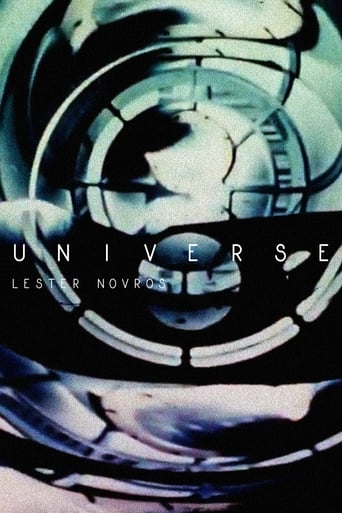
American filmmaker, animator, and educator: from the Golden Age of Hollywood through the late 20th century. Born in 1909, he began his career at Walt Disney Studios in the 1930s, working as an animator on classic films like 'Fantasia' and 'Dumbo' before leaving to establish his own production company. Novros became a pioneer in educational and scientific filmmaking, creating numerous documentaries and industrial films that combined artistic vision with educational purpose. He founded Graphic Films Corporation in 1941, which specialized in producing technical and scientific films for government and corporate clients. His most acclaimed work, 'Universe' (1976), was a visually stunning documentary about astronomy that earned an Academy Award nomination and showcased his mastery of combining scientific accuracy with cinematic artistry. Beyond his filmmaking, Novros — respected educator who taught at the University of Southern California's School of Cinematic Arts for over three decades, influencing generations of filmmakers. His career bridged the gap between Hollywood's golden age and modern documentary filmmaking, making him a unique figure in American cinema history.
The Craft
Behind the Camera
Known for combining scientific accuracy with stunning visual effects and cinematic artistry. His directing approach emphasized clarity of information while maintaining visual engagement, particularly in educational and documentary subjects. Novros pioneered techniques in visual effects and animation that made complex scientific concepts accessible to general audiences.
Milestones
- Worked as animator at Walt Disney Studios (1930s)
- Founded Graphic Films Corporation (1941)
- Created Academy Award-nominated documentary 'Universe' (1976)
- Taught at USC School of Cinematic Arts for over 30 years
- Pioneered scientific and educational filmmaking
- Produced films for NASA and aerospace industry
Best Known For
Must-See Films
Accolades
Won
- Academy Award nomination for Best Live Action Short Film - Universe (1976)
Nominated
- Academy Award nomination for Best Live Action Short Film - Universe (1976)
Special Recognition
- USC School of Cinematic Arts Faculty Award
- Pioneer in Educational Filmmaking recognition
Working Relationships
Worked Often With
Studios
Why They Matter
Impact on Culture
Lester Novros significantly influenced the field of educational and scientific filmmaking, demonstrating that documentaries could be both informative and visually compelling. His work with NASA and the aerospace industry helped bring space exploration to the public through cinema, inspiring interest in science and technology during the Space Race era. As an educator at USC, he helped shape several generations of filmmakers who would go on to become major figures in Hollywood, including directors like George Lucas and Robert Zemeckis. His techniques in visual effects and animation for educational purposes set standards that continue to influence modern science communication.
Lasting Legacy
Novros's legacy lives on through the thousands of students he taught at USC, many of whom became successful filmmakers. His company, Graphic Films, continued producing educational content long after his active involvement. The techniques he developed for making complex scientific subjects accessible through film remain influential in contemporary documentary and educational media. His work on 'Universe' particularly stands as a milestone in bringing astronomy to mainstream audiences with artistic excellence.
Who They Inspired
Novros influenced both the technical and educational aspects of filmmaking. His students at USC carried forward his emphasis on combining technical skill with storytelling ability. His work in scientific visualization predated and influenced the modern field of computer graphics and visual effects used in educational media. Directors like George Lucas have acknowledged the impact Novros had on their understanding of visual storytelling and technical filmmaking.
Off Screen
Lester Novros was married and had children. He balanced his filmmaking career with his academic responsibilities at USC, where he became a beloved professor known for his dedication to students and the craft of filmmaking. His family life remained relatively private, though he was known to be a devoted family man who often involved his family in his creative endeavors.
Education
Graduated from Pratt Institute in New York with a degree in art and design. Later pursued advanced studies in animation and filmmaking, which led to his position at Disney Studios.
Family
- Elizabeth Novros (married 1936 until her death)
Did You Know?
- Started his career during the Great Depression, finding work at Disney Studios
- His company Graphic Films created training films for the military during World War II
- Worked on early NASA documentaries that helped explain space missions to the public
- Was one of the first filmmakers to use animation techniques for scientific visualization
- His film 'Universe' was shown in theaters alongside major feature films
- Taught at USC during the same period as the 'Movie Brats' generation of filmmakers
- His animation work on 'Fantasia' contributed to one of Disney's most innovative films
- Created industrial films for major corporations like Boeing and Lockheed
- Was known for his meticulous attention to scientific accuracy in his films
- Continued working well into his 80s, maintaining his passion for filmmaking and education
In Their Own Words
The goal of educational film is not just to inform, but to inspire curiosity and wonder.
Animation is not just for entertainment - it's a powerful tool for explaining the unexplainable.
Good teaching and good filmmaking have the same principle: make the complex simple without making it simple-minded.
The universe is the greatest film ever made - we just have to learn how to show it properly.
Every frame should teach something, even if it's just the beauty of the subject.
Frequently Asked Questions
Who was Lester Novros?
American filmmaker, animator, and educator who worked at Disney Studios in the 1930s before founding his own production company. He was best known for his educational and scientific documentaries, particularly the Academy Award-nominated film 'Universe' (1976), and for teaching filmmaking at USC for over three decades.
What films is Lester Novros best known for?
Titles linked here include Universe (1976), Fantasia (1940) - as animator.
When was Lester Novros born and when did he die?
Born October 26, 1909; died September 10, 2000.
What awards did Lester Novros win?
Lester Novros received an Academy Award nomination for Best Live Action Short Film for 'Universe' in 1976. He also received various honors for his contributions to education and filmmaking, including recognition from USC School of Cinematic Arts for his teaching career.
What was Lester Novros's directing style?
Novros's directing style emphasized clarity and visual beauty, particularly in scientific subjects. He pioneered techniques for making complex concepts accessible through animation and visual effects, always balancing educational content with cinematic artistry. His approach was characterized by meticulous attention to scientific accuracy while maintaining engaging visual storytelling.