Guy Hastings
Actor
- Active
- 1915-1915
Films 1
About Guy Hastings
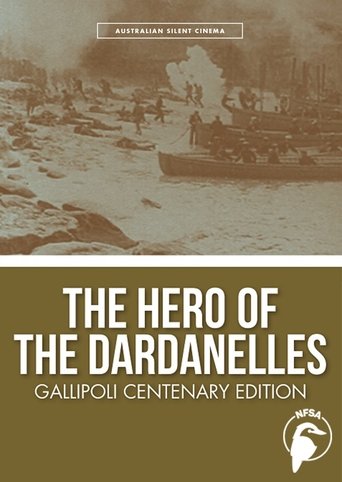
Guy Hastings was a little-documented Australian silent-era actor whose known screen work places him briefly in the film industry during the mid-1910s. He is credited in The Hero of the Dardanelles (1915), one of the most important early Australian war films, which dramatized the Gallipoli campaign and was used as both entertainment and patriotic wartime expression. Beyond this credit, surviving records about his life, training, and later career are scarce, which is not unusual for many performers from the silent period, especially those who worked in national cinemas outside Hollywood. His name appears in historical film references primarily because of that single surviving screen credit, suggesting either a very short acting career or one that was poorly documented in contemporary archival sources. Because the extant record is limited, it is not possible to reconstruct a detailed personal biography with confidence. He remains part of the broader cadre of early Australian screen performers who helped establish the country’s film culture during the silent era. His significance today lies less in celebrity than in his connection to one of the landmark productions of early Australian cinema.
More about Guy Hastings
On screen
No reliable contemporary descriptions of Guy Hastings's acting style survive. As a silent-era performer, his work would have relied on visual expression, gesture, and physical presence rather than spoken dialogue, in keeping with the conventions of 1910s cinema. Since no reviews or detailed production notes have been securely tied to him, any further characterization would be speculative.
In film history
Guy Hastings's cultural impact is tied almost entirely to his participation in The Hero of the Dardanelles, a film of national importance in Australia. That production is remembered as an early cinematic response to the First World War and the Gallipoli campaign, subjects that became deeply embedded in Australian historical memory and identity. Even though Hastings himself is not a widely documented star, his presence in such a film connects him to a formative moment in the country's screen history. Performers like him helped populate the silent-era films that shaped audience expectations for Australian cinema and demonstrated that locally made productions could address major contemporary events. His contribution is therefore archival and historical as much as performative, representing the many early actors whose work made the silent film era possible.
Later reputation
Guy Hastings's legacy is primarily that of an early Australian silent-film actor whose surviving credit links him to one of the country's notable wartime dramas. Because so little personal information remains, his historical importance rests on the preservation of the film record rather than on an extensive star persona. He stands as an example of the many performers whose careers were brief or poorly documented, yet who were still part of the industry’s foundational years. For film historians, names like his help fill out the cast lists and social history of early production practice. His legacy endures through archival film scholarship and databases that preserve the names of otherwise obscure silent-era contributors.
Influence
There is no evidence that Guy Hastings directly influenced later actors or directors in a documented, traceable way. His broader influence is indirect: by appearing in a significant early Australian feature, he became part of the body of work that established the grammar and ambitions of Australian silent cinema. That film, and the performers associated with it, helped demonstrate the viability of locally produced historical and patriotic dramas. In that sense, his contribution belongs to the collective influence of early screen actors rather than to a personally documented legacy of mentorship or star-making.
Off screen
No reliable biographical information about Guy Hastings's personal life has been located in widely available film reference sources. Details such as family background, marriage, children, residence, education, and later occupation are not currently documented with sufficient certainty. Like many minor silent-era performers, he may have left behind limited archival traces, especially if he did not continue in a long film career or public life.
Credits
- Appeared in The Hero of the Dardanelles (1915), a landmark silent war film in early Australian cinema
- Participated in one of the earliest screen dramatizations connected to the Gallipoli campaign
- Contributed to the development of the Australian silent film industry during its formative years
- Represents the generation of early screen actors whose work is preserved mainly through fragmentary film records and credits
Roles
- Role in The Hero of the Dardanelles (1915)
Films
- The Hero of the Dardanelles (1915)
Studios
- Likely associated with the Australian silent film production environment of the mid-1910s
Notes
- Guy Hastings is associated with one of the early Australian films about the Gallipoli campaign, a subject that later became central to Australian national memory.
- His surviving filmography is extremely short, with The Hero of the Dardanelles (1915) being the only widely documented credit.
- He is an example of how many silent-era performers are known today mainly through cast lists rather than full biographies.
- Because of the age of the film industry at the time, many records about performers like Hastings were never fully preserved or have been lost.
- The Hero of the Dardanelles was made during the First World War and is significant for its patriotic and historical themes.
- Hastings's career demonstrates how early cinema archives often preserve films more completely than the personal histories of the people who appeared in them.
Questions
Who was Guy Hastings?
Guy Hastings was an Australian silent-era actor known from the surviving record for appearing in The Hero of the Dardanelles (1915). Very little else about his personal or professional life has been preserved in widely available sources. He is best understood as part of the early Australian film community rather than as a major star.
What films is Guy Hastings best known for?
He is best known for The Hero of the Dardanelles (1915), a significant Australian silent war film. That is the main surviving screen credit associated with him in standard film references.
When was Guy Hastings born and when did he die?
His birth and death dates are not currently documented in reliable, widely available sources. The archival record for him is extremely limited, so both his birth place and death details remain unknown.
What awards did Guy Hastings win?
No awards or formal honors are known for Guy Hastings. Given the limited surviving record of his career, there is no evidence of documented nominations or industry awards.
What was Guy Hastings's acting style?
No contemporary description of his style has survived, but as a silent-film actor he would have worked within the expressive visual conventions of the 1910s. That typically meant strong physical presence, facial expression, and gesture to communicate character and emotion without spoken dialogue.
What is Guy Hastings's legacy in film history?
His legacy lies in his connection to early Australian cinema, especially a landmark wartime production. While he is not a widely documented star, his name survives as part of the historical cast record of an important silent film.