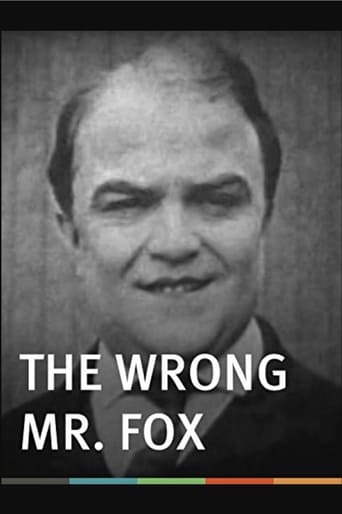
William Slade
Actor
- Active
- 1917-1917
Films 1
About William Slade
William Slade was a silent-era actor known for appearing in the 1917 film The Wrong Mr. Fox, but very little else about his life and career has survived in the standard reference sources for early cinema. He appears to have been a minor or supporting performer whose screen work was limited, and no substantial record of a broader acting career, stage background, or later filmography is readily documented in commonly available classic-film archives. Because he is represented in surviving film records primarily through a single credited appearance, he is best understood as one of the many early motion-picture performers whose contributions are preserved only in fragmentary form. There is no widely confirmed biographical information about his birth, death, family, education, or subsequent professional life. His name remains notable mainly for its association with a surviving credit in the silent era, which makes him of interest to historians and database researchers tracing obscure film personnel. In the absence of stronger archival evidence, his career must be treated as largely undocumented beyond the known 1917 screen appearance.
More about William Slade
In film history
William Slade's cultural impact is limited by the scarcity of surviving information, but his presence in an extant 1917 screen credit contributes to the historical record of silent cinema personnel. Actors like Slade helped populate the rapidly expanding film industry during the teens, when studios were producing large numbers of short and feature-length films and many performers appeared only briefly in the archival record. Even when a performer did not become a star, their work contributed to the texture, labor, and industrial growth of early American filmmaking. His name is therefore part of the larger mosaic of silent-era film history, reminding researchers how many contributors to early cinema remain underdocumented or unidentified beyond a single credit.
Later reputation
William Slade's legacy lies not in a celebrated body of work, but in the preservation of his name within silent-film documentation. For film historians, such names are important because they help reconstruct casting practices, production networks, and the often-incomplete personnel histories of the early industry. His surviving credit in The Wrong Mr. Fox (1917) gives him a small but tangible place in cinema history, even though the rest of his career has not been clearly established. He stands as one of many obscure performers whose limited documentation reflects the fragility of early film records and the uneven survival of studio paperwork, trade references, and contemporary reviews. In that sense, his legacy is archival as much as artistic. He remains a minor but valid entry in the historical ledger of silent-era performers.
Influence
There is no documented evidence that William Slade directly influenced later actors or directors in a traceable way. His influence is best understood indirectly, as part of the collective workforce of early film actors who helped shape the silent-era production environment. Performers like him contributed to the professionalization of screen acting during a formative period, even if their individual styles or methods were not recorded. His historical significance is therefore contextual rather than personal: he belongs to the generation that made early cinema possible, but left behind too little biographical material for detailed influence studies.
Off screen
No reliable public information has been located regarding William Slade's personal life, including marriage, family, residence, or activities outside of film. Standard silent-era documentation available for this name does not provide verified details about spouses, children, or education. As a result, any attempt to describe his private life in detail would be speculative. For a database entry, he should be listed as an early film actor with an undocumented personal history rather than as a figure with a well-recorded biography.
Credits
- Appeared in the silent film The Wrong Mr. Fox (1917)
- Represents one of the many early film performers documented only by limited surviving credits
- His name is preserved in classic-cinema reference data despite the scarcity of biographical detail
- Serves as an example of the many lesser-known actors active in the silent era whose careers remain partially lost to history
Films
- The Wrong Mr. Fox (1917)
Notes
- William Slade is documented in relation to a 1917 silent film credit, but little else is reliably known about him.
- He is an example of an early cinema performer whose career survives mainly through filmographic reference rather than biography.
- His known screen activity appears to have been extremely brief, at least in currently accessible records.
- Because many silent-era records are incomplete, it is possible that additional credits existed but have not been securely attributed.
- He should not be confused with any later figures of the same or similar name, as the classic-cinema record points specifically to the 1917 actor credit.
- His limited documentation makes him of particular interest to researchers focused on lost or obscure silent-era performers.
Questions
Who was William Slade?
William Slade was a silent-era actor who is known from a 1917 screen credit in The Wrong Mr. Fox. Beyond that appearance, surviving biographical information is extremely limited, and he is one of many early film performers whose careers are only sparsely documented.
What films is William Slade best known for?
He is best known for The Wrong Mr. Fox (1917), which is the primary film credit currently associated with him. No broader filmography is reliably documented in the standard classic-cinema record available for this name.
When was William Slade born and when did he die?
His birth and death dates are not confirmed in the available records. Likewise, his place of birth and place of death are not reliably documented in currently accessible classic-film sources.
What awards did William Slade win?
No awards or nominations are known for William Slade from the surviving record. He appears to have been a minor silent-era performer rather than a nationally recognized star with documented honors.
What was William Slade's acting style?
His acting style cannot be reliably assessed because no detailed reviews, interviews, or substantial surviving filmography are available. As a silent-era actor, he would have worked in the expressive visual style typical of the period, but specific techniques attributed to him are not documented.
What is William Slade's legacy in film history?
His legacy is primarily archival: he remains part of the historical record of silent cinema through his 1917 film credit. Even without a large surviving body of work, his presence helps historians reconstruct the personnel of early filmmaking.