Maria Ouspenskaya
Actor
Born: July 24, 1876 in Tula, Russian Empire Died: December 3, 1949 Active: 1916-1949 Birth Name: Maria Alekseyevna Ouspenskaya
Films
1 film
About Maria Ouspenskaya
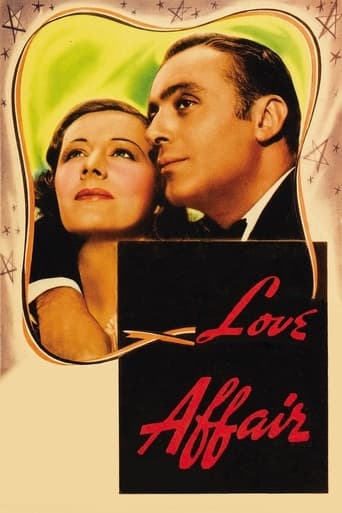
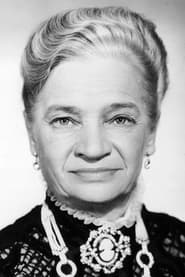
Russian-born actress who became one of Hollywood's most memorable character actresses during the Golden Age. She began her illustrious career as a stage actress in Russia, where she was a member of the prestigious Moscow Art Theatre under the Konstantin Stanislavski, learning his revolutionary acting system firsthand. After emigrating to the United States in the 1920s, she established her own acting school in New York City, teaching the Stanislavski method to American actors before transitioning to film work in her late 50s. Despite beginning her Hollywood career at an advanced age, she quickly became typecast as elegant, aristocratic European women, often playing mothers, grandmothers, or mysterious figures with an air of authority and wisdom. Her breakthrough came with her role as the grandmother in 'Love Affair' (1939), which earned her the first of two Academy Award nominations for Best Supporting Actress. She continued acting throughout the 1940s, appearing in diverse films from romantic dramas to horror classics, with her most role being Maleva the gypsy woman in 'The Wolf Man' (1941). Tragically, her career was cut short when she died from injuries sustained in a house fire at her home in Los Angeles in 1949.
The Craft
On Screen
Ouspenskaya's acting style was deeply rooted in the Stanislavski system, which she learned directly from the master himself. Her performances were characterized by intense psychological realism, precise emotional control, and a commanding presence that belied her small stature. She brought an authentic European aristocratic dignity to her roles, often playing characters with wisdom, mystery, or maternal authority. Her distinctive Russian accent and piercing eyes became trademarks, allowing her to convey complex emotions with minimal dialogue. Even in genre films like horror, she maintained a level of serious dramatic commitment that elevated her performances above typical genre conventions.
Milestones
- Member of Moscow Art Theatre under Stanislavski
- Founded acting school in New York teaching Stanislavski method
- Academy Award nomination for Love Affair (1939)
- Academy Award nomination for Dance, Girl, Dance (1940)
- Iconic role as Maleva in The Wolf Man (1941)
- Established herself as a leading character actress in Hollywood despite starting film career in her 60s
Best Known For
Iconic Roles
Must-See Films
Accolades
Won
- Academy Award nomination for Best Supporting Actress for Love Affair (1939)
- Academy Award nomination for Best Supporting Actress for Dance, Girl, Dance (1940)
Nominated
- Academy Award for Best Supporting Actress for Love Affair (1939)
- Academy Award for Best Supporting Actress for Dance, Girl, Dance (1940)
Special Recognition
- Two-time Academy Award nominee
- Member of the prestigious Moscow Art Theatre
- Recognized as one of Hollywood's most character actresses of the 1940s
Working Relationships
Worked Often With
Studios
Why They Matter
Impact on Culture
Maria Ouspenskaya significantly impacted Hollywood by bringing authentic Russian theatrical training and the Stanislavski method to American cinema at a time when these techniques were still relatively unknown in the film industry. Her success as a character actress in her 60s and 70s challenged Hollywood's ageism and demonstrated that older actresses could play vital, memorable roles beyond stereotypical parts. Her portrayal of Maleva in 'The Wolf Man' created one of cinema's most enduring horror characters, influencing countless subsequent depictions of mystical, wise women in horror films. She helped pave the way for other foreign-born character actors in Hollywood, proving that authenticity and theatrical training could overcome language barriers and cultural differences.
Lasting Legacy
Maria Ouspenskaya's legacy endures through her iconic film performances and her influence on American acting techniques. As one of the first actresses to bring the Stanislavski system to Hollywood, she indirectly influenced generations of method actors who would follow. Her dual Academy Award nominations for her first two American films remains a remarkable achievement, testifying to her immediate impact on Hollywood. Her role as Maleva in the Wolf Man series has become a touchstone of classic horror cinema, frequently referenced and parodied in popular culture. She is remembered as a bridge between the rich theatrical traditions of Russia and the emerging realism of American cinema, and as proof that talent and dedication could create a significant Hollywood career regardless of age or origin.
Who They Inspired
Ouspenskaya influenced American cinema primarily through her teaching of the Stanislavski method at her New York acting school, which helped introduce these revolutionary techniques to American actors before they became widespread in Hollywood. Her success as a character actress in her later years demonstrated the value of maturity and experience in film performance, challenging Hollywood's obsession with youth. Her dignified, psychologically complex approach to character roles elevated the status of supporting actors and showed that even smaller parts could be played with depth and authenticity. Many subsequent character actresses, particularly those playing European or aristocratic roles, were clearly influenced by her distinctive style and presence.
Off Screen
Maria Ouspenskaya never married and had no children, dedicating her entire life to her art and teaching. She was known as a private person who maintained a certain mystique throughout her career, rarely discussing her personal life in interviews. Her dedication to her craft was absolute, and she was respected by colleagues for her professionalism and theatrical background. She lived modestly despite her Hollywood success, maintaining connections to her Russian heritage and theatrical roots. Her death in 1949 was particularly tragic - she suffered severe burns while trying to rescue her dog from a house fire and died several days later in the hospital.
Education
Trained at the Moscow Art Theatre under Konstantin Stanislavski, where she learned his revolutionary acting system firsthand. She also studied at the Philharmonic School in Moscow before joining the theatre company.
Did You Know?
- She began her Hollywood film career at age 60, making her one of the oldest actresses to achieve major success as a newcomer
- She was a direct student of Konstantin Stanislavski at the Moscow Art Theatre
- Despite her Russian accent, she spoke fluent English and French
- She founded her own acting school in New York, the Maria Ouspenskaya School of Acting
- Her role as Maleva in The Wolf Man was so popular that she reprised it in the sequel Frankenstein Meets the Wolf Man
- She was only 5'2" tall but had such a commanding presence that she appeared much taller on screen
- She was nominated for Academy Awards for her first two American films
- She died from injuries sustained while trying to rescue her dog from a house fire
- She was one of the first actresses to bring authentic Russian theatrical training to Hollywood
- Her distinctive pronunciation of 'werewolf' in The Wolf Man became iconic and is frequently imitated
In Their Own Words
In The Wolf Man: 'Even a man who is pure in heart and says his prayers by night, may become a wolf when the wolfbane blooms and the autumn moon is bright.'
About acting: 'The actor must not be afraid to be ugly. He must not be afraid to be ridiculous. He must not be afraid to be himself.'
On her late start in films: 'Age is only important if you're cheese or wine. In acting, experience is everything.'
From Love Affair: 'You must not be afraid to love. It is the only thing that matters in this world.'
Frequently Asked Questions
Who was Maria Ouspenskaya?
Russian-born actress who became a prominent character actress in Hollywood's Golden Age. She was a member of the Moscow Art Theatre under Stanislavski and founded her own acting school before transitioning to film in her 60s, earning two Academy Award nominations for her first two American films.
What films is Maria Ouspenskaya best known for?
Titles linked here include Love Affair (1939), Dance, Girl, Dance (1940).
When was Maria Ouspenskaya born and when did she die?
Born July 24, 1876; died December 3, 1949.
What awards did Maria Ouspenskaya win?
While she didn't win, Maria Ouspenskaya received two Academy Award nominations for Best Supporting Actress: one for 'Love Affair' (1939) and another for 'Dance, Girl, Dance' (1940). This was remarkable considering these were her first two American film roles.
What was Maria Ouspenskaya's acting style?
Her acting style was rooted in the Stanislavski method, which she learned directly from Stanislavski himself. She was known for intense psychological realism, precise emotional control, and bringing authentic European dignity to her roles, often playing wise, mysterious, or aristocratic characters with commanding presence.