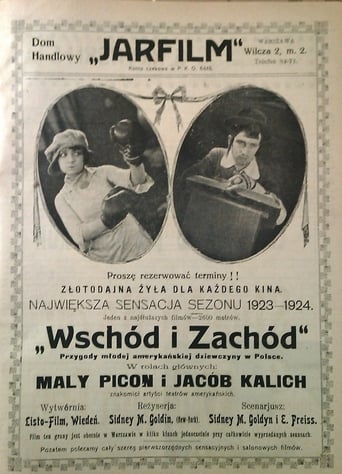
Ivan Abramson
Director
- Active
- primarily 1910s-1923
Films directed 1
About Ivan Abramson
Ivan Abramson was an early American motion-picture director, producer, and writer active in the silent era, best known today for directing the 1923 film East and West. He emerged during the formative years of the American film industry, when many filmmakers were transitioning from stage-oriented productions to the more visual grammar of cinema. Abramson was associated with the making of melodramatic, socially oriented, and often sensational silent films, a mode that was especially popular with audiences in the 1910s and early 1920s. His surviving screen credit history is sparse, and much of his career is reconstructed from trade references and film records rather than extensive personal documentation. Because of that, he remains a comparatively obscure figure in classic-film history despite having worked in a period of rapid creative change. His known directing work suggests a filmmaker interested in strong narrative situations and moral or emotional conflict, characteristic of many independent silent-era producers. Beyond his credited films, little reliable detail has survived about his later life, making him one of the many early cinema craftsmen whose work is remembered more clearly than his biography.
More about Ivan Abramson
Behind the camera
Abramson appears to have worked in the emotionally heightened, plot-driven style typical of silent-era melodrama, emphasizing strong situations, moral tensions, and clear visual storytelling. Like many directors of the period, his work would have relied heavily on expressive framing, performance readable without dialogue, and dramatic incident designed to hold audience attention in a few intertitles and images. The surviving record does not support a highly individualized auteur profile, but his films fit the broader early-20th-century pattern of earnest, sensational, and sometimes issue-based storytelling. His direction seems most closely aligned with independent production values rather than the polished house style of the major studios.
In film history
Ivan Abramson's cultural impact lies less in broad public fame than in what his career represents: the large body of early American filmmakers who helped define silent-era feature production. Directors like Abramson contributed to the expansion of film narrative grammar during a period when cinema was still establishing itself as a mass art form. His work, especially East and West, belongs to the historical record of independent melodrama and the kinds of socially inflected films that circulated widely before the studio era fully standardized production. Even when individual titles are now obscure or lost, filmmakers like Abramson help historians understand the diversity of early American cinema beyond the best-known studio names. His legacy is therefore archival as much as artistic. He stands as a reminder that classic cinema was built not only by the major auteurs whose films are still widely screened, but also by working directors whose output shaped audience taste and industrial practice in the silent era. For researchers, he is valuable as part of the broader ecosystem of early film entrepreneurship, where directing, producing, and writing often overlapped. In that sense, Abramson contributes to the historical foundation of American feature filmmaking, even if his surviving reputation is modest.
Later reputation
Abramson's lasting legacy is primarily historical: he is remembered as a silent-era filmmaker who participated in the development of American feature cinema and melodramatic storytelling. Because so little biographical information has survived, his importance is measured more through his place in early film production than through a widely celebrated body of extant work. He remains of interest to film historians, archivists, and database researchers who study the many overlooked figures who helped build the silent film industry. His name persists as part of the documentary record of classic cinema, especially in connection with East and West (1923).
Influence
Any influence Abramson had would have been within the immediate sphere of early silent filmmaking: shaping story construction, production methods, and the melodramatic tone popular with audiences of the time. There is no well-documented evidence that he developed a school of followers or directly mentored major later figures. His broader influence is indirect, through the accumulation of techniques and production norms that were absorbed into mainstream American cinema. As with many early directors, his work helped normalize the feature-length narrative form and the use of strongly visual dramatic storytelling.
Off screen
Very little verified information survives about Ivan Abramson's personal life, including his family background, marriages, or descendants. He appears in historical records primarily through his film credits rather than through interviews, memoirs, or detailed press profiles. Because of the fragmentary nature of surviving documentation, many personal details remain unknown. No reliable evidence was found here for a well-documented public personal life or major off-screen notoriety.
Credits
- Worked in the silent-era American film industry as a director, producer, and writer
- Directed East and West (1923), the film most clearly associated with his name in surviving filmographies
- Participated in the production culture of independent melodramas and socially charged silent pictures
- Built a career during the transitional years when feature-length storytelling became the dominant commercial form
- Represents the many early filmmakers whose reputations are preserved mainly through film credits and trade records
Films
- East and West (1923)
Studios
- Independent silent film production
Notes
- He is most clearly associated in surviving filmographies with East and West (1923).
- He worked during the silent era, when many directors also wrote or produced their own films.
- Compared with many better-known contemporaries, remarkably little biographical information has survived about him.
- His career reflects the importance of independent production in early American cinema.
- He is an example of a filmmaker whose reputation rests more on archival records than on widely circulating modern viewership.
- His work belongs to the period when silent films often explored melodrama, morality, and social tension in highly visual ways.
- Because of sparse documentation, he is often overlooked in popular histories of classic Hollywood despite being part of the industry's formative years.
Questions
Who was Ivan Abramson?
Ivan Abramson was an American silent-era filmmaker known as a director, producer, and writer. He is most closely associated today with the 1923 film East and West. His career belongs to the formative years of American feature filmmaking.
What films is Ivan Abramson best known for?
He is best known for East and West (1923), which is the principal surviving film credit tied to his name in many film records. Beyond that, his broader body of work is not well documented in readily available sources. His reputation is therefore based largely on his silent-era directing career rather than on a long list of famous surviving titles.
When was Ivan Abramson born and when did he die?
His birth date and death date are not reliably established in the available record used here. Many details of his private life remain undocumented or difficult to verify. He is primarily known through his film credits rather than through a detailed biographical archive.
What awards did Ivan Abramson win?
No verified awards or major honors are documented for Ivan Abramson in the available record. This is not unusual for silent-era filmmakers, many of whom worked before the modern awards culture developed. His significance is historical rather than awards-based.
What was Ivan Abramson's directing style?
His directing style appears to have fit the silent-era melodramatic tradition, emphasizing emotional conflict, strong situations, and visual storytelling. Like many directors of his time, he would have relied on expressive performances and clear narrative staging rather than dialogue-driven drama. The surviving evidence suggests an independent, story-first approach typical of early feature filmmaking.
What is Ivan Abramson's legacy in film history?
Ivan Abramson's legacy is as part of the generation of early American filmmakers who helped build the silent film industry. Even though he is not widely known today, his work contributes to the historical record of feature-length cinema and independent production. He is remembered by film historians as one of the many craftsmen who shaped classic cinema's foundations.