Alfred Rolfe
Director
- Active
- 1915-1915
Films directed 1
About Alfred Rolfe
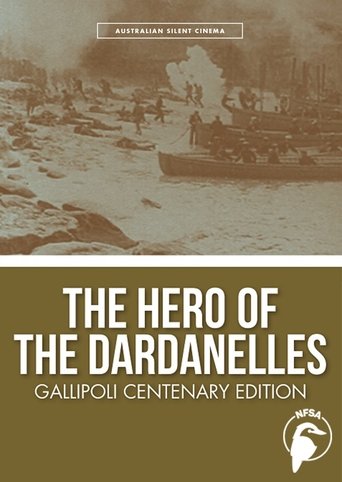
Alfred Rolfe was an Australian film director, producer, and occasional actor who became one of the key figures in the formative years of the Australian silent film industry. He is especially remembered for directing The Hero of the Dardanelles (1915), a notable wartime drama that reflected the patriotic themes and topical urgency of Australian cinema during World War I. Rolfe was active in the mid-1910s, a period when the local industry was still experimenting with feature-length storytelling and developing a distinct national screen identity. His work is associated with the early bush, adventure, and military pictures that helped define Australian popular filmmaking before Hollywood dominance reshaped exhibition habits. Because film records from the era are incomplete, many details of his personal life and full filmography are now difficult to verify with certainty. Even so, he remains an important early director whose surviving reputation rests on his contribution to the emergence of feature filmmaking in Australia. His name is preserved in film history chiefly through silent-era trade references, contemporary press accounts, and later archival research into Australian cinema's pioneer period.
More about Alfred Rolfe
Behind the camera
Rolfe's directing style, as understood from the surviving historical record, appears to have been straightforward and narrative-driven, shaped by the conventions of the early silent feature. Like many directors of the period, he relied on clear staging, economical storytelling, and strongly visual situations that could be understood without dialogue. The Hero of the Dardanelles suggests an emphasis on patriotic spectacle, dramatic incident, and accessible emotional appeal rather than elaborate technical experimentation. His work fits the broader early Australian silent tradition, which often favored outdoor settings, broad action, and readily legible melodrama.
In film history
Alfred Rolfe's cultural importance lies less in a large surviving body of work than in his role as part of the first generation of filmmakers who gave Australian cinema its early shape. The Hero of the Dardanelles helped demonstrate that Australian production could respond quickly to contemporary national events and translate them into emotionally charged screen drama. In the context of World War I, films like Rolfe's contributed to a sense of shared patriotic identity and helped establish cinema as a medium with social and political resonance, not merely entertainment. His work belongs to the broader story of how local filmmakers in the silent era sought to create an Australian screen voice before imported American product came to dominate the market. Even where prints have not survived, the film-historical record preserves his contribution as part of the foundation of Australian national cinema.
Later reputation
Rolfe's lasting legacy is primarily historical and archival: he is remembered by film historians as one of the early directors who helped demonstrate the viability of feature-length Australian production in the silent era. The significance of The Hero of the Dardanelles has made his name a recurring reference point in discussions of wartime screen propaganda, national identity, and early local filmmaking. His career also illustrates the fragility of silent-era film history, where many important artists are known from documentation rather than a surviving body of widely screened films. In Australian film history, he stands as part of the small group of pioneers whose work laid groundwork for later national cinema traditions. For researchers and enthusiasts of silent film, Rolfe's importance lies in what his career reveals about the ambitions, themes, and limitations of the Australian industry in the 1910s.
Influence
Alfred Rolfe influenced the development of Australian silent cinema by participating in the early move toward feature-length storytelling and by helping legitimize locally made films as vehicles for current events and national sentiment. His wartime film work contributed to a template that other filmmakers could follow: topical subject matter, broad emotional appeal, and clear visual narration suited to silent exhibition. While there is no strong evidence of a direct line of personal mentorship to later famous directors, his films formed part of the environment that shaped subsequent Australian screen production. His influence is therefore best understood as institutional and historical rather than as a visible auteurist school. In film history, he represents the generation that made later Australian filmmaking possible by proving that domestic productions could address the tastes and concerns of local audiences.
Off screen
Very little reliable biographical information about Alfred Rolfe's personal life has survived in widely accessible film histories. His marriages, family background, education, and later life are not well documented in the standard references available for early Australian cinema. This lack of documentation is not unusual for silent-era Australian filmmakers, many of whom worked in a fragile industry whose records were never comprehensively preserved. As a result, any detailed account of his private life would be speculative and is best left unasserted until corroborated by archival sources.
Credits
- Directed The Hero of the Dardanelles (1915), one of the best-known Australian silent war films of its period.
- Worked during the crucial early years of Australian feature filmmaking, when local studios were trying to build a national cinema.
- Contributed to the wartime patriotic film cycle that used cinema to support recruitment, morale, and public identification with the ANZAC war effort.
- Was part of the generation of early directors whose work helped establish the commercial possibilities of longer narrative films in Australia.
- His surviving reputation is tied to film-historical scholarship on the silent era and the preservation of early Australian screen culture.
Films
- The Hero of the Dardanelles (1915)
Studios
- Early Australian film production companies active in the silent era
Notes
- He is chiefly remembered today for a single surviving title in film histories, The Hero of the Dardanelles (1915).
- His career sits squarely in the silent era, before standardized crediting and record-keeping became common in Australian production.
- He worked at a time when Australian filmmakers were strongly influenced by stage melodrama, topical journalism, and bush adventure traditions.
- Film historians often discuss him in the context of World War I patriotic cinema and early feature-length production.
- Many details of his biography remain uncertain, which is common for pioneers of the early Australian film industry.
- His name is preserved more securely in archival and reference sources than in the surviving film prints themselves.
- He is an example of an important early filmmaker whose reputation rests on historical significance rather than a large accessible filmography.
Questions
Who was Alfred Rolfe?
Alfred Rolfe was an Australian silent-era film director, producer, and occasional actor. He is best known for directing The Hero of the Dardanelles (1915), an important wartime film from the early Australian cinema period.
What films is Alfred Rolfe best known for?
He is primarily remembered for The Hero of the Dardanelles (1915). Because records from the period are incomplete, that film remains the key title associated with his name in film history.
When was Alfred Rolfe born and when did he die?
His birth and death dates are not reliably documented in the widely available references for early Australian film history. This is common for many silent-era filmmakers whose personal records were not fully preserved.
What awards did Alfred Rolfe win?
No verified awards or formal honors are commonly recorded for Alfred Rolfe. Recognition of his work is mainly historical and scholarly, especially in relation to early Australian silent cinema.
What was Alfred Rolfe's directing style?
His directing style appears to have been practical, visually direct, and narrative-focused, in keeping with the silent feature conventions of the 1910s. His best-known film suggests an emphasis on patriotic drama, clear staging, and accessible emotional storytelling.
What is Alfred Rolfe's legacy in film history?
Rolfe's legacy is tied to the foundation of Australian feature filmmaking and the wartime film culture of the 1910s. He is remembered as part of the first generation of filmmakers who helped establish cinema as a national medium in Australia.
Was Alfred Rolfe mainly an actor or a director?
He is primarily known as a director. Some references also describe him as a producer or occasional actor, but his historical reputation comes chiefly from his directing work.