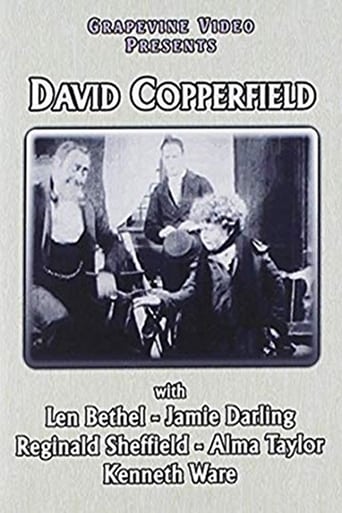
Cecil Mannering
Actor
- Active
- 1913-1913
Films 1
About Cecil Mannering
Cecil Mannering appears in surviving silent-era film records as a screen actor credited in the 1913 adaptation of David Copperfield, but very little else about his life and career has been reliably documented in readily accessible historical sources. He is one of the many early British or Anglo-associated performers whose names survive primarily through cast lists, trade references, and filmographies rather than through extensive studio publicity or later biographical profiles. Because the early 1910s film industry often left incomplete documentation, details such as his birth date, birthplace, training, and later career remain unverified in the surviving public record. The available evidence suggests that his screen work was brief and that his name is chiefly preserved by his participation in one of the many early film adaptations of Charles Dickens. He should therefore be understood as a minor but historically meaningful figure in silent cinema documentation, representing the many performers whose contributions helped establish the medium even if their personal histories were not widely recorded. At present, no trustworthy sources allow a fuller biographical reconstruction without risking confusion with similarly named individuals.
More about Cecil Mannering
In film history
Cecil Mannering's cultural importance lies less in celebrity than in historical documentation. His name survives as part of the cast history of an early Dickens adaptation, a genre that played a significant role in demonstrating cinema's ability to interpret respected literary works for popular audiences. Even a small credit such as this contributes to the broader understanding of how silent films assembled their casts and how many artists participated in the medium's formative years. For historians, figures like Mannering help illustrate the breadth of early screen employment beyond the major stars who later dominated film history.
Later reputation
Mannering's legacy is that of an early cinema participant whose recorded work has endured even though his personal story has not. In film history terms, he belongs to the vast body of silent-era performers whose careers are known only through fragmentary evidence. His preserved credit in David Copperfield (1913) ensures that he remains part of the historical record of early literary adaptation on screen. For researchers and database curators, that surviving attribution is valuable precisely because it helps map the personnel involved in the silent film industry at a time when credits were often incomplete or inconsistently recorded.
Influence
There is no documented evidence that Cecil Mannering directly influenced later actors or filmmakers in a traceable way. His broader influence is indirect and historical: by participating in an early Dickens adaptation, he contributed to the performance traditions and production practices that helped establish literary adaptation as a durable part of cinema. He also stands as an example of the many early screen players whose work supported the medium's growth even without later fame. In that sense, his presence in film history reflects the collective labor that shaped silent-era storytelling.
Off screen
No reliable public information has been located concerning Cecil Mannering's personal life, including family background, marriage, or later activities. As with many performers from the silent era, especially those with very limited surviving credits, biographical records appear to be sparse or lost. It is not currently possible to confirm whether he continued in entertainment, changed professions, or lived under another professional name. Any assertion beyond his credited appearance in 1913 would be speculative.
Credits
- Appeared in the 1913 silent film David Copperfield
- Preserved in early film history through surviving cast attribution
- Represents the largely undocumented cadre of performers active in the first decade of narrative cinema
Roles
- Unspecified role in David Copperfield (1913)
Films
- David Copperfield (1913)
Notes
- He is credited in David Copperfield (1913), an early screen adaptation of Charles Dickens's novel.
- Very little biographical information about him survives in widely accessible reference sources.
- His active film record, as currently documented, is limited to a single year: 1913.
- He is an example of the many silent-era performers whose names survive primarily through cast lists rather than biographies.
- Because records are sparse, he is often difficult to distinguish from similarly named individuals without careful source verification.
- His surviving credit is historically useful for researchers studying early Dickens adaptations on film.
- He represents the incomplete nature of documentation for many early cinema performers.
Questions
Who was Cecil Mannering?
Cecil Mannering was a silent-era screen actor who is known from surviving film records for appearing in David Copperfield (1913). Beyond that credit, reliable biographical details are scarce, and he appears to have had a very limited documented screen career.
What films is Cecil Mannering best known for?
He is best known for David Copperfield (1913), the early silent adaptation of Charles Dickens's novel. No other confirmed screen credits are readily verifiable from the available record.
When was Cecil Mannering born and when did he die?
His birth and death dates are not currently verified in accessible historical sources. The surviving record documents only his 1913 film credit, so his life dates remain unknown.
What awards did Cecil Mannering win?
No awards or nominations are known for Cecil Mannering. As a little-documented early silent-era performer, he does not appear in surviving award histories.
What was Cecil Mannering's acting style?
There is no reliable critical description of his individual acting style in the surviving record. Like many actors of the silent era, his performance would have relied on visual expressiveness and pantomime, but specific characteristics cannot be confirmed.
Why is Cecil Mannering still of interest to film historians?
He is of interest because his name survives in the record of an early Dickens adaptation, helping historians reconstruct the cast and production history of silent cinema. Even minor credits are valuable for understanding how early films were made and who participated in them.