
Madeleine Rodrigue
Actor
- Active
- 1925-1925
Films 1
About Madeleine Rodrigue
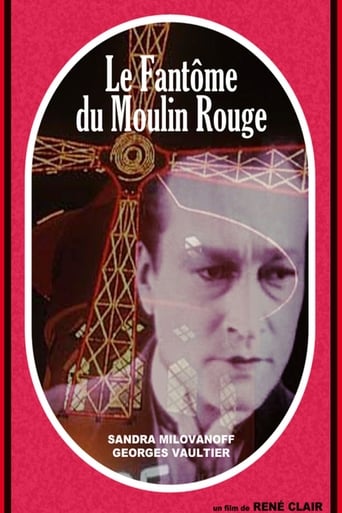
Madeleine Rodrigue is a largely undocumented silent-era screen performer who is credited in The Phantom of the Moulin-Rouge (1925), a French serial-era or melodramatic production associated with the mid-1920s European cinema landscape. Surviving reference material indicates that she worked as an actor during 1925, but available public records do not provide a fuller biographical profile, making her one of the many early-film performers whose careers are known primarily through surviving credits rather than extensive press coverage. Because of this scarcity of documentation, her training, stage background, family origins, and later life remain unclear in standard film references. Her known screen activity places her within the silent-film period, when performers often moved between stage, regional productions, and short-lived film companies with limited archival preservation. At present, she is best understood as a historical screen credit associated with a single surviving title rather than as a widely documented celebrity of the era. Further research in French archival sources, studio records, and contemporary trade papers may reveal additional details about her identity and career. Her presence in film history is still significant as part of the broader, often under-credited body of silent cinema performers whose contributions helped shape early screen acting.
More about Madeleine Rodrigue
In film history
Madeleine Rodrigue's cultural impact is difficult to quantify because the surviving record is extremely limited, but her credit is still part of the historical fabric of silent cinema. Performers like Rodrigue helped populate the screens of the 1920s, contributing to the dramatic texture and visual storytelling that defined the era even when their names did not become widely famous. Her presence in The Phantom of the Moulin-Rouge places her within the rich tradition of French and European silent filmmaking, a field that strongly influenced editing, mise-en-scène, and screen performance internationally. In a broader cultural sense, her obscurity is itself instructive: it reflects how many early film artists, especially women and supporting players, were under-documented despite their participation in important productions.
Later reputation
Her legacy lies primarily in historical preservation and film scholarship rather than popular fame. Because Madeleine Rodrigue is known chiefly from a surviving credit, she exemplifies the many early cinema artists whose contributions are reconstructed from fragmentary evidence. For archivists and historians, such names are important markers of production history, casting practices, and the networks of silent-era filmmaking. If additional archival documentation emerges, her legacy could expand from a single credit to a more complete understanding of her role in early French cinema.
Influence
There is no documented evidence that Madeleine Rodrigue directly influenced later actors or filmmakers in a traceable way. However, as part of the silent-film generation, her work contributed to the evolving performance conventions of the period, including expressive gesture, visual clarity, and narrative immediacy. The cumulative influence of performers like her helped establish the acting language that would carry over into early sound cinema. Her historical value today is mainly as a participant in a foundational era of screen acting rather than as a documented trendsetter.
Off screen
No reliable public information is currently available about Madeleine Rodrigue's personal life, including marriage, family background, residence, or later career. Surviving references do not provide enough detail to identify spouses, children, or other biographical circumstances with confidence. As with many silent-era performers, any personal history may be dispersed across local archives, civil records, or period newspapers rather than centralized film biographies. Until corroborating evidence is located, her private life remains undocumented in standard reference sources.
Credits
- Screen credit in the 1925 silent-era production The Phantom of the Moulin-Rouge
- Participation in early French or Francophone cinema of the mid-1920s
- Representation of the many lesser-documented silent-film performers whose work survives mainly through cast lists
Roles
- Role in The Phantom of the Moulin-Rouge (1925)
Films
Notes
- Madeleine Rodrigue is currently known from only a very small surviving body of film-reference data.
- Her documented screen activity is tied to a single year, 1925.
- The Phantom of the Moulin-Rouge (1925) is her only confirmed credit in the information currently available.
- She is part of the large group of silent-era performers whose careers are difficult to reconstruct because of incomplete archival survival.
- No authoritative public record currently confirms her birth date, death date, or birthplace in standard film references.
- Her obscurity makes her a useful example of how many women in early cinema were essential to productions but remained under-recorded in later histories.
Questions
Who was Madeleine Rodrigue?
Madeleine Rodrigue was a silent-era screen actor known from her credit in The Phantom of the Moulin-Rouge (1925). Very little biographical information about her has survived in widely available sources, so she is best understood as a lesser-documented performer from early cinema. Her surviving credit places her within the French or Francophone film world of the mid-1920s.
What films is Madeleine Rodrigue best known for?
She is best known for The Phantom of the Moulin-Rouge (1925), which is the only confirmed film credit currently associated with her in the available record. Additional titles may exist in archival or local sources, but they are not reliably established in standard references. As a result, her known filmography is extremely limited.
When was Madeleine Rodrigue born and when did she die?
Her birth and death dates are not currently documented in the accessible reference material. Likewise, her birthplace and death location are not confirmed. This is common for some silent-era supporting performers whose careers were recorded mainly through cast lists.
What awards did Madeleine Rodrigue win?
No awards or nominations are currently documented for Madeleine Rodrigue in the available film records. That does not necessarily mean she received none; rather, it reflects the limited surviving information about her career. Silent-era performers outside major stardom were often not tracked by modern awards systems.
What was Madeleine Rodrigue's acting style?
Her specific acting style is not described in surviving reference sources. Because she worked in silent cinema, her performance would likely have relied on visual expressiveness, gesture, and facial expression, as was typical of the period. Beyond that general context, no verified commentary on her technique is currently available.
What is Madeleine Rodrigue's legacy in film history?
Her legacy is primarily archival and historical: she represents the many early film artists whose names survive even when detailed biographies do not. She is a reminder that silent cinema was built not only by major stars but also by many lesser-known performers whose work still shaped the final films. Her credit helps preserve the production history of The Phantom of the Moulin-Rouge and the broader silent-era screen culture.