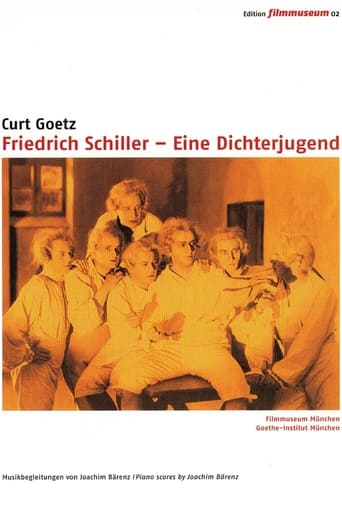
Rudolf Klein-Rhoden
Actor
- Active
- 1923-1923
Films 1
About Rudolf Klein-Rhoden
Rudolf Klein-Rhoden was a German actor active in the silent-film era, with documented screen work in the early 1920s. He is credited in Friedrich Schiller - Eine Dichterjugend (1923), a historical literary biopic that reflects the period's strong German interest in prestige costume dramas and cultural subjects. Beyond this film credit, readily verifiable information about his life and career is scarce, which suggests that he was likely a supporting or character performer rather than a major star of the era. As with many actors from the silent period, his surviving legacy is tied more to filmographies and archival records than to widely circulated biographical detail. His name appears in German-language film history contexts, indicating that he worked within the Weimar-era cinema ecosystem. Because available sources do not reliably preserve his birth, death, or personal history, many details of his life remain undocumented in standard reference material. Even so, his presence in an important early-1920s production places him within the formative years of German silent cinema.
More about Rudolf Klein-Rhoden
On screen
No detailed contemporary descriptions of Rudolf Klein-Rhoden's acting style have survived in accessible reference sources. Given the conventions of early-1920s German silent cinema, his performance would have relied on expressive physical gesture, facial clarity, and a stage-informed sense of presence suited to silent storytelling. His work was likely aligned with the restrained yet visually legible style common in historical and literary films of the era. Without surviving reviews or performance analysis, any more specific characterization would be speculative.
In film history
Rudolf Klein-Rhoden's cultural impact is best understood as part of the broader ensemble of actors who populated Weimar-era German cinema. While he does not appear to have left a widely documented star persona, his participation in a historical literary film connects him to Germany's early efforts to adapt canonical cultural figures for the screen. Actors like him helped establish the credibility and texture of silent-era prestige pictures, where even smaller roles contributed to the film's historical atmosphere and emotional authority. His legacy lies in representing the many working performers whose names survive in credits even when detailed biographies do not.
Later reputation
His lasting legacy in film history is primarily archival and historiographic: he is one of the many silent-era actors whose work is preserved through film credits and filmographies rather than through a robust public persona. For researchers and cinephiles, his name is a reminder of the collaborative, often anonymous labor that underpinned early cinema, especially in Germany's highly productive silent period. If prints or records of Friedrich Schiller - Eine Dichterjugend survive, his performance remains a small but genuine part of silent German film heritage. In the absence of fuller biographical evidence, his legacy is modest but still meaningful within classic cinema scholarship.
Influence
There is no evidence that Rudolf Klein-Rhoden exerted a documented influence on later actors or directors in the way major silent-era stars did. His importance is instead indirect: he participated in the performance culture that shaped the style and standards of early German screen acting. Supporting actors of his type influenced the overall aesthetic of ensemble filmmaking by reinforcing the disciplined, expressive performance norms of silent cinema. Any deeper influence would need to be established through archival criticism, casting records, or contemporary reviews, none of which are readily available here.
Off screen
No reliably verified information has been found in accessible sources regarding Rudolf Klein-Rhoden's personal life, including marriages, family background, or later-life activities. His biographical footprint in standard film references is minimal, which is not unusual for performers whose careers were brief or whose surviving records are incomplete. As a result, details about his private life should be treated as unknown rather than inferred. Any claims about family, education, or later career would require archival confirmation.
Credits
- Appeared in Friedrich Schiller - Eine Dichterjugend (1923), a period film centered on the early life of Friedrich Schiller.
- Worked during the Weimar Republic era, one of the most artistically significant periods in German silent cinema.
- Represents the kind of supporting-screen presence that contributed to the texture and historical authenticity of early German prestige productions.
Roles
- Role in Friedrich Schiller - Eine Dichterjugend (1923)
Films
Notes
- He is known from a single readily verifiable film credit in the early 1920s.
- His credited film, Friedrich Schiller - Eine Dichterjugend, belongs to the German silent prestige tradition.
- He worked during the Weimar Republic, a landmark era for world cinema.
- His biographical details are not well preserved in standard online reference sources.
- He appears to have had a very limited documented screen career, at least in surviving filmographies.
- His name is preserved mainly through cast listings rather than extensive press coverage.
Questions
Who was Rudolf Klein-Rhoden?
Rudolf Klein-Rhoden was a German actor from the silent-film era, best documented for his appearance in Friedrich Schiller - Eine Dichterjugend (1923). Surviving reference material about him is limited, so he is known primarily through film credits rather than an extensive biographical record.
What films is Rudolf Klein-Rhoden best known for?
He is best known for Friedrich Schiller - Eine Dichterjugend (1923), which appears to be his principal surviving screen credit. At present, no broader filmography is readily confirmed from accessible reference sources.
When was Rudolf Klein-Rhoden born and when did he die?
His birth and death dates are not reliably documented in accessible sources. The available record does not provide confirmed details about his place of birth or death.
What awards did Rudolf Klein-Rhoden win?
No awards or nominations are documented for Rudolf Klein-Rhoden in the available reference material. This is not unusual for many silent-era supporting performers whose careers were lightly documented.
What was Rudolf Klein-Rhoden's acting style?
No direct critical descriptions of his acting style have survived in accessible sources. Given the period in which he worked, his performance would likely have followed silent-era conventions of expressive gesture and clear physical storytelling.
What is Rudolf Klein-Rhoden's legacy in film history?
His legacy is mainly archival: he is part of the surviving record of Weimar-era German cinema. Even with little biographical information, his credit in a historical literary film places him within an important chapter of silent-film history.