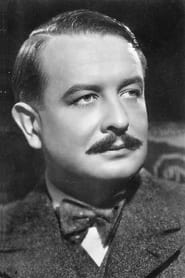
Siegfried Breuer
Actor
- Born
- June 24, 1906, Vienna, Austria-Hungary
- Died
- February 1, 1954
- Active
- 1924-1953
Films 1
About Siegfried Breuer
Siegfried Breuer was a prominent Austrian stage and film actor who became one of the most recognizable faces of German-language cinema during the 1940s and early 1950s. Born into a theatrical family in Vienna, he was the son of the renowned opera singer Hans Breuer, which naturally led him to study at the Academy of Music and Performing Arts. He made his professional stage debut in 1924 at the Volkstheater in Vienna and spent fifteen years honing his craft in theaters across Prague and Berlin before transitioning to film. His screen career took off in the late 1930s, where he quickly established a niche playing elegant, often morally ambiguous 'bon vivants' and sophisticated villains. Breuer's career reached an international peak with his role as Popescu in the 1949 classic 'The Third Man,' filmed in his native Vienna. Despite his professional success, his personal life was tumultuous, marked by six marriages and a reputation as a heavy smoker. He passed away prematurely at the age of 47 in 1954, leaving behind a legacy of suave, cynical characterizations that defined a specific era of European film noir and melodrama.
More about Siegfried Breuer
On screen
Breuer was celebrated for his portrayal of the 'elegant villain' or the cynical 'bon vivant.' He often utilized a signature physical trait—a raised left eyebrow—to convey skepticism, arrogance, or a cold, calculating nature. His performances were characterized by a polished, aristocratic demeanor that masked a darker, often morbid or zwielichtig (shady) interior, making him the quintessential choice for sophisticated antagonists in both dramas and early film noir.
Impact on culture
Siegfried Breuer epitomized the sophisticated European aesthetic of the mid-20th century. His ability to portray high-society figures with a hint of danger or moral decay provided a necessary counterpoint to the more earnest heroes of the era. He helped define the 'Viennese' archetype in cinema—charming, musical, yet often weary or cynical—which became a staple of both German-language films and international productions like 'The Third Man.'
Lasting legacy
Breuer's legacy is preserved through his contribution to the 'Golden Age' of Austrian and German cinema. He is remembered as one of the few actors of his generation who could seamlessly transition from the propaganda-heavy films of the early 1940s to the international stage and the lighthearted 'Heimatfilms' of the 1950s. His family remains a prominent fixture in German-speaking theater and television, ensuring the Breuer name remains synonymous with the performing arts.
Who they inspired
His 'suave villain' archetype influenced a generation of European actors who specialized in character roles. His specific blend of charm and menace can be seen in the later work of actors like Curd Jürgens and other stars of the post-war European noir movement.
Off screen
Breuer was known for a colorful and somewhat unstable personal life, having been married six times. He was a heavy smoker and suffered from health issues later in life, ultimately succumbing to a liver ailment complicated by pneumonia. He came from a significant acting dynasty; his son and grandchildren continued the family tradition in the German and Austrian entertainment industries.
Education
Academy of Music and Performing Arts in Vienna
Career milestones
- Stage debut at the Vienna Volkstheater in 1924
- Breakthrough film role in 'The Postmaster' (Der Postmeister) in 1940
- International recognition for his role in Carol Reed's 'The Third Man' (1949)
- Directorial debut with 'Der Schuß durchs Fenster' (1950)
- Successful transition from 'bon vivant' roles to serious character acting in 'Nathan the Wise' (1953)
Iconic roles
- Popescu in 'The Third Man' (1949)
- Rittmeister Minskij in 'Der Postmeister' (1940)
- Benjamin Hecht in 'Venus on Trial' (1941)
- Graf Stefan Oginski in 'Der Weg ins Freie' (1941)
- Viktor in 'Romance in a Minor Key' (1943)
Must-see films
- The Third Man (1949)
- Der Postmeister (1940)
- Romanze in Moll (1943)
- Operetta (1940)
- Venus vor Gericht (1941)
Special recognition
- Title role in the prestigious production of 'Nathan the Wise' at the Deutsches Theater Göttingen (1953)
Worked often with
- Curd Jürgens (Actor/Director)
- Maria Andergast (Actress/Spouse)
- Helmut Käutner (Director)
- Hans Moser (Actor)
Studios
- Bavaria Film
- UFA
- Wien-Film
Family
- Maria Andergast (1941-?)
- Eva Maria Meineke (Dates unknown)
- Lia Condrus (Dates unknown)
- Eva Leiter (Dates unknown)
- Mathilde Magagna (Dates unknown)
Did you know?
- He was married and divorced six times during his short life.
- His trademark acting move was raising his left eyebrow to signal arrogance.
- He was a heavy smoker, which contributed to his early death at age 47.
- His role in 'Venus on Trial' (1941) involved playing a character named Benjamin Hecht, a name likely chosen by the Nazi-era production as a jab at the famous Jewish-American screenwriter Ben Hecht.
- He was the father of actor Siegfried Breuer Jr. and grandfather to actors Jacques and Pascal Breuer.
- He died in the Weende district of Göttingen while working at the Deutsches Theater.
In their own words
The mask of the elegant bon vivant often hides the most interesting shadows. (Context: Describing his preference for complex, shady characters over traditional heroes.)
Questions and answers
Who was Siegfried Breuer?
Siegfried Breuer was a famous Austrian stage and film actor, director, and screenwriter active from the 1920s to the early 1950s. He was best known for playing sophisticated, often cynical 'bon vivants' and villains in European cinema.
What films is Siegfried Breuer best known for?
He is most internationally recognized for his role as Popescu in 'The Third Man' (1949). Other major works include 'Der Postmeister' (1940), 'Romanze in Moll' (1943), and 'Operetta' (1940).
When was Siegfried Breuer born and when did he die?
He was born on June 24, 1906, in Vienna, Austria, and died on February 1, 1954, in Göttingen, West Germany, at the age of 47.
What awards did Siegfried Breuer win?
While he did not win major international film awards like the Oscar, he was a highly respected stage actor and a top-tier star of the UFA and Wien-Film studios, often headlining major prestige productions.
What was Siegfried Breuer's acting style?
Breuer was known for his 'elegant villain' persona, characterized by a suave, aristocratic manner and a signature raised eyebrow. He specialized in playing complex men who were charming on the surface but morally ambiguous underneath.
Was Siegfried Breuer involved in directing?
Yes, in the latter part of his career, he directed and wrote several films, including 'Der Schuß durchs Fenster' (1950) and 'In München steht ein Hofbräuhaus' (1951).