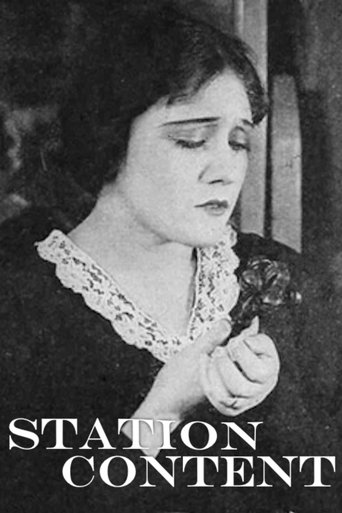
Nellie Allen
Actor
- Active
- 1918-1918
Films 1
About Nellie Allen
Nellie Allen is a largely undocumented silent-era screen performer who is known primarily for appearing in the 1918 film Station Content. Surviving reference sources on early cinema give her very little biographical coverage, which suggests that she may have been a minor or supporting player rather than a star with a widely publicized career. Her known screen activity is confined, in the currently accessible filmographic record, to a single credited year, 1918, making her one of the many performers from the silent period whose work survives in fragmentary form in studio records and film indexes. Because of the scarcity of reliable documentation, details such as her birth name, birthplace, later life, and death have not been securely established in standard film reference sources. What can be said with confidence is that she participated in the American silent-film industry during the First World War era, a period when many actors moved quickly between stage, stock company work, and short-lived screen opportunities. Her inclusion in surviving cast records is itself historically important, because it helps preserve the names of lesser-known artists who contributed to early motion pictures even when their full biographies were not recorded. Like many women in the silent era, her on-screen work may have been limited in duration but still formed part of the broader labor force that shaped early Hollywood and regional studio production.
More about Nellie Allen
On screen
No detailed critical descriptions of Nellie Allen's acting style have been located in readily available film-historical reference sources. As a silent-era performer, her work would have depended on facial expression, physical presence, and gesture rather than spoken dialogue. Because no reviews or extended production commentary have been securely tied to her, any further characterization would be speculative. She is best understood as a silent-screen actor whose style is preserved indirectly through the conventions of the period rather than through surviving critique.
In film history
Nellie Allen's cultural impact is best understood as archival rather than celebrity-based. While she does not appear to have become a nationally famous screen personality, her presence in the cast record of Station Content places her among the many working actors who helped build silent cinema's production ecosystem. Performers like Allen are important to film history because they illustrate how many careers from the silent period were modest, regional, or transient, yet still essential to the creation of early feature films. Her name surviving in databases and indexes also reminds researchers that early Hollywood was not made only by marquee stars, but by a wide labor pool of actors whose contributions were often unpublicized at the time. For contemporary film historians, Allen's significance lies in the preservation of completeness: each recovered credit improves our understanding of casting practices, studio personnel, and the breadth of participation in silent film. In that sense, she has legacy value as part of the documented but still enigmatic population of early cinema workers whose identities can be partially recovered even when their biographies cannot. Her record helps contextualize the era as one in which many actresses and actors worked briefly on screen and then disappeared from the surviving historical record.
Later reputation
Nellie Allen's lasting legacy is her inclusion in the documented cast history of the silent era, especially through Station Content. Even without a substantial star career or extensive press coverage, her credit preserves a trace of the people who populated early American film production. She stands as an example of the thousands of performers whose work supported the growth of the medium but who were seldom granted enduring fame. For modern databases and historians, her surviving record is valuable because it keeps open the possibility of future identification through trade journals, census materials, studio documents, or archival discoveries. Her legacy is therefore one of historical presence: a small but real contribution to the map of silent-cinema personnel.
Influence
There is no evidence of direct influence on later actors or filmmakers that can be confidently attributed to Nellie Allen. Her influence is better understood in aggregate, as part of the working class of silent-era performers whose performances, however briefly recorded, shaped audience expectations and the performance norms of early screen acting. By participating in a 1918 production, she contributed to the visual language of the period, where expressive, economical acting was essential. Her historical influence is thus indirect and collective rather than individually documented.
Off screen
No reliable public information has been found regarding Nellie Allen's personal life, family background, marriages, or later life. Standard silent-film reference materials and the available filmography do not provide enough evidence to reconstruct a fuller biographical portrait. As a result, her personal history remains undocumented in the accessible record. This is not unusual for lesser-known performers of the silent era, many of whom left only sparse traces in trade papers, studio paperwork, and cast lists.
Education
No confirmed educational background has been located in accessible historical sources.
Credits
- Appeared in the 1918 silent film Station Content
- Represents the small supporting-performer class of the silent era whose credits survive mainly through filmographic records
- Documented screen activity places her in the American cinema world during the late World War I period
- Her surviving film credit contributes to the historical cast record for early feature production
Roles
- Cast member in Station Content (1918)
Films
- Station Content (1918)
Notes
- Nellie Allen is known in surviving records primarily for a single film credit, Station Content (1918).
- She appears to be one of many silent-era performers whose lives are poorly documented outside film cast lists.
- No confirmed birth or death details are readily available in standard accessible reference sources.
- Her surviving screen record places her in the American film industry during the final years of the silent feature boom before the sound era.
- Because her filmography is so limited in surviving sources, she is of special interest to researchers studying lost or obscure silent-era personnel.
- Her case illustrates how many early film actors were employed briefly and then disappeared from mainstream historical memory.
- The scarcity of personal information about her is typical of minor performers from the 1910s, especially women whose careers were not heavily publicized.
Questions
Who was Nellie Allen?
Nellie Allen was a silent-era actor known from surviving film records, chiefly for her appearance in Station Content (1918). Very little biographical information has survived, which suggests she was likely a minor or supporting performer rather than a widely publicized star.
What films is Nellie Allen best known for?
She is best known for Station Content (1918), which is the primary credit associated with her in accessible film-history sources. No additional confirmed film titles have been securely identified in the available record.
When was Nellie Allen born and when did she die?
Her birth and death dates are not currently documented in the accessible reference material. Likewise, her birthplace and other vital details remain unconfirmed in standard film-history sources.
What awards did Nellie Allen win?
No awards or formal nominations have been found for Nellie Allen in the accessible historical record. This is not unusual for lesser-known silent-era performers whose careers were not widely covered by the press.
What was Nellie Allen's acting style?
No contemporary reviews or detailed criticism securely describing her acting style have been located. As a silent-film performer, her work would have depended on gesture, expression, and physical presence, which were central to acting in the period.
What is Nellie Allen's legacy in film history?
Her legacy is primarily archival: she is part of the surviving cast record of early American cinema. Even with little personal information available, her credit helps historians reconstruct the many lesser-known contributors to silent film production.