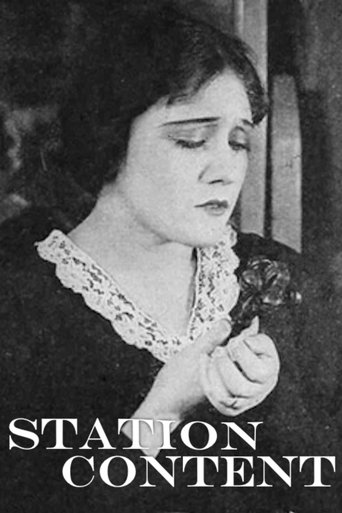
May Walters
Actor
- Active
- 1918-1918
Films 1
About May Walters
May Walters is a very obscure silent-era screen performer credited in the 1918 film Station Content, but surviving reference material about her is extremely limited. She appears in film records from the late silent period, suggesting that her screen career was brief and possibly confined to a small number of supporting or extra roles rather than starring vehicles. Because standard biographical sources do not preserve detailed personal information about her, many basic facts such as her birth, death, family background, and training remain undocumented or uncertain. Her name survives primarily through filmographies and cast listings, which is common for many minor players from the silent era whose work was recorded in studio paperwork but not fully preserved in later historical accounts. She is part of the large group of early cinema performers whose contributions helped populate the formative years of American film production even when they did not become household names. At present, no reliable evidence has surfaced to connect her to a larger body of surviving work beyond the known 1918 credit. For that reason, her historical significance lies chiefly in her presence within the silent-film record and in the documentation of a lost or under-documented era of screen acting.
More about May Walters
In film history
May Walters' cultural impact is indirect rather than celebrity-driven. She represents the thousands of silent-era performers who filled the ensembles of early feature films and made the industrial expansion of American cinema possible. Even when their individual biographies were not preserved, such actors contributed to the tone, realism, and production scale of early screen storytelling. Her surviving credit helps modern historians reconstruct casting practices and the workforce of the silent era, where many performers remain known only by name and one or two film appearances. In that sense, she is part of the broader cultural memory of lost, fragmentary, or under-documented cinema history.
Later reputation
Her legacy rests on preservation through film records rather than on a widely celebrated body of work. May Walters stands as an example of how many early film performers have become historical footnotes despite participating in the development of American cinema. For database and archival purposes, she remains important because each confirmed credit helps complete the record of silent-era production. Her name also underscores the fragility of early film history, in which many careers were not fully documented and many screen identities have faded from public memory. If additional archival material emerges, her profile may become clearer, but at present her legacy is that of a traceable but largely undocumented participant in early film culture.
Influence
There is no evidence that May Walters exerted a documented influence on major stars, filmmakers, or acting trends. Her influence is best understood at the level of historical presence: she is one of the many working actors who helped establish the ensemble structures and performance conventions of silent cinema. By appearing in a 1918 feature, she contributed to the professional ecosystem that supported more prominent stars and directors. Her surviving record is useful to historians studying labor patterns, casting depth, and the development of the film industry during the silent era.
Off screen
No dependable public biographical record has been located for May Walters, so her personal life is not documented in standard classic-cinema references. There is no confirmed information available about marriages, family connections, residence, or later-life activities. Like many silent-era bit players and supporting performers, she may have left few surviving paper traces outside studio-era cast lists and trade references. Until archival discoveries or specialized research produce more evidence, her private life must be regarded as unknown.
Education
No verified information is available about her education or performance training.
Credits
- Screen credit for Station Content (1918), the principal documented film associated with her name
- Representation of the many lesser-known performers who worked in the American silent-film industry during World War I era production
- Inclusion in surviving cast records that preserve her as part of early cinema history
- Association with a feature film from the late silent period, when studio production was rapidly professionalizing
- Historical value as an example of an under-documented performer whose work is known mainly through filmographic traces
Roles
- Undocumented role in Station Content (1918)
Films
- Station Content (1918)
Notes
- May Walters is documented primarily through her credit in Station Content (1918).
- She is one of many silent-era performers whose careers survive only in fragmentary film records.
- No verified birth or death information is currently established in standard reference sources.
- Her filmography appears to be extremely brief, at least in the surviving documentation.
- She is a useful example of how early cinema history often preserves names without preserving full biographies.
- Her record helps historians reconstruct cast lists for lost or obscure silent films.
- Because of the scarcity of sources, she is easily confused with other people of similar names, so identification must be handled carefully.
Questions
Who was May Walters?
May Walters was an obscure silent-era actor known from a documented credit in Station Content (1918). Very little else about her life or career has survived in standard reference sources. She is chiefly remembered as part of the large body of early film performers whose work is preserved only in cast records.
What films is May Walters best known for?
She is best known for Station Content (1918), which is the principal surviving film credit associated with her name. No other reliably verified titles are currently established in the available classic-cinema record. If additional archival evidence exists, it has not yet become widely documented.
When was May Walters born and when did she die?
Her birth and death dates are currently unknown in the available historical record. Standard reference sources do not provide confirmed dates or places for either event. This is common for many minor silent-era performers whose personal details were not extensively preserved.
What awards did May Walters win?
No awards or major nominations are documented for May Walters. This does not necessarily mean she had no recognition during her lifetime, but rather that no surviving evidence of formal honors has been found. Her historical importance is based on her participation in early film rather than on documented award history.
What was May Walters' acting style?
There is no surviving critical description of her individual performance style. As a silent-era actor, her work would have depended on the visual expression and physical readability typical of the period. However, without reviews or preserved performances, any detailed assessment of her style would be speculative.
What is May Walters' legacy in film history?
Her legacy lies in the historical record of early American silent cinema. Even with only a small amount of surviving information, she helps document the cast ecology of 1910s feature production. She is an example of the many working actors whose names remain in filmographies even when fuller biographies have been lost.