Nina Olivette
Actor
- Active
- 1930-1930
Films 1
About Nina Olivette
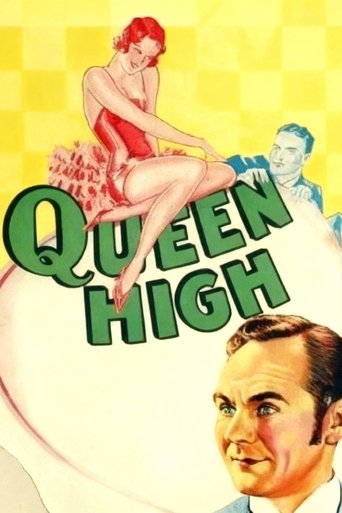
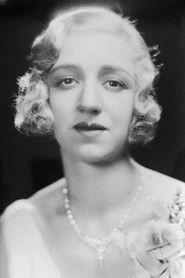
Nina Olivette was an early Hollywood performer who appears in surviving film records primarily as a cast member in the early sound-era musical comedy Queen High (1930). Very little biographical information about her has survived in standard reference sources, which suggests that she was a minor-screen figure rather than a major star of the period. Her known screen presence places her at the threshold between the silent era and the coming dominance of sound films, when many stage-trained performers and specialty players circulated through short-lived roles in studio productions. Because her documented filmography is extremely limited in currently accessible sources, it is difficult to reconstruct a full career arc with certainty. She is nevertheless part of the broad layer of early talking-picture talent whose work supported the studio system even when they did not become marquee names. No widely verifiable public records in the usual classic-cinema references clearly establish her birth details, later life, or death, so much of her personal history remains obscure. As a result, Nina Olivette is best understood as one of the many lightly documented contributors to early 1930s screen entertainment, preserved chiefly through cast listings and archival film databases.
More about Nina Olivette
In film history
Nina Olivette's cultural significance lies less in star power than in her presence within the early sound-film ecosystem, where countless performers contributed to the texture and rhythm of studio productions. Even when a performer survives in the record only through a single title, that credit helps map the labor structure of early Hollywood and preserves evidence of the breadth of talent employed by the industry. Her documented appearance in Queen High connects her to the musical-comedy and light entertainment traditions that were especially important in the first years after synchronized sound transformed filmmaking. For historians, performers like Olivette are valuable because they illustrate how many artists participated in studio-era cinema without leaving extensive press coverage or autobiographical records. That scarcity of documentation is itself part of her legacy, underscoring how easily many early film workers disappeared from mainstream memory despite having contributed to the medium's development.
Later reputation
Nina Olivette's legacy is that of a little-documented early cinema participant whose name endures through film credits rather than through a large surviving body of work. In film history, such figures are important because they help reconstruct the industrial and social world of classic Hollywood beyond the most famous stars. Her surviving credit in Queen High (1930) gives her a small but real place in the archive of early talkies, a period when the industry was rapidly changing and many performers moved in and out of screen work quickly. For researchers and database users, her case is a reminder that the history of classic cinema includes many semi-obscure professionals whose contributions are preserved only fragmentarily. She remains part of the broader, often anonymous workforce that made the early studio system function.
Influence
There is no evidence that Nina Olivette directly influenced major stars, directors, or later generations in a documented way. Her influence is therefore best understood indirectly: as one of many working performers whose presence contributed to the norms, pacing, and performance environment of early 1930s studio filmmaking. Such performers helped define the ensemble texture of musical comedies and transitional talkies, even when they did not become public figures themselves. In that sense, her historical importance is archival and contextual rather than celebrity-driven.
Off screen
No reliable, widely accessible biographical sources currently provide confirmed information about Nina Olivette's personal life, including family background, marriages, or later activities. Her obscurity in the historical record suggests that she may have had a brief performing career or worked largely in supporting and peripheral screen roles without extensive publicity. Until corroborated by primary documents, any detailed personal history would be speculative.
Credits
- Appeared in the early sound-era film Queen High (1930), her best-documented screen credit.
- Represents the class of minor credited and uncredited performers who helped populate early studio-era musical comedies and transitional talkies.
- Associated with the fragile, sparsely documented world of pre-Code and early-1930s Hollywood supporting casts.
Roles
- Role in Queen High (1930)
Films
- Queen High (1930)
Notes
- Nina Olivette is best documented today through a single known film credit: Queen High (1930).
- Her surviving record is sparse enough that standard classic-cinema references do not consistently provide birth or death details.
- She worked during the early sound era, when Hollywood was rapidly adapting stage and vaudeville talent to the new technology of synchronized dialogue.
- Because so little is known about her, she is an example of the many minor players whose names survive in cast lists even when their broader biographies have been lost.
- Her name can be easily overlooked or confused with more prominent performers, so careful filmography verification is important.
- Her documented credit places her in the pre-Code period of Hollywood, before stricter production enforcement began in mid-1934.
Questions
Who was Nina Olivette?
Nina Olivette was a classic-era film actor known from surviving records primarily for her credit in Queen High (1930). She appears to have been a minor performer in early Hollywood, and very little confirmed biographical information has survived in standard reference sources. Her historical importance lies in her documentation as part of the early sound-film workforce.
What films is Nina Olivette best known for?
She is best known for Queen High (1930), the only clearly documented film credit currently associated with her in accessible classic-cinema references. No additional verified feature-film credits are readily available from the information currently known. Her film history may be incomplete due to the fragmentary nature of early studio records.
When was Nina Olivette born and when did she die?
Her birth date and death date are not currently verified in the accessible classic-cinema record. Likewise, her birthplace and later-life details remain unavailable from standard reference sources. This is common for minor performers from the early sound era whose careers were only lightly documented.
What awards did Nina Olivette win?
No awards or major nominations are currently documented for Nina Olivette. She does not appear in the available reference material as a recipient of major industry honors. Her significance is primarily historical and archival rather than award-based.
What was Nina Olivette's acting style?
There is no surviving critical description of a distinctive acting style for Nina Olivette in the accessible historical record. Because she is primarily known from a single early sound-era credit, any precise stylistic characterization would be speculative. She should be understood as part of the broad ensemble of performers who adapted to the conventions of early talking pictures.
What is Nina Olivette's legacy in film history?
Her legacy is the preservation of a small but authentic footprint in early Hollywood history. Even a single surviving credit helps historians understand the breadth of talent employed during the transition to sound. She represents the many performers whose contributions were real, even if their biographies were not extensively recorded.