Bruce Herschensohn
Director
Born: September 10, 1932 in Milwaukee, Wisconsin, United States Died: November 30, 2020 Active: 1963-1963 (as director), 1932-2020 (overall career)
Films
1 film
About Bruce Herschensohn
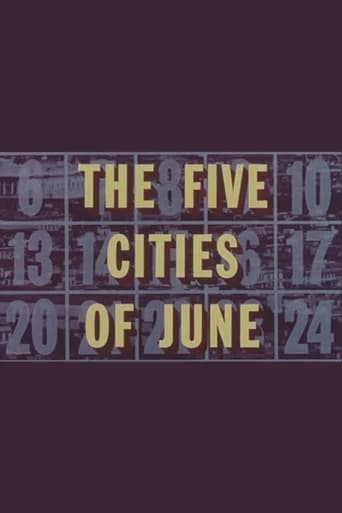
American filmmaker, political commentator, and government official who began his career as a documentary director in the early 1960s. His most notable cinematic achievement was the Academy Award-winning documentary short 'The Five Cities of June' (1963), which explored five significant global events occurring in June 1963, including the election of a pope and the civil rights movement in Birmingham. After his brief but impactful period in documentary filmmaking, Herschensohn transitioned into a career in politics and public service, serving as a speechwriter for Presidents Nixon and Ford, and later as a special assistant to President Reagan. He became a prominent conservative commentator, author of several political books, and ran for the U.S. Senate from California in 1992. Despite his relatively brief tenure in cinema, his documentary work left a lasting mark on political filmmaking, demonstrating how cinema could capture pivotal moments in world history. Herschensohn's career arc represents a unique journey from documentary filmmaker to influential political voice, with his film work serving as a bridge between his artistic sensibilities and his lifelong interest in international affairs and American politics.
The Craft
Behind the Camera
Herschensohn's directing style was characterized by a documentary approach that focused on capturing significant historical moments with journalistic precision and emotional resonance. His work demonstrated a keen eye for visual storytelling, combining news footage with carefully crafted narration to create compelling narratives about world events. His filmmaking emphasized the interconnectedness of global events and their impact on human lives, using a style that was both informative and emotionally engaging.
Milestones
- Directed Academy Award-winning documentary 'The Five Cities of June' (1963)
- Served as speechwriter for President Nixon (1969-1971)
- Worked as Deputy Special Assistant to President Reagan (1981-1982)
- Republican nominee for U.S. Senate from California (1992)
- Became prominent conservative political commentator and author
- Directed other documentary shorts including 'The Best Man' (1964)
Best Known For
Iconic Roles
Must-See Films
Accolades
Won
- Academy Award for Best Documentary Short Subject (1964) for 'The Five Cities of June'
Nominated
- Academy Award nomination for Best Documentary Short Subject (1965) for 'The Best Man'
Special Recognition
- Presidential appointment to various advisory roles
- Recognized as influential conservative voice in American politics
Working Relationships
Worked Often With
Studios
Why They Matter
Impact on Culture
Bruce Herschensohn's impact on cinema was primarily through his innovative approach to documentary filmmaking in the early 1960s. 'The Five Cities of June' represented a new style of documentary that connected seemingly disparate global events into a cohesive narrative about human progress and struggle. His work demonstrated the power of short-form documentary to capture pivotal moments in history and present them in ways that were both educational and emotionally resonant. This approach influenced future generations of documentary filmmakers who sought to create more globally conscious and politically aware films. Herschensohn's transition from filmmaking to political commentary also highlighted the important role that creative artists can play in shaping public discourse and political dialogue.
Lasting Legacy
Bruce Herschensohn's legacy in film history is primarily defined by his Academy Award-winning documentary 'The Five Cities of June,' which remains a significant example of early 1960s documentary filmmaking. The film is studied in film schools for its innovative approach to global storytelling and its ability to capture the interconnected nature of world events. Beyond cinema, Herschensohn's legacy includes his contributions to American political discourse as a conservative commentator and his service in multiple presidential administrations. His career trajectory from documentary filmmaker to influential political voice represents a unique path that demonstrates the intersection between artistic expression and political engagement. Herschensohn's work continues to be referenced in discussions about political filmmaking and the role of documentary in shaping public understanding of international affairs.
Who They Inspired
Herschensohn influenced both documentary filmmakers and political commentators through his unique approach to visual storytelling and political analysis. His documentary style, which combined news footage with thoughtful narration, influenced later filmmakers working in political documentary and current affairs programming. In the political realm, his articulate and passionate advocacy for conservative causes influenced a generation of commentators and political strategists. His ability to bridge the worlds of cinema and politics demonstrated how artistic sensibilities could enhance political communication, influencing how political messages are crafted and delivered in modern media.
Off Screen
Bruce Herschensohn was married twice during his lifetime. His first marriage was to Barbara Herschensohn, with whom he had children. Later in life, he married his second wife, Patty Herschensohn. He was known for his deep commitment to conservative political causes and maintained an active public life well into his later years. Herschensohn was also an avid writer and lecturer, frequently appearing on television and radio programs to discuss political issues. His personal philosophy combined a strong belief in American exceptionalism with a deep appreciation for international affairs, reflecting his background in documentary filmmaking that captured global events.
Education
Attended University of California, Los Angeles (UCLA) but did not complete degree; largely self-educated in filmmaking and political science
Family
- Barbara Herschensohn (years unknown)
- Patty Herschensohn (years unknown)
Did You Know?
- 'The Five Cities of June' was produced by the United States Information Agency (USIA) and was not widely seen in the United States initially
- The film covered events in Rome, Tokyo, Moscow, Birmingham, and Saigon, all occurring in June 1963
- Herschensohn was only 31 years old when he won the Academy Award
- He was the youngest director to win the Documentary Short Oscar at that time
- His documentary work was often funded by government agencies, reflecting the Cold War era's emphasis on cultural diplomacy
- After leaving filmmaking, he became a speechwriter for President Nixon during the height of the Vietnam War
- He ran for U.S. Senate in California in 1992 but lost to Dianne Feinstein
- Herschensohn — frequent guest on political talk shows throughout the 1980s and 1990s
- He authored several books on American politics and foreign policy
- Despite his success in documentary film, he never directed another feature-length film after his early 1960s work
In Their Own Words
'The camera doesn't lie, but it can certainly tell the truth in many different ways.' - on documentary filmmaking
'Politics is the art of the possible, but filmmaking is the art of making the impossible visible.' - on his career transition
'Every frame of film is a political statement, whether the filmmaker intends it to be or not.' - on the political nature of cinema
Frequently Asked Questions
Who was Bruce Herschensohn?
American documentary filmmaker best known for directing the Academy Award-winning film 'The Five Cities of June' (1963). He later became a prominent conservative political commentator, speechwriter for Presidents Nixon and Reagan, and author of several political books. His career uniquely bridged the worlds of cinema and American politics.
What films is Bruce Herschensohn best known for?
Titles linked here include The Five Cities of June (1963), The Best Man (1964).
When was Bruce Herschensohn born and when did he die?
Born September 10, 1932; died November 30, 2020.
What awards did Bruce Herschensohn win?
Herschensohn won the Academy Award for Best Documentary Short Subject in 1964 for 'The Five Cities of June.' He also received an Oscar nomination in the same category the following year for 'The Best Man.' His documentary work was recognized for its innovative approach to global storytelling.
What was Bruce Herschensohn's directing style?
Herschensohn's directing style combined journalistic precision with emotional storytelling, using news footage and careful narration to create compelling narratives about significant global events. His approach emphasized the interconnectedness of world events and their human impact, making complex political situations accessible and emotionally resonant for audiences.
How did Bruce Herschensohn transition from filmmaking to politics?
After his success in documentary filmmaking, Herschensohn leveraged his understanding of media and international affairs to enter politics. He began as a speechwriter for President Nixon in 1969, later serving in the Reagan administration, and eventually became a prominent conservative commentator and political candidate, using his communication skills honed in filmmaking to shape political discourse.