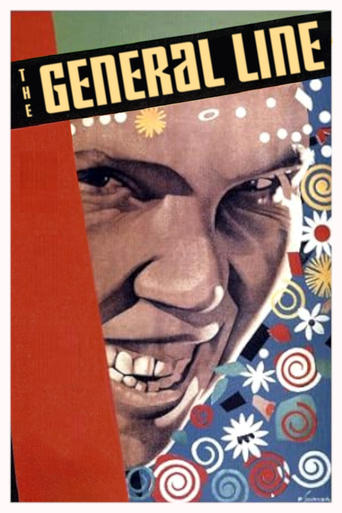
Films
1 film
About M. Ivanin
Soviet actor active during the late silent film era, best known for his appearance in Sergei Eisenstein's landmark 1929 film 'The General Line' (also known as 'Old and New'). As a performer in Soviet cinema during its formative years, Ivanin was part of the revolutionary artistic movement that sought to create a new cinematic language aligned with socialist ideals. His participation in Eisenstein's film places him within the circle of actors who worked with one of cinema's most influential directors during his most productive period. The General Line was Eisenstein's exploration of agricultural collectivization, representing the Soviet Union's push toward modernization and industrialization. Ivanin's role, while not extensively documented in surviving records, contributed to the film's powerful visual narrative and its depiction of rural Soviet life. Like many actors of this period in Soviet cinema, detailed biographical information is scarce, as the focus was often on collective artistic achievement rather than individual stardom. M. Ivanin's career appears to have been brief, with 1929 being the only year of documented activity in film archives.
The Craft
Milestones
- Appeared in Sergei Eisenstein's 'The General Line' (1929)
Best Known For
Iconic Roles
Must-See Films
Working Relationships
Worked Often With
Studios
Why They Matter
Impact on Culture
M. Ivanin's contribution to Soviet cinema, while brief, represents the collective effort of actors who participated in creating the foundational works of socialist realist film. His appearance in 'The General Line' places him within Eisenstein's revolutionary approach to cinema, which sought to use film as a tool for social and political education. The film itself was significant in promoting collectivization policies and demonstrating the potential of cinema as propaganda for socialist ideals. Ivanin, as part of the ensemble cast, contributed to the film's powerful visual storytelling that influenced generations of filmmakers both within and outside the Soviet Union.
Lasting Legacy
M. Ivanin's legacy is tied to his participation in. While his individual contribution may not be widely documented, his work in 'The General Line' makes him part of cinema history through his association with Sergei Eisenstein and the revolutionary Soviet film movement. The film remains a classic of world cinema, studied by film scholars for its innovative techniques and historical significance.
Who They Inspired
As a relatively obscure actor from early Soviet cinema, M. Ivanin's direct influence on other performers is not documented. However, his participation in Eisenstein's work contributed to the development of acting techniques in socialist realist cinema, which emphasized collective performance over individual stardom.
Off Screen
Very little is documented about M. Ivanin's personal life, which was typical for many supporting actors in early Soviet cinema where individual biographies were often subsumed by the collective nature of socialist art.
Did You Know?
- Appeared in 'The General Line' during its original 1929 release before it was re-edited
- Worked during the transition period from silent films to sound in Soviet cinema
- Part of Eisenstein's ensemble cast during his most influential period
- The General Line was one of Eisenstein's last silent films before moving to sound production
- The film was commissioned to promote agricultural collectivization in the Soviet Union
- Ivanin's career appears to have been limited to this single known film credit
Frequently Asked Questions
Who was M. Ivanin?
Soviet with credits in this catalog. His career appears to have been brief, with 1929 being the only documented year of his film activity.
What films is M. Ivanin best known for?
Titles linked here include The General Line (1929).
When was M. Ivanin born and when did they die?
Specific birth and death dates for M. Ivanin are not documented in available historical records, which is common for many supporting actors from early Soviet cinema.
What awards did M. Ivanin win?
There are no documented awards or nominations for M. Ivanin, which was typical for many ensemble actors in early Soviet films where recognition focused on the collective rather than individual achievements.
What was M. Ivanin's acting style?
Specific details about M. Ivanin's acting style are not documented, but as an actor in Eisenstein's films, he would have worked within the director's innovative approach to performance that emphasized typage and collective expression over individual star performances.