
Films
1 film
About Edna Maison
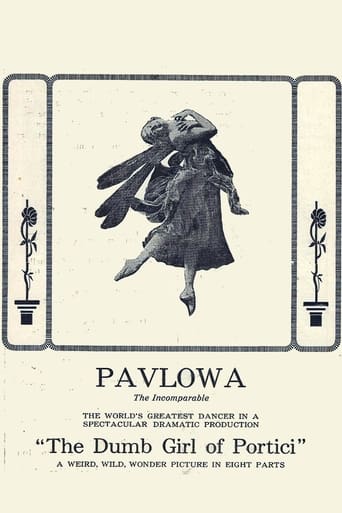
The 1916 film The Dumb Girl of Portici is the only title linked here for Edna Maison. Her most notable work was in the 1916 feature film 'The Dumb Girl of Portici,' which was directed by the influential female filmmaker Lois Weber and her husband Phillips Smalley. The film was a prestigious production starring the renowned Russian ballerina Anna Pavlova in her film debut, and Maison was part of the supporting cast that brought this adaptation of Daniel Auber's opera to life. Her career appears to have been brief, with most of her known work concentrated around the mid-1910s period when the American film industry was transitioning from shorts to feature-length productions. Like many actors of the silent era, her career was likely affected by the dramatic changes in the film industry, including the transition to sound and the consolidation of the studio system. While her filmography may be limited, her participation in 'The Dumb Girl of Portici' places her within the context of early Hollywood's artistic ambitions and the significant contributions of women filmmakers during this period.
The Craft
On Screen
As a silent film actress, Maison would have employed the exaggerated gestures and facial expressions characteristic of the era, using pantomime and body language to convey emotion and narrative without spoken dialogue. Her performance style would have been influenced by the theatrical traditions that dominated early cinema before the development of more naturalistic acting techniques.
Milestones
- Appeared in 'The Dumb Girl of Portici' (1916), a significant silent film adaptation of an opera
- Worked with director Lois Weber
- Participated in early feature-length cinema during Hollywood's transitional period
Best Known For
Iconic Roles
Must-See Films
Working Relationships
Worked Often With
Studios
Why They Matter
Impact on Culture
Edna Maison's contribution to cinema, while limited in scope, represents the broader landscape of silent era filmmaking and the many actors who populated early feature films. Her appearance in 'The Dumb Girl of Portici' connects her to an important moment in film history when the industry was experimenting with adapting prestigious theatrical works to the new medium. The film itself was significant for featuring Anna Pavlova and for being directed by Lois Weber,. Maison's participation in such an ambitious production reflects the collaborative nature of early filmmaking and the various roles that actors played in establishing cinema as an art form.
Lasting Legacy
Edna Maison's legacy is preserved through her appearance in 'The Dumb Girl of Portici,' which survives as an example of early American feature filmmaking and the ambitious artistic projects undertaken during the silent era. While she may not have achieved lasting fame, her work contributes to our understanding of the film industry during its formative years and the many performers who helped shape early cinema. Her association with Lois Weber's work places her within the context of women's significant contributions to early Hollywood, an aspect of film history that has gained increased recognition in recent years.
Who They Inspired
As a supporting actress from the silent era with a brief documented career, Edna Maison's direct influence on subsequent generations of performers is difficult to trace. However, like many actors of her time, she contributed to the development of film acting techniques during the medium's early years when the language of cinema was still being established. Her work in a high-profile production helped demonstrate the potential of feature-length films to incorporate elements from other art forms, particularly opera and classical performance.
Off Screen
Very little is documented about Edna Maison's personal life, which is common for many supporting actors from the silent era who were not major stars. Like many performers of her time, she may have come from a theatrical background or been drawn to the emerging film industry during its rapid expansion in the 1910s.
Did You Know?
- 'The Dumb Girl of Portici' was an adaptation of Daniel Auber's 1828 opera 'La Muette de Portici'
- The film was one of the earliest feature films to star a classical ballet dancer
- Director Lois Weber was
- The film was produced by Universal during a period when the studio was known for producing ambitious feature films
- Anna Pavlova, the film's star, was
- The film's title refers to the mute female protagonist of the original opera
- The story is set in Naples in 1647 and deals with historical themes of revolution and oppression
- The film was part of a trend in the 1910s of adapting operatic and theatrical works to the new medium of cinema
Frequently Asked Questions
Who was Edna Maison?
Silent film actress active in the mid-1910s, best known for her appearance in the 1916 film 'The Dumb Girl of Portici.' She was part of the supporting cast in this ambitious feature film directed by Lois Weber and Phillips Smalley.
What films is Edna Maison best known for?
Titles linked here include The Dumb Girl of Portici (1916).
When was Edna Maison born and when did she die?
Specific birth and death dates for Edna Maison are not documented in available historical records, which is common for many supporting actors from the silent era who were not major stars. Her known film work dates from 1916.
What awards did Edna Maison win?
There are no documented awards or nominations for Edna Maison, which was typical for many actors during the early years of cinema before the establishment of formal industry awards like the Academy Awards, which began in 1929.
What was Edna Maison's acting style?
As a silent film actress, Edna Maison would have employed the dramatic physical acting style characteristic of the era, using exaggerated gestures, facial expressions, and body language to convey emotions and story elements without spoken dialogue.
What was the significance of 'The Dumb Girl of Portici'?
'The Dumb Girl of Portici' was significant as an early adaptation of a classical opera to feature-length cinema, starring the renowned ballet dancer Anna Pavlova. It was directed by Lois Weber,.