Milton Charles
Actor
Born: May 8, 1897 in San Jose, California, USA Died: November 1, 1991 Active: 1912-1971
Films
1 film
About Milton Charles
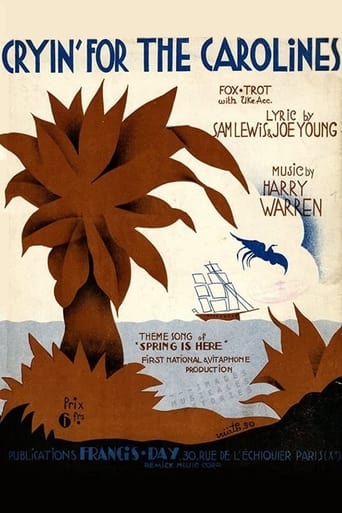
Preeminent American theatre organist and vocalist: the transition from silent films to the Golden Age of radio and television. Born in San Jose, California, in 1897, he began his musical journey as a child prodigy, playing the church organ by age 13 and performing in San Francisco's grand movie palaces by 15. His exceptional talent caught the attention of showman Sid Grauman, leading to a long-standing residency at the Million Dollar Theater in Los Angeles where he entertained Hollywood royalty like Charlie Chaplin and Gloria Swanson. In 1930, Charles made a unique mark on film history as the star of 'Crying for the Carolines,' the first entry in Leon Schlesinger's 'Spooney Melodies' series, which is now recognized as a precursor to the modern music video. As sound films replaced live accompaniment, Charles successfully transitioned to radio, serving as the musical director for CBS in Chicago and providing the organ scores for soap operas and programs like 'The Amos 'n' Andy Show.' He remained a beloved figure in the musical community for decades, performing well into his 90s before passing away in 1991.
The Craft
On Screen
In his limited film appearances, Charles utilized a charismatic, 'singing organist' persona, blending live-action performance with a smooth, melodic vocal style that complemented his intricate organ arrangements.
Milestones
- Headline organist at Sid Grauman's Million Dollar Theater in Los Angeles during the 1920s
- Star of 'Crying for the Carolines' (1930), the first 'Spooney Melodies' short for Warner Bros.
- Served as Music Director for CBS Radio in Chicago during the 1930s and 1940s
- Recorded numerous popular organ tracks for Columbia and Paramount Records
- Provided live musical accompaniment for silent film legends including Charlie Chaplin and Gloria Swanson
- Staff organist for the Roy Rogers and Gene Autry radio shows
Best Known For
Iconic Roles
Must-See Films
Accolades
Won
- Inducted into the American Theatre Organ Society (ATOS) Hall of Fame (1971)
Special Recognition
- Recognized as one of the 'Pioneers of the Theatre Organ'
- Featured on the cover of 'Charmaine' sheet music (1927) for the film 'What Price Glory'
Working Relationships
Worked Often With
Studios
Why They Matter
Impact on Culture
Pivotal figure in the 'Golden Age of the Theatre Organ,' a period when the organist was as much a star as the with credits in this catalog. His work in 'Crying for the Carolines' is historically significant as it experimented with synchronized music and abstract animation, effectively creating a prototype for the music video format decades before MTV. By bridging the gap between live theatre performance and recorded media, he helped define the auditory landscape of early 20th-century entertainment.
Lasting Legacy
His legacy is preserved through the American Theatre Organ Society and the surviving Vitaphone recordings of his performances. He is remembered as one of the few artists who successfully navigated the death of silent cinema by reinventing himself as a radio star and musical director. His 1930 short remains a staple of animation and film history studies due to its status as the first 'Spooney Melody.'
Who They Inspired
His improvisational style and 'understated' accompaniment influenced the way silent films were scored, moving away from literal 'mickey-mousing' toward more atmospheric and thematic musical storytelling.
Off Screen
Milton Charles was born into a musical family in San Jose. He was a devoted family man who, despite his professional success in major cities like Chicago and Los Angeles, eventually retired to the quiet beauty of Ojai, California. He was known for his longevity and continued to perform monthly concerts at his retirement community until shortly before his death at age 94.
Education
Studied piano from age 7; received organ instruction from San Francisco teacher Benjamin Moore.
Family
- Information regarding specific spouse names and dates is not publicly documented in standard archives.
Did You Know?
- He was often called 'The Singing Organist' during his tenure with Warner Bros.
- At age 15, he was already earning $50 a week, a massive sum for a teenager in 1912.
- His music teacher originally dropped him as a student because he disapproved of the 'low-brow' film business.
- He once worked 12-hour shifts at the Million Dollar Theater because his partner, 'C Sharp' Minor, would frequently disappear.
- He provided the background music for the legendary 'Amos 'n' Andy' radio show.
- Charles — favorite of Charlie Chaplin, who would often visit the theater late at night to hear him play.
- He spent the final 20 years of his active career as a resident organist at the Kings Arms restaurant in Toluca Lake.
In Their Own Words
I tried not to play the same music twice for each film, although I would repeat themes for various characters and settings.
There would be a sound stage for every show, and I would race—I had 20 seconds—from one studio and organ across the hall to another soap opera.
Frequently Asked Questions
Who was Milton Charles?
Famed American theatre organist and vocalist, best known for his work during the silent film era and his transition into early sound films and radio.
What films is Milton Charles best known for?
Titles linked here include Crying for the Carolines (1930), ToonHeads: The Lost Cartoons (2000) - archival footage.
When was Milton Charles born and when did he die?
Born May 8, 1897; died November 1, 1991.
What awards did Milton Charles win?
While he did not win mainstream acting awards, he was a highly honored musician, notably inducted into the American Theatre Organ Society Hall of Fame in 1971.
What was Milton Charles's musical style?
He was known for an understated, often improvised style of organ accompaniment that focused on atmospheric themes rather than repetitive sound effects.
Was Milton Charles involved in radio?
Yes, he was a major radio personality, serving as the Music Director for CBS in Chicago and scoring famous programs like 'Ma Perkins' and 'The Roy Rogers Show.'