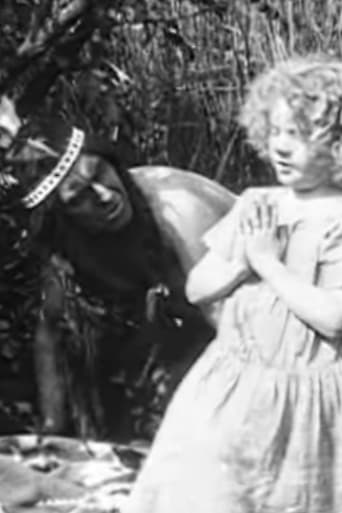
William J. Bauman
Director
- Active
- 1913-1913
Films directed 1
About William J. Bauman
William J. Bauman was an early American film director active during the silent era, credited in surviving records with directing the 1913 film "When the West Was Young." Like many filmmakers of the earliest years of American cinema, he worked at a time when film credits were inconsistently recorded, which makes detailed biographical information difficult to reconstruct with certainty. His known screen career places him in the formative years of narrative filmmaking, when one- and two-reel dramas were the standard and directors were still defining the visual grammar of the medium. Because his name appears primarily in filmographic references rather than in extensive contemporary publicity, it is likely that he was one of the many behind-the-camera craftsmen whose work helped establish the industry before the feature-film era fully matured. No reliable evidence has survived in widely accessible sources regarding his birth, death, family background, or later life. What can be stated confidently is that he participated in the early development of American cinema and contributed to the western genre at a very early date, during a period when the genre was rapidly becoming one of the most popular forms in motion pictures. His surviving film credit places him among the pioneers who helped shape silent-era screen storytelling, even if his broader career remains obscure.
More about William J. Bauman
Behind the camera
No detailed contemporary descriptions of William J. Bauman's directing style appear to survive in commonly available reference sources. Based on the period in which he worked, his direction would have been shaped by the conventions of early silent cinema: concise storytelling, tableau-like framing, expressive physical action, and clear visual progression suitable for short-form films. As a director of an early western, he would likely have emphasized straightforward narrative clarity, outdoor locations or rustic settings, and action that could be easily understood without synchronized sound or dialogue. Any stylistic assessment beyond that would be speculative, since no extensive critical commentary on his work has been preserved in widely accessible sources.
In film history
William J. Bauman's cultural impact is best understood as part of the broader foundation of early American cinema rather than through a large surviving body of work. His credit on an early western places him within the generation of filmmakers who helped popularize a genre that would become central to American film mythology. Even when individual careers from this era are poorly documented, such credits are valuable because they show how the western was already taking shape in the silent period and how directors outside the major later-celebrated names contributed to the medium's evolution. His work belongs to the historical bedrock of film culture: the anonymous or semi-anonymous creators whose films, however few, helped establish storytelling conventions that later directors refined.
Later reputation
Bauman's legacy lies primarily in his place within early silent-film history and in the documentary record of the 1913 western "When the West Was Young." Because so much of the earliest film industry has been lost or incompletely archived, even a small surviving credit can be important for historians mapping the development of genre cinema and the careers of forgotten filmmakers. He stands as an example of the many early directors whose names are preserved in filmographies even when the details of their lives have faded from public memory. In that sense, his legacy is archival as much as artistic: he is part of the historical chain that allows scholars to understand how American cinema expanded during the 1910s.
Influence
There is no surviving evidence of direct influence by William J. Bauman on later well-known directors, nor of protégés he is known to have trained. His influence, to the extent it can be inferred, was indirect and collective, contributing to the early silent western form at a time when filmmakers were establishing the patterns that later generations would adopt and refine. As with many early directors, his importance is less about individually documented stylistic innovation and more about participation in the medium's foundational period.
Off screen
There is no reliably documented biographical information available in commonly accessible film-reference sources about William J. Bauman's marriages, family life, education, or later personal activities. Like many early silent-era filmmakers, he appears to have left only a sparse archival footprint, with film credits surviving more clearly than personal records. Without verified documentary evidence, details about his private life cannot be stated confidently.
Credits
- Directed the silent western "When the West Was Young" in 1913
- Worked during the formative years of American narrative cinema
- Represents one of the early screen directors whose surviving credit contributes to the history of the silent western
- Associated with the period when short-form films dominated exhibition and directors were experimenting with visual storytelling conventions
Films
- When the West Was Young (1913)
Notes
- William J. Bauman is chiefly remembered today for a single surviving director credit: "When the West Was Young" (1913).
- He worked during the silent era, when film credits and personal records were often inconsistently preserved.
- His career appears to have been brief or at least sparsely documented in surviving filmographies.
- He is associated with one of American cinema's earliest popular genres, the western.
- Because of the limited archival record, many biographical details about him remain unknown.
- His known film was made in 1913, the same period when the feature film was beginning to emerge as the dominant format.
- He is an example of the many early filmmakers whose contributions are visible in credits but not in extensive biography.
Questions
Who was William J. Bauman?
William J. Bauman was an American silent-era film director best known for directing the 1913 western "When the West Was Young." He is one of many early cinema figures whose names survive in filmographies even though detailed biographical information has largely been lost. His career belongs to the formative years of American motion pictures.
What films is William J. Bauman best known for?
He is primarily known for "When the West Was Young" (1913), his credited directing work. No other widely documented films can be confidently listed from the available information. As a result, this title remains his principal surviving screen credit.
When was William J. Bauman born and when did he die?
Reliable birth and death dates for William J. Bauman are not readily available in commonly accessible sources. His surviving record is largely filmographic rather than biographical. Because of that, both his birth and death details remain unverified.
What awards did William J. Bauman win?
No awards or nominations are known for William J. Bauman from the available historical record. This is not unusual for filmmakers working in the earliest years of cinema, long before the modern awards system was established. His significance is historical rather than award-based.
What was William J. Bauman's directing style?
No direct critical descriptions of his style have survived, but as an early silent-era director he would have worked within the visual, action-driven conventions of 1913 filmmaking. His approach likely emphasized clear staging, physical expression, and straightforward storytelling suitable for silent western audiences. Any more precise stylistic claim would be speculative.
What is William J. Bauman's legacy in film history?
His legacy is as an early, largely undocumented contributor to American silent cinema and the western genre. Even a single surviving credit helps historians trace how film storytelling developed in the 1910s. He represents the many foundational figures whose work helped build the industry despite limited surviving personal records.