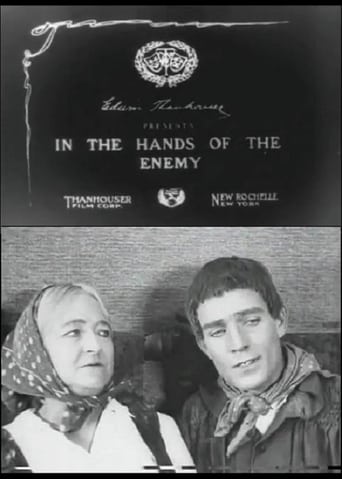

Inda Palmer
Actor
- Active
- 1915-1915
Films 1
About Inda Palmer
Inda Palmer appears in surviving film reference sources as a very early silent-era screen performer, credited in the 1915 feature In the Hands of the Enemy. Beyond that single credited appearance, reliable biographical documentation is extremely limited, which is common for minor players from the first decades of American cinema whose careers were briefly recorded in studio publicity and trade notices but not preserved in later reference books. No dependable evidence has surfaced to confirm a broader filmography, stage career, or later screen work under this exact name. Because of the scarcity of surviving documentation, many details of Palmer's life, including birth, death, family background, and training, remain unknown. The available record suggests a performer working during the formative years of the silent-film industry, when many actors moved through short-term contracts, stock companies, or one-off productions with little long-term archival footprint. In the absence of stronger documentation, Palmer is best understood as a minor but real participant in early cinema history rather than a widely documented star. Their significance lies primarily in the preservation of their name in early film credit records and in the broader history of silent-era screen labor.
More about Inda Palmer
In film history
Inda Palmer's cultural impact is difficult to measure because the surviving record is extremely limited, but their presence in a 1915 feature places them within the earliest commercially organized period of American feature filmmaking. Performers like Palmer helped populate the ensemble system that sustained silent production, even when individual names did not become part of the lasting star pantheon. Their contribution is historically meaningful as part of the enormous labor pool of actors whose work made the silent-film industry function and whose names sometimes survive only in cast lists and archival databases. In that sense, Palmer represents the many early screen artists whose careers illuminate the breadth of film history beyond the major stars.
Later reputation
Inda Palmer's legacy rests chiefly on archival survival rather than fame: a name attached to an early silent feature and preserved in film reference culture. For historians, such names are important because they help reconstruct casting practices, company rosters, and the personnel networks of early cinema. Palmer also stands as a reminder of how many silent-era performers remain only partially documented, with entire careers lost to time, studio attrition, and incomplete recordkeeping. Their enduring legacy is therefore one of historical presence and scholarly intrigue, rather than celebrity.
Influence
There is no documented evidence that Inda Palmer directly influenced later actors or filmmakers in a traceable, named way. However, as part of the early silent-screen workforce, Palmer contributed to the collective performance tradition from which later film acting styles evolved. Early screen players helped establish the conventions of expressive gesture, visual storytelling, and ensemble screen behavior that became foundational to the medium. Palmer's influence, if any, is best understood as indirect and embedded in the broader development of silent-film acting practice.
Off screen
No reliable biographical record has been located for Inda Palmer's personal life, including family background, marriages, children, residence, or later occupation. This is often the case for minor performers from the silent era, especially those whose careers were short-lived or whose credits did not carry over into major reference biographies. Any attempt to supply personal details beyond the surviving record would be speculative, so they are best left undocumented until primary sources or archival material can be found.
Credits
- Credited screen appearance in the silent film In the Hands of the Enemy (1915)
- Documented participation in early American silent cinema during the industry’s formative years
- Presence in surviving film records despite the scarcity of biographical information typical of minor early-screen performers
Films
- In the Hands of the Enemy (1915)
Notes
- Inda Palmer is documented in surviving film references primarily for In the Hands of the Enemy (1915).
- No widely accepted birth or death data is currently confirmed for this exact name in major public film references.
- Palmer appears to have had a very brief or at least very sparsely documented screen career.
- The name is easy to overlook because early cinema records often preserve cast lists without detailed biographical profiles.
- Their surviving credit makes them part of the historical record of silent feature production in the mid-1910s.
- Like many early film performers, Palmer may have worked in productions that are now partially lost or incompletely cataloged.
- The lack of documentation does not necessarily mean the career was insignificant; it often reflects the archival fragility of silent-era history.
Questions
Who was Inda Palmer?
Inda Palmer was a silent-era film actor credited in the 1915 production In the Hands of the Enemy. Surviving documentation about this exact person is very limited, so they are best known as a minor early cinema performer rather than a widely chronicled star.
What films is Inda Palmer best known for?
Inda Palmer is primarily known for In the Hands of the Enemy (1915), which is the main surviving screen credit associated with the name. No additional filmography can be confidently confirmed from reliable available sources.
When was Inda Palmer born and when did they die?
Reliable birth and death information for Inda Palmer has not been confirmed in accessible reference sources. As a result, both dates remain unknown, along with the place of birth and death.
What awards did Inda Palmer win?
No awards or nominations are currently documented for Inda Palmer. This is not unusual for minor silent-era performers, many of whom worked before the modern awards system existed or before their careers were thoroughly recorded.
What was Inda Palmer's acting style?
There is no detailed critical description of Inda Palmer's acting style in surviving sources. Given the period, any screen performance would have been shaped by silent-era techniques such as expressive gesture, clear pantomime, and visually legible emotional communication.
What is Inda Palmer's legacy in film history?
Inda Palmer's legacy is primarily archival: a credited early-film performer whose name survives in the historical record. That makes Palmer representative of the many silent-era actors whose work helped build the medium even if their individual biographies were not fully preserved.
Did Inda Palmer work with major studios or famous collaborators?
No confirmed studio affiliation or recurring collaborator is currently documented for Inda Palmer. The surviving record is too limited to identify a consistent production company, director, or acting ensemble with confidence.