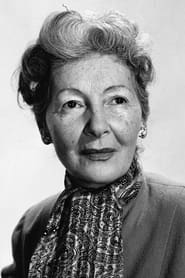
Celia Lovsky
Actor
Born: February 21, 1897 in Vienna, Austria-Hungary (now Austria) Died: October 12, 1979 Active: 1930s-1970s Birth Name: Cäcilie Lvovsky
Films
1 film
About Celia Lovsky
Austrian-American actress: over four decades in Hollywood, bringing authentic European sophistication to countless films. Born Cäcilie Lvovsky in Vienna, she began her career on the European stage before emigrating to the United States in the 1930s to escape the rising Nazi threat. Lovsky quickly established herself as a character actress specializing in foreign roles, utilizing her distinctive Viennese accent and aristocratic bearing to memorable effect. Celia appears in numerous classic films including Casablanca (1942), The Maltese Falcon (1941), and The Seventh Cross (1944), often playing sophisticated ladies, refugees, or mysterious European women. Her marriage to fellow actor Peter Lorre from 1940 to 1945 brought her additional attention in Hollywood circles, though she maintained her own successful career throughout their relationship. Later in her career, she transitioned successfully to television, appearing in popular series like The Twilight Zone and Perry Mason. Lovsky's final years were marked by continued character work until her death in 1979, leaving behind a legacy of over 100 film and television performances that showcased her versatility and distinctive presence.
The Craft
On Screen
Known for her sophisticated, aristocratic demeanor and distinctive Viennese accent, Lovsky specialized in playing refined European women, refugees, and mysterious characters. Her acting was characterized by subtle nuances, elegant gestures, and an ability to convey deep emotion through minimal expression. She brought authenticity to foreign roles that many American actresses couldn't match, often serving as cultural ambassador in wartime films.
Milestones
- Stage debut in Vienna in the 1920s
- Emigrated to Hollywood in 1930s
- Marriage to Peter Lorre (1940-1945)
- Notable role in Casablanca (1942)
- Transition to television in 1950s
- Over 100 film and television appearances
Best Known For
Iconic Roles
Must-See Films
Accolades
Special Recognition
- Hollywood Walk of Fame star (for television)
Working Relationships
Worked Often With
Studios
Why They Matter
Impact on Culture
Celia Lovsky played a significant role in Hollywood's representation of European culture during World War II and the post-war period. Her authentic portrayal of European characters helped American audiences understand the plight of refugees and the sophistication of European culture at a time when many Europeans were fleeing persecution. She was part of a wave of European talent that enriched Hollywood cinema during the Golden Age, bringing international perspective and authenticity to American films.
Lasting Legacy
Lovsky's legacy lies in her contribution to the authenticity of Hollywood's depiction of European characters during a critical period in world history. Her ability to embody various European nationalities with genuine credibility set a standard for character actors. Her extensive filmography serves as a valuable record of Hollywood's Golden Age, and her transition to television demonstrated her adaptability as an entertainer across different media.
Who They Inspired
Lovsky influenced subsequent generations of character actors, particularly those specializing in foreign or ethnic roles. She demonstrated that authentic accents and cultural understanding could elevate character performances beyond stereotypes. Her successful career as an immigrant actress paved the way for other European actors in Hollywood, showing that foreign talent could find success and respect in the American film industry.
Off Screen
Celia Lovsky was married to fellow actor Peter Lorre from 1940 to 1945, during which time she supported his career while maintaining her own successful acting career. Despite their divorce, they remained on good terms. She never remarried and had no children. Lovsky was known in Hollywood circles for her intelligence, wit, and dedication to her craft, often hosting salons for European expatriate artists and actors.
Education
Studied drama and theater in Vienna before beginning her stage career in the 1920s
Family
- Peter Lorre (1940-1945)
Did You Know?
- Born Cäcilie Lvovsky, she Anglicized her name for American audiences
- Appeared without on-screen billing in Casablanca as a woman at Rick's café
- Was fluent in German, English, and French
- Began her career on the Viennese stage in the 1920s
- Was often typecast as a Viennese woman regardless of the character's actual nationality
- Her distinctive accent became one of her most valuable assets in Hollywood
- Worked steadily in television well into her 70s
- Was part of Hollywood's European émigré community during WWII
- Never received top billing but was consistently employed for over 40 years
- Her final film appearance was in 1975, four years before her death
In Their Own Words
In Hollywood, my accent was my fortune. It made me valuable when other actresses struggled to find work.
I never minded playing supporting roles. The important thing was to work and to bring truth to every character, no matter how small.
Frequently Asked Questions
Who was Celia Lovsky?
Austrian-American character actress known for her distinctive Viennese accent and sophisticated portrayals of European women in Hollywood films from the 1930s through the 1970s. She appeared in over 100 films and television productions, often playing aristocratic or refugee characters.
What films is Celia Lovsky best known for?
Titles linked here include Casablanca (1942), The Maltese Falcon (1941).
When was Celia Lovsky born and when did she die?
Born February 21, 1897; died October 12, 1979.
Was Celia Lovsky married to Peter Lorre?
Yes, Celia Lovsky was married to actor Peter Lorre from 1940 to 1945. Their marriage occurred during the height of both their Hollywood careers, and though they divorced, they maintained a professional relationship.
What was Celia Lovsky's acting style?
Lovsky was known for her elegant, understated acting style characterized by sophisticated gestures, subtle emotional expression, and authentic European mannerisms. Her distinctive Viennese accent and aristocratic bearing made her particularly effective in roles as refined European women.