
Skip Homeier
Actor
Born: October 5, 1930 in Chicago, Illinois, USA Died: June 25, 2017 Active: 1944-1982 Birth Name: George Vincent Homeier
Films
1 film
About Skip Homeier
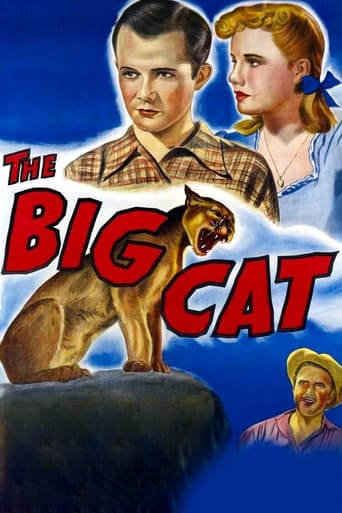
Skip Homeier began his career as a child prodigy, making his Broadway debut at age 12 in the controversial play 'Tomorrow, the World!' where he portrayed a Nazi youth indoctrinated in Germany. His performance was so powerful that he was immediately cast in the 1944 film adaptation, earning critical acclaim and an Academy Award nomination for Best Actor at just 14 years old. Throughout the late 1940s and 1950s, Homeier specialized in playing troubled youths and menacing characters, often typecast as the rebellious teenager or young antagonist. His performance in 'The Big Cat' (1950) showcased his ability to convey complex emotions as a young man struggling with family dynamics in the wilderness. As he transitioned to adult roles, Homeier found steady work in Westerns and film noir productions, though he never achieved the same level of fame as his early breakthrough suggested. By the 1960s, he had successfully transitioned to television, appearing in numerous popular series including 'Perry Mason,' 'The Fugitive,' and 'Gunsmoke.' Homeier continued acting through the 1970s and 1980s, eventually retiring from the entertainment industry to pursue other interests, leaving behind a legacy as one of Hollywood's most convincing young actors of the post-war era.
The Craft
On Screen
Homeier was known for his intense, naturalistic acting style that brought psychological depth to his characters, particularly troubled youths and antagonists. His performances were marked by a raw emotional authenticity that was unusual for child actors of his era, often conveying complex inner turmoil through subtle facial expressions and controlled intensity. He had a particular talent for playing characters with dual natures - outwardly rebellious but internally vulnerable, making his antagonists sympathetic and his heroes complex.
Milestones
- Broadway debut in 'Tomorrow, the World!' at age 12
- Academy Award nomination for Best Actor at age 14
- Starred in 'The Boy with Green Hair' (1948)
- Leading role in 'The Big Cat' (1950)
- Transition to successful television career in the 1960s
- Appeared in over 100 film and television productions
Best Known For
Iconic Roles
Must-See Films
Accolades
Won
- Academy Award nomination for Best Actor (1944)
Nominated
- Academy Award for Best Actor for 'Tomorrow, the World!' (1944)
Special Recognition
- Hollywood Walk of Fame star (Television category)
Working Relationships
Worked Often With
Studios
Why They Matter
Impact on Culture
Skip Homeier's breakthrough role as a Nazi youth in 'Tomorrow, the World!' had significant cultural impact during World War II, serving as both propaganda and a cautionary tale about indoctrination. His performance helped shape how Hollywood portrayed the psychological effects of totalitarian regimes on young minds. Homeier's work in 'The Boy with Green Hair' addressed themes of prejudice and conformity that resonated with post-war American society, making him an unexpected voice for social consciousness in family entertainment. Throughout his career, he consistently brought psychological depth to characters that might otherwise have been one-dimensional, elevating the quality of juvenile and young adult roles in Hollywood cinema.
Lasting Legacy
Skip Homeier is remembered as. His legacy lies in his ability to bring nuance and complexity to roles that could easily have been stereotypical, particularly in his portrayals of troubled youth. Homeier's career serves as a bridge between the Golden Age of Hollywood child stars and the more psychologically complex character actors of later decades. His extensive television work in the 1960s and 1970s made him a familiar face to multiple generations of viewers, cementing his place in American popular culture.
Who They Inspired
Homeier influenced subsequent generations of child actors by demonstrating that young performers could handle complex, psychologically demanding roles with maturity and depth. His naturalistic acting style prefigured the more realistic approaches that would become standard in method acting during the 1950s. Many actors who later specialized in playing troubled or villainous characters cited Homeier's early work as inspiration for how to make antagonists multi-dimensional and compelling rather than merely one-dimensional threats.
Off Screen
Skip Homeier was married twice during his lifetime. His first marriage was to Nancy Leonard in 1952, which ended in divorce in 1959. He later married Della Sharman in 1961, with whom he remained until his death. Homeier was known for being a private individual who rarely discussed his personal life in interviews, preferring to let his work speak for itself. In his later years, he stepped away from acting to focus on his family and other business interests.
Education
Attended local schools in Chicago while beginning his acting career, later studied at the University of California, Los Angeles (UCLA) between acting roles
Family
- Nancy Leonard (1952-1959)
- Della Sharman (1961-2017)
Did You Know?
- Was discovered by director Lewis Allen while performing in a school play
- His Oscar nomination at age 14 made him one of the youngest Best Actor nominees ever
- Originally used the name 'Skip' as a nickname that stuck professionally
- Served in the U.S. Army during the Korean War
- Was an accomplished horseman, which served him well in Western roles
- Spoke fluent German, which helped in his early Nazi youth roles
- Turned down several teen heartthrob roles to maintain his serious actor image
- Was a licensed pilot who owned his own small aircraft
- Made his final film appearance in 1982's 'The Beastmaster'
- His performance in 'Tomorrow, the World!' was studied by child psychologists for its accuracy in portraying indoctrination
In Their Own Words
I never wanted to be a star, I just wanted to be a good actor
Playing the bad guy is always more interesting than being the hero
The transition from child actor to adult actor is like learning to walk all over again
Television gave me a second career when film roles became scarce
Frequently Asked Questions
Who was Skip Homeier?
American with credits in this catalog. He was best known for his intense performances as troubled youths and antagonists, particularly his breakthrough role as a Nazi youth in 'Tomorrow, the World!' which earned him an Academy Award nomination at age 14.
What films is Skip Homeier best known for?
Titles linked here include Tomorrow, the World! (1944), The Boy with Green Hair (1948).
When was Skip Homeier born and when did he die?
Born October 5, 1930; died June 25, 2017.
What awards did Skip Homeier win?
Skip Homeier received an Academy Award nomination for Best Actor for his role in 'Tomorrow, the World!' (1944) when he was just 14 years old, making him one of the youngest nominees in that category. He also received a Hollywood Walk of Fame star for his contributions to television.
What was Skip Homeier's acting style?
Homeier was known for his intense, naturalistic acting style that brought psychological depth to his characters. He specialized in playing troubled youths and antagonists with a raw emotional authenticity that was unusual for actors of his age during that era, often conveying complex inner turmoil through subtle expressions and controlled intensity.