
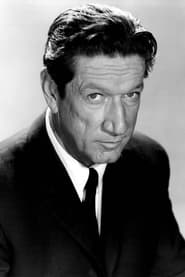
Richard Boone
Actor
Born: June 18, 1917 in Los Angeles, California, USA Died: January 10, 1981 Active: 1951-1981 Birth Name: Richard Allen Boone
Films
1 film
About Richard Boone
Richard Boone was born in Los Angeles, California, in 1917 to a family with deep American roots as a direct descendant of frontiersman Daniel Boone. After serving as a navigator in the U.S. Army Air Forces during World War II, he pursued acting studies with the Actors' Lab in Hollywood. His film career began in the early 1950s with supporting roles, including his appearance in 'Beneath the 12-Mile Reef' (1953) as Thomas Rhys. Boone's breakthrough came with the medical drama series 'Medic' (1954-1956), followed by his role as the sophisticated gunfighter Paladin in 'Have Gun - Will Travel' (1957-1963), which made him a television star. Throughout the 1950s and 1960s, he appeared in numerous notable films, often playing complex characters in Westerns and dramas. In his later career, Boone transitioned to directing, helming films like 'The Night of the Following Day' (1968). He continued acting until his death from throat cancer in 1981, leaving behind a legacy of memorable performances that helped redefine the Western genre.
The Craft
On Screen
Richard Boone was known for his deep, resonant voice and commanding screen presence. He had a naturalistic yet intense acting style that made him particularly effective in Westerns and dramatic roles. His performances often conveyed a sense of moral ambiguity and complexity, with characters who operated in gray areas between heroism and villainy. Boone had a distinctive way of delivering lines that combined gravitas with subtle wit, making his Paladin character particularly memorable.
Milestones
- Film debut in 'The Hasty Heart' (1951)
- Appeared in 'Beneath the 12-Mile Reef' (1953)
- Breakthrough TV role in 'Medic' (1954-1956)
- Iconic role as Paladin in 'Have Gun - Will Travel' (1957-1963)
- Starred in 'The Alamo' (1960)
- Directed 'The Night of the Following Day' (1968)
Best Known For
Iconic Roles
Must-See Films
Accolades
Won
- Western Heritage Awards (1960) for 'Have Gun - Will Travel'
Nominated
- Primetime Emmy Award for Outstanding Lead Actor in a Drama Series (1959)
- Primetime Emmy Award for Outstanding Lead Actor in a Drama Series (1960)
Special Recognition
- Hollywood Walk of Fame star (1960)
Working Relationships
Worked Often With
Studios
Why They Matter
Impact on Culture
Richard Boone's portrayal of Paladin in 'Have Gun - Will Travel' created one of television's most complex protagonists, a character who was both a gentleman and a gunfighter. This role helped redefine the Western hero archetype, moving away from the clear-cut morality of earlier Westerns toward more nuanced characters. Boone's deep voice and distinctive delivery style influenced generations of actors, particularly in the Western genre. His work helped bridge the gap between classic Hollywood Westerns and the revisionist Westerns of the 1960s and 1970s.
Lasting Legacy
Richard Boone left an indelible mark on both film and television, particularly in the Western genre. His Paladin character remains one of television's most iconic figures, with the show's influence still felt in modern Westerns and character-driven dramas. Boone's ability to convey complex emotions with minimal dialogue and his distinctive voice made him. His transition from actor to director demonstrated his versatility and deep understanding of the filmmaking process.
Who They Inspired
Boone's naturalistic acting style and his ability to portray morally ambiguous characters influenced many actors who followed, particularly in the Western genre. His work on 'Have Gun - Will Travel' helped establish the template for complex television protagonists that would become standard in later decades. Directors like Sam Peckinpah and Sergio Leone drew inspiration from Boone's approach to Western characters, incorporating similar moral complexity into their own films.
Off Screen
Boone was married three times and had three children. He was known for his intellectual pursuits off-screen, including extensive reading and collecting rare books. Boone was also an accomplished artist who painted throughout his adult life. He struggled with alcoholism during parts of his career but overcame it in his later years. His final years were spent in Hawaii, where he had moved for health reasons before returning to Florida for his final days.
Education
Studied at Stanford University, attended Stanford Community College, served in U.S. Army Air Forces during WWII
Family
- Jane Hopper (1937-1940)
- Mimi Kelly (1949-1950)
- Claire McAloon (1951-1981, his death)
Did You Know?
- Was a direct descendant of frontiersman Daniel Boone
- Served as a navigator in the U.S. Army Air Forces during WWII
- Was an accomplished painter who sold his artwork privately
- His distinctive voice was once used by NASA for a public service announcement
- Turned down the role of J.R. Ewing in 'Dallas' before Larry Hagman was cast
- Was a licensed pilot who owned several aircraft
- Spoke several languages including French and Spanish
- Was an avid chess player who often played between takes on set
- His character Paladin's business card reading 'Wire Paladin, San Francisco' became iconic
- Was considered for the role of Colonel Kurtz in 'Apocalypse Now' before Marlon Brando was cast
In Their Own Words
A gun is a tool, Marian; no better or no worse than any other tool: an axe, a shovel or anything. A gun is as good or as bad as the man using it. Remember that.
I'm not a hero. I'm a survivor.
The Western is the only genre where you can be a poet and a philosopher at the same time.
Television is a medium of entertainment which permits millions of people to listen to the same joke at the same time and yet remain lonesome.
I've always tried to play characters who have some dignity, even when they're doing terrible things.
Frequently Asked Questions
Who was Richard Boone?
American with credits in this catalog. With his deep voice and commanding presence, he became.
What films is Richard Boone best known for?
Titles linked here include Beneath the 12-Mile Reef (1953), The Big Sleep (1956).
When was Richard Boone born and when did he die?
Born June 18, 1917; died January 10, 1981.
What awards did Richard Boone win?
Richard Boone received Emmy Award nominations for Outstanding Lead Actor in a Drama Series for his work on 'Have Gun - Will Travel' in 1959 and 1960. He was honored with a star on the Hollywood Walk of Fame in 1960 and received Western Heritage Awards for his television work.
What was Richard Boone's acting style?
Richard Boone was known for his naturalistic yet intense acting style, characterized by his deep, resonant voice and commanding screen presence. He excelled at portraying morally complex characters who operated in the gray areas between heroism and villainy, particularly in Western roles that required both toughness and intelligence.
Was Richard Boone related to the frontiersman Daniel Boone?
Yes, Richard Boone — direct descendant of the famous American frontiersman Daniel Boone, which added an authentic dimension to his many Western roles throughout his career.
Did Richard Boone direct films?
Yes, Richard Boone transitioned to directing in the late 1960s, directing films such as 'The Night of the Following Day' (1968) and several television episodes. His directorial work maintained the same focus on character complexity that characterized his acting.