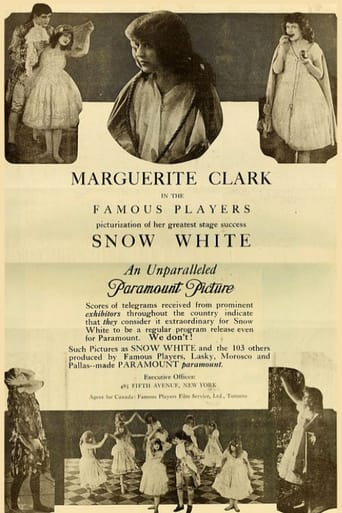

Marguerite Clark
Actor
Born: February 22, 1883 in Cincinnati, Ohio, USA Died: September 25, 1940 Active: 1914-1921
Films
1 film
About Marguerite Clark
silent film actress who began her career on Broadway before transitioning to films in 1914. She quickly became popular and highest-paid actresses of the 1910s — known for her petite 4'10" stature and remarkable ability to portray teenage characters well into her 30s. Her 1916 adaptation of 'Snow White' was a tremendous critical and commercial success that reportedly influenced Walt Disney's later animated masterpiece. Clark commanded an impressive $2,500 per week at the height of her fame, making her one of Hollywood's best-compensated stars. She retired from films in 1921 at the peak of her career after marrying Harry Palmerston Williams, a wealthy New Orleans plantation owner. Her relatively brief but impactful career on silent cinema, particularly in establishing fantasy films as a viable genre and helping shape the emerging Hollywood star system.
The Craft
On Screen
Marguerite Clark developed a naturalistic acting style that stood out in an era of exaggerated theatrical gestures. She specialized in conveying emotion through subtle facial expressions and delicate movements, creating an ethereal, innocent screen persona that resonated with audiences. Her petite stature and youthful appearance allowed her to authentically portray adolescent and young adult characters, bringing a sense of genuine vulnerability and charm to her roles. Clark's performances were characterized by their emotional depth and restraint, influencing many silent film actresses who followed.
Milestones
- Broadway debut in 'The Beauty Spot' (1900)
- Film debut in 'Wildflower' (1914)
- Starred in 'Snow White' (1916)
- Highest-paid actress of the 1910s at $2,500/week
- Retired from films after marriage (1921)
Best Known For
Iconic Roles
Must-See Films
Accolades
Special Recognition
- Star on Hollywood Walk of Fame (Motion Pictures)
Working Relationships
Worked Often With
Studios
Why They Matter
Impact on Culture
Marguerite Clark's portrayal of Snow White in 1916 significantly influenced the fantasy film genre and reportedly served as direct inspiration for Walt Disney's 1937 animated classic. Her success as one of Hollywood's first major film stars helped establish the star system and demonstrated the commercial viability of feature-length fantasy productions. Clark's ability to command unprecedented salaries helped pave the way for future actresses to negotiate better compensation and contracts. The preservation of her films, particularly the rediscovered 'Snow White,' provides invaluable insight into early cinematic storytelling techniques and special effects innovations of the 1910s.
Lasting Legacy
Marguerite Clark's legacy endures primarily through her groundbreaking performance in 'Snow White,' which remains. As one of the highest-paid and most popular actresses of the silent era, she helped establish the template for the Hollywood star system and demonstrated the commercial potential of female-led films. Her naturalistic acting style influenced subsequent generations of performers, moving away from theatrical exaggeration toward more subtle, camera-friendly techniques. Though she retired before the sound era, her films continue to be studied by film historians for their technical innovations and storytelling sophistication. The rediscovery of her work has sparked renewed appreciation for her contributions to early American cinema.
Who They Inspired
Clark's naturalistic acting approach influenced many silent film actresses who followed, particularly in her use of subtle facial expressions rather than exaggerated gestures common in early cinema. Her success in fantasy films helped establish the genre as commercially viable and artistically respectable. Her ability to maintain a youthful screen presence well into her 30s influenced Hollywood's casting practices for romantic leads. Her business acumen in negotiating high salaries set important precedents for future actresses' compensation and contract negotiations. The rediscovery of her 'Snow White' has influenced modern understanding of early special effects and fantasy filmmaking techniques.
Off Screen
Marguerite Clark married Harry Palmerston Williams, a wealthy New Orleans plantation owner, in 1918, which led to her retirement from films at the height of her fame. The couple had no children, and Clark devoted her post-Hollywood life to managing their plantation and participating in New Orleans high society. After her husband's death in 1932, she lived quietly in New York before moving to Florida. She was known for her charitable work, particularly during World War I, and maintained her Catholic faith throughout her life. Clark valued her privacy and rarely gave interviews after retirement, living a quiet life until her death from pneumonia at age 57.
Education
Attended Ursuline Academy in Cincinnati
Family
- Harry Palmerston Williams (1918-1932)
Did You Know?
- She was only 4'10" tall, which contributed to her ability to play youthful roles convincingly
- She was reportedly paid $2,500 per week at her peak, making her one of Hollywood's highest-paid actresses
- Her 'Snow White' film was thought lost for decades but was rediscovered in the 1990s in a Dutch film archive
- She was a successful Broadway actress for over a decade before transitioning to films
- She retired at the absolute height of her fame to marry, never returning to films
- Walt Disney reportedly cited her 'Snow White' as a key inspiration for his animated classic
- She was known for her extensive charitable work, particularly supporting soldiers during World War I
- She never made a sound film, retiring before the transition to talkies
- Her films were among the first to use extensive special effects for fantasy sequences
- She was one of the first actresses to have significant creative input on her films' development
In Their Own Words
I would rather be a little star in a great picture than a great star in a little picture.
The camera is a truth-teller. You cannot fool it with pretense.
Retirement was not a sacrifice. I found happiness in a different world.
Frequently Asked Questions
Who was Marguerite Clark?
Highly successful silent film actress of the 1910s, known for her petite stature and youthful appearance. She was one of the highest-paid actresses of her era and starred in the influential 1916 film 'Snow White.' She retired from films at the height of her fame in 1921.
What films is Marguerite Clark best known for?
Titles linked here include Snow White (1916), The Seven Sisters (1915).
When was Marguerite Clark born and when did she die?
Born February 22, 1883; died September 25, 1940.
What awards did Marguerite Clark win?
Marguerite Clark did not win major formal awards during her career, as the Academy Awards were established after her retirement. However, she received a posthumous star on the Hollywood Walk of Fame for her contributions to motion pictures and was recognized as one of the highest-paid actresses of her era.
What was Marguerite Clark's acting style?
Marguerite Clark developed a naturalistic acting style that emphasized subtle facial expressions and delicate movements rather than the exaggerated gestures common in early silent films. She specialized in conveying innocence and vulnerability, creating an ethereal screen persona that resonated with audiences and influenced subsequent performers.