James Gist
Director
Born: null in United States Died: December 12, 1937 Active: 1930-1937 Birth Name: James E. Gist
Films
1 film
About James Gist
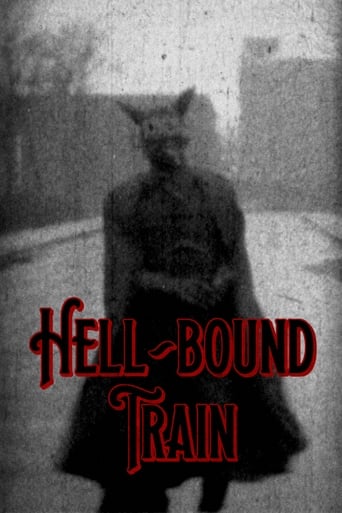
African American filmmaker and traveling evangelical preacher who utilized the medium of cinema as a tool for moral instruction and spiritual outreach during the early 1930s. Operating outside the traditional Hollywood studio system, Gist produced and directed 'Hell-Bound Train' (1930), a surreal allegorical film designed to warn audiences about the consequences of sin. He collaborated closely with his wife, Eloyce King Patrick Gist, who was a musician and entrepreneur; she often rewrote his scripts, edited the footage, and provided live musical accompaniment during their traveling screenings. The Gists would journey across the United States, primarily visiting Black church communities and meeting halls, where they would project their films followed by a fire-and-brimstone sermon. Their work is characterized by its non-linear narrative structure, focusing on a car-by-car catalog of Jazz Age 'vices' such as gambling, drinking, and dancing. Despite their amateur production values, Gist's films are now recognized as vital artifacts of early Black independent cinema and were recently preserved by the Library of Congress. James Gist's career was cut short when he passed away in 1940, leaving behind a unique legacy of 'race movies' that blended religious fervor with avant-garde visual storytelling.
The Craft
Behind the Camera
Gist employed a surreal, non-linear directing style that favored allegorical pageantry over traditional plot development. His work featured minimal production values, utilizing natural light and handheld 16mm cameras, which gave his films a raw, documentary-like texture. He frequently used symbolic imagery, such as a man in a devil suit and model trains, to represent spiritual concepts. His films were designed to be 'visual sermons,' intended to be punctuated by live narration and music rather than standing as independent narrative features.
Milestones
- Directed 'Hell-Bound Train' (1930), a landmark of early African American independent cinema
- Pioneered the use of 16mm film as a mobile evangelistic tool for church communities
- Collaborated with wife Eloyce Gist to create a unique body of religious allegorical films
- Screened films in partnership with the NAACP to promote social uplift and morality
- Posthumously recognized by the National Film Registry for the cultural significance of his work
Best Known For
Iconic Roles
Must-See Films
Accolades
Won
- National Film Registry Induction (2021) for 'Hell-Bound Train'
Special Recognition
- Preserved by the Library of Congress
- Featured in the 'Pioneers of African-American Cinema' collection by Kino Lorber
- Subject of retrospective screenings at the Museum of Modern Art (MoMA)
Working Relationships
Worked Often With
Studios
Why They Matter
Impact on Culture
James Gist provided a rare, unmediated look at African American life and religious values during the Great Depression, free from the stereotypical 'Blackface' tropes of mainstream Hollywood. By taking his films directly to the people in churches and tents, he bypassed the segregated theater system and created a communal cinematic experience for Black audiences. His work represents one of the earliest examples of 'guerrilla filmmaking' in America, proving that cinema could be a powerful tool for grassroots social and spiritual activism.
Lasting Legacy
Gist's legacy lies in his role as a pioneer of 'Race Movies' and his contribution to the history of amateur and independent cinema. For decades, his films were lost or forgotten until fragments were donated to the Library of Congress in 1974. The restoration of 'Hell-Bound Train' has allowed modern scholars to re-evaluate his work not just as a religious curiosity, but as a significant precursor to the American underground and avant-garde movements. He is now celebrated as a visionary who saw the potential of film to serve a higher moral purpose within the Black community.
Who They Inspired
His use of religious allegory and surrealist imagery is often cited as a precursor to the work of Spencer Williams, particularly in the 1941 classic 'The Blood of Jesus.' Modern filmmakers and historians view his 'renegade' approach to production as an early inspiration for independent Black cinema.
Off Screen
Devoted Christian evangelist. In the late 1920s, he met Eloyce King Patrick, a Howard University-educated musician and beauty culture entrepreneur. Despite their differing religious backgrounds—James was a Christian and Eloyce was a follower of the Baháʼí Faith—they shared a deep commitment to moral education and social reform. They married in June 1932 in Pennsylvania and operated as a filmmaking duo until James's death. Their home in Washington, D.C., served as a base for their ministry and creative work.
Education
Self-taught filmmaker
Family
- Eloyce King Patrick Gist (1932-1937)
Did You Know?
- Gist's film 'Hell-Bound Train' was originally silent and intended to be accompanied by a live sermon.
- The 'devil' in his films was often played by an uncredited actor in a simple cloth costume with horns.
- Many of his original film records and personal documents were tragically lost in a house fire.
- He and his wife were of different faiths (Christian and Baháʼí) but collaborated on Christian-themed films.
- The climax of 'Hell-Bound Train' features a model train being tossed into a bonfire to represent a wreck.
- His films were often screened by the NAACP as part of their community outreach programs.
- He was a self-taught filmmaker who learned the craft specifically to enhance his ministry.
In Their Own Words
The devil rejoices! (Intertitle frequently used in his films to signal sinful behavior)
Frequently Asked Questions
Who was James Gist?
African American evangelical preacher and independent filmmaker active in the 1930s. He is best known for creating religious allegorical films like 'Hell-Bound Train' to serve as visual aids for his traveling ministry.
What films is James Gist best known for?
Titles linked here include Hell-Bound Train (1930), Verdict: Not Guilty (1933).
When did James Gist die?
James Gist passed away on December 12, 1937. Some sources previously cited 1940, but recent archival research points to the late 1930s as the time of his death from pneumonia.
What was James Gist's directing style?
Gist used a surreal and episodic style, often depicting various sins in a car-by-car format on a metaphorical train to hell. His work was amateur but highly imaginative, utilizing 16mm film and non-professional actors.
Did James Gist win any awards?
While he did not win awards during his lifetime, his film 'Hell-Bound Train' was posthumously inducted into the National Film Registry in 2021, recognizing its immense cultural and historical importance.
Who was James Gist's creative partner?
His most significant collaborator was his wife, Eloyce Gist. She was a talented musician and editor who played a crucial role in refining his scripts and providing the musical backdrop for their screenings.