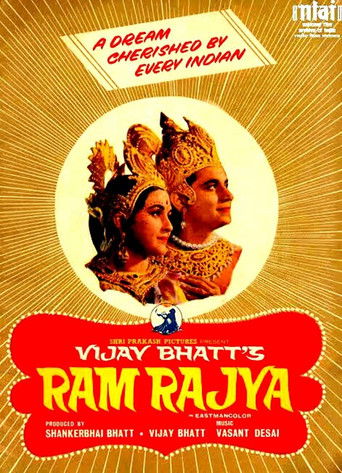
Films
1 film
About Yeshwant
Yeshwant worked on one surviving credit: Ram Rajya (1943). Specifically active in the year 1943. His most notable and apparently only credited film role was in 'Ram Rajya' (1943), a significant film in Indian cinematic history. The film was directed by Vijay Bhatt and was based on the Uttar Kand of the Hindu epic Ramayana, focusing on Rama's rule after his return to Ayodhya. Yeshwant's brief appearance in the film industry coincided with a pivotal period in Indian cinema when the country was still under British rule and films were becoming important vehicles for cultural expression and nationalist sentiment. Unfortunately, detailed records about his complete career trajectory, personal background, or other film appearances are scarce in the historical archives of Indian cinema. His contribution, though brief, represents the work of many supporting actors who helped build the foundation of Indian film industry during its formative years.
The Craft
Milestones
- Appeared in 'Ram Rajya' (1943), one of the significant films of early Indian cinema
Best Known For
Iconic Roles
Must-See Films
Working Relationships
Worked Often With
Why They Matter
Impact on Culture
Yeshwant's contribution to Indian cinema, though brief, is part of the broader tapestry of early Indian filmmakers and actors who helped establish the foundation of one of the world's largest film industries. His appearance in 'Ram Rajya' connects him to a historically significant film that was notable for being the only film Mahatma Gandhi reportedly ever watched. The film itself was important for its portrayal of ideal governance and moral values during India's struggle for independence, making every contributor to the film, including supporting actors like Yeshwant, part of this cultural moment.
Lasting Legacy
As a supporting actor from the early era of Indian cinema, Yeshwant represents the countless performers who contributed to the foundational years of Indian film history. While individual details about many such actors have been lost to time, their collective work helped establish the storytelling traditions and technical foundations that would later make Indian cinema a global phenomenon. His appearance in 'Ram Rajya' ensures his place in the historical record of significant early Indian films.
Who They Inspired
Given the brief nature of his documented career and the limited information available about his work, there is no substantial evidence of Yeshwant's direct influence on subsequent generations of actors or filmmakers. However, like all early cinema contributors, he was part of the generation that helped establish acting conventions and film production practices in Indian cinema.
Off Screen
Very limited information is available about Yeshwant's personal life, which is not uncommon for supporting actors from early Indian cinema where detailed biographical records were often not maintained.
Did You Know?
- 'Ram Rajya' (1943) is historically significant as it was reportedly the only film that Mahatma Gandhi ever watched
- The film was based on the Uttar Kand of the Ramayana, depicting Rama's ideal rule
- Yeshwant's career appears to have been limited to the year 1943 based on available records
- The film was directed by Vijay Bhatt, a prominent figure in early Indian cinema
- During this period, Indian cinema was dealing with censorship under British rule while also becoming a medium for nationalist expression
- Many supporting actors from early Indian cinema have incomplete biographical records due to limited documentation practices of the time
Frequently Asked Questions
Who was Yeshwant?
Indian film with credits in this catalog.
What films is Yeshwant best known for?
Titles linked here include Ram Rajya (1943).
When was Yeshwant born and when did he die?
Specific birth and death dates for Yeshwant are not available in historical records, which is common for many supporting actors from early Indian cinema.
What awards did Yeshwant win?
There are no documented awards or nominations for Yeshwant, which was not uncommon for supporting actors during the early era of Indian cinema.
What was Yeshwant's acting style?
Specific details about Yeshwant's acting style are not documented in available historical records, making it difficult to assess his particular approach to performance.
What is the significance of 'Ram Rajya' (1943)?
'Ram Rajya' (1943) is historically significant as it was reportedly the only film Mahatma Gandhi ever watched, and it portrayed ideal governance during India's independence struggle.
Why is there limited information about Yeshwant?
Limited information about Yeshwant is typical for many supporting actors from early Indian cinema, as comprehensive biographical records were often not maintained during that period.