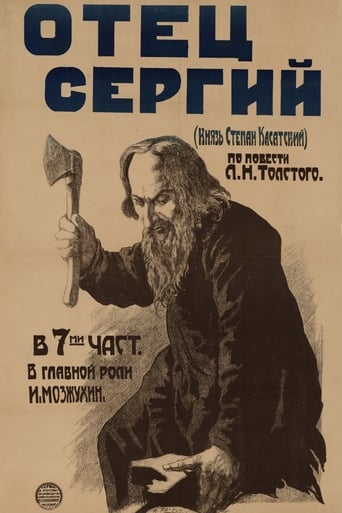
Films
1 film
About Vera Dzheneyeva
Vera Dzheneyeva worked on one surviving credit: Father Sergius (1918). Her known film work consists of a single appearance in the 1918 Russian silent film 'Father Sergius,' directed by Yakov Protazanov and based on Leo Tolstoy's novella. This film was produced Russian history, coinciding with the aftermath of the Russian Revolution, which dramatically affected the country's film industry. Like many actors from this period of Russian cinema, detailed records of her career and life are scarce due to the political upheaval and subsequent loss of archival materials. Her appearance in 'Father Sergius' places her among the generation of Russian film actors who helped establish the country's early cinematic tradition before the Soviet era fully transformed the industry.
The Craft
Milestones
- Appeared in 'Father Sergius' (1918), a significant early Russian adaptation of Tolstoy's work
Best Known For
Iconic Roles
Must-See Films
Working Relationships
Worked Often With
Why They Matter
Impact on Culture
As an actress from the earliest period of Russian cinema, Vera Dzheneyeva represents the generation of performers who helped establish the foundation of Russian film art. Her participation in 'Father Sergius,' an adaptation of one of Russia's most celebrated literary works, connects her to the important tradition of bringing classic Russian literature to the screen. Though her individual contribution may be difficult to assess due to limited documentation, she was part of a crucial transitional period in Russian cinema that bridged the pre-revolutionary film industry with what would become Soviet cinema.
Lasting Legacy
Vera Dzheneyeva's legacy is primarily preserved through her appearance in 'Father Sergius,' one of the surviving examples of early Russian cinematic art. Like many actors from this era, she represents the often-overlooked contributors to film history whose work survives only through fragmentary records. Her story exemplifies the challenges faced by film historians in documenting the careers of early cinema performers, particularly those from Russia during the revolutionary period when many archives were destroyed or lost.
Who They Inspired
Due to the limited documentation of her career and the brevity of her known filmography, it is difficult to assess Vera Dzheneyeva's direct influence on subsequent generations of actors. However, as part of the ensemble of early Russian film performers, she contributed to the development of acting techniques that would evolve during the Soviet era and influence Russian cinema for decades to come.
Off Screen
Very little is known about Vera Dzheneyeva's personal life, which is typical for many actors from early Russian cinema whose records were lost during the political upheavals of the early 20th century.
Did You Know?
- Appeared in only one known film during her career
- Her film 'Father Sergius' was based on a Leo Tolstoy novella
- The film was directed by Yakov Protazanov, one of Russia's film directors
- 1918 was a crucial year in Russian history, marking the end of the imperial era and the beginning of Soviet rule
- Many records from this period of Russian cinema were lost during the revolutionary period and subsequent decades
- Silent film actors from this era often had their careers cut short by the advent of sound technology and political changes
Frequently Asked Questions
Who was Vera Dzheneyeva?
Russian silent film actress known for her appearance in the 1918 film 'Father Sergius.' Very little is documented about her life and career, which is typical for many actors from early Russian cinema whose records were lost during the revolutionary period.
What films is Vera Dzheneyeva best known for?
Titles linked here include Father Sergius (1918).
When was Vera Dzheneyeva born and when did she die?
Specific birth and death dates for Vera Dzheneyeva are not available in historical records. Like many actors from early Russian cinema, detailed biographical information has been lost to history, particularly due to the political upheavals of the early 20th century.
What awards did Vera Dzheneyeva win?
There are no known awards or honors received by Vera Dzheneyeva. The award systems for cinema were not yet established during her brief career in 1918, and individual recognition for film actors was not common in early Russian cinema.
What was Vera Dzheneyeva's acting style?
Due to the scarcity of documentation about her work and the fact that only one of her films is known to exist, it's difficult to assess Vera Dzheneyeva's specific acting style. She would have employed the theatrical techniques common to silent film actors of the era.
Why is so little known about Vera Dzheneyeva?
The limited information about Vera Dzheneyeva is typical of many early Russian cinema figures. The Russian Revolution, subsequent civil war, and political changes led to the destruction or loss of many film industry archives, making it difficult to document the careers of actors from this period.