Films
1 film
About Baby Lillian Wade
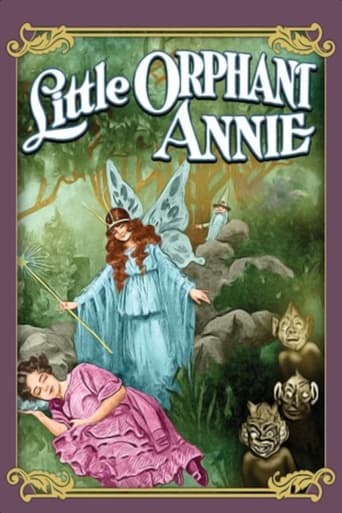
Baby Lillian Wade appears once in this catalog: Little Orphant Annie (1918). Specifically known for her role in the 1918 film 'Little Orphant Annie'. Her career was remarkably brief, confined entirely to the year 1918, making her a quintessential example of the many young performers who graced the silver screen for a moment before fading from public record. She was cast as 'Little Orphant Annie' herself in the adaptation of James Whitcomb Riley's beloved poem, a role that required significant emotional range for a child performer. The film, produced by Selig Polyscope Company, was one of the earliest cinematic adaptations of the famous literary work. Like many child actors of the period, her career was likely managed by her parents and ended as she grew older, transitioning back to a normal childhood away from the demands of the film industry. Her legacy remains tied to this single, significant performance, which has been preserved as an important artifact of silent-era family cinema. Unfortunately, detailed records of her life before and after her film career are scarce, a common fate for minor players from that foundational era of Hollywood.
The Craft
On Screen
As a child actress in the silent era, Baby Lillian Wade's acting style was characterized by the exaggerated physical expressions and pantomime required to convey emotion without dialogue. Her performance in 'Little Orphant Annie' would have relied heavily on her ability to project innocence, pathos, and wonder through her eyes and body language, following the melodramatic conventions popular in family films of the time.
Milestones
- Starred as the title character in 'Little Orphant Annie' (1918)
Best Known For
Iconic Roles
Must-See Films
Working Relationships
Worked Often With
Studios
Why They Matter
Impact on Culture
Baby Lillian Wade's cultural impact is intrinsically linked to her role in the 1918 adaptation of 'Little Orphant Annie', which represents an early attempt to bring a classic piece of American literature to the moving picture screen. Her portrayal helped to cement the visual image of the character for contemporary audiences, contributing to the poem's enduring popularity in the 20th century. The film itself serves as a valuable time capsule of the cinematic techniques and storytelling methods used in the family genre during the late silent period.
Lasting Legacy
The legacy of Baby Lillian Wade is that of a representative figure from the first generation of child stars in American cinema. While her career was fleeting, her work in 'Little Orphant Annie' has been preserved by film archives, ensuring that her contribution to silent film history is not entirely lost. She stands as a poignant reminder of the countless young performers who were essential to the early film industry but whose lives and careers remain largely undocumented.
Who They Inspired
Due to the brevity of her career, there is no documented evidence of Baby Lillian Wade directly influencing other actors or filmmakers. Her primary influence is historical, serving as a subject of study for film historians and archivists interested in the evolution of child performance on screen and the adaptation of literary works during the silent era.
Off Screen
Very little is documented about the personal life of Baby Lillian Wade outside of her brief film career. It is presumed that after her single film appearance in 1918, she retired from acting and lived a private life away from the entertainment industry. As was common for child actors of the era, her identity was largely tied to her screen persona, and records of her family, education, and adult life have not been widely preserved or made public.
Did You Know?
- Her entire known film career consists of a single film role in 1918.
- The film she starred in, 'Little Orphant Annie', is an adaptation of an 1885 poem by James Whitcomb Riley.
- The production company behind her film, Selig Polyscope, was one of Chicago's first movie studios and a major player in early American cinema.
- Her role required her to recite lines from the famous poem, which would have been presented through intertitles in the silent film.
- Child actors in the silent era often worked long hours under difficult conditions, leading to the eventual push for better labor laws.
- A copy of 'Little Orphant Annie' is preserved in the Library of Congress, ensuring her performance survives for modern audiences.
- The 'Baby' in her stage name was a common moniker for very young child actors of the period, similar to 'Baby Peggy' or 'Baby Marie Osborne'.
Frequently Asked Questions
Who was Baby Lillian Wade?
American child actress from the silent film era, active exclusively in the year 1918. She is known solely for her performance as the title character in the film adaptation of the poem 'Little Orphant Annie'.
What films is Baby Lillian Wade best known for?
Titles linked here include Little Orphant Annie (1918).
When was Baby Lillian Wade born and when did she die?
Born 1912; died death date not listed.
What awards did Baby Lillian Wade win?
Baby Lillian Wade did not receive any notable awards or nominations for her work. The modern awards system, including the Academy Awards, had not yet been established during her brief career.
What was Baby Lillian Wade's acting style?
Her acting style was typical for a child performer in the silent era, relying on expressive pantomime and large, emotive gestures to convey the character's feelings to the audience without the use of spoken dialogue.