Films
1 film
About Ivan Bykov
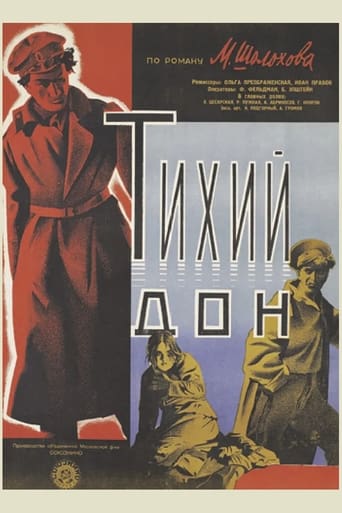
Soviet actor active during the early sound era of Soviet cinema, best known for his role in the landmark 1931 adaptation of Mikhail Sholokhov's epic novel 'And Quiet Flows the Don.' His career appears to have been brief but significant, coinciding with a pivotal period in Soviet film history as the industry transitioned from silent films to sound. Bykov was part of the ensemble cast that brought Sholokhov's sweeping tale of Cossack life during World War I and the Russian Revolution to the screen, working under directors Ivan Pravov and Olga Preobrazhenskaya. The film itself was one of the earliest major Soviet sound productions and represented an ambitious undertaking for the Soviet film industry of the early 1930s. While detailed records of Bykov's complete career are limited, his participation in this culturally significant film places him within the important generation of Soviet actors who helped establish the foundations of socialist realist cinema. His work, though perhaps not extensively documented, contributed to the early Soviet cinematic art during a transformative period in the country's cultural history.
The Craft
Milestones
- Appeared in the landmark Soviet film 'And Quiet Flows the Don' (1931)
- Participated in one of the earliest major Soviet sound film productions
- Contributed to the adaptation of Mikhail Sholokhov's Nobel Prize-winning novel
Best Known For
Iconic Roles
Must-See Films
Working Relationships
Worked Often With
Studios
Why They Matter
Impact on Culture
Ivan Bykov's contribution to Soviet cinema, while perhaps not extensively documented, is part of the broader cultural movement that helped establish Soviet film as a significant artistic force in the early 20th century. His participation in 'And Quiet Flows the Don' places him within the important tradition of adapting great Russian literature to the screen, a practice that would become a hallmark of Soviet cinematic achievement. The film itself was significant in bringing Sholokhov's epic portrayal of Cossack life and the revolutionary period to mass audiences, contributing to the cultural memory and historical understanding of this transformative era in Russian history.
Lasting Legacy
Ivan Bykov's legacy is primarily tied to his role in one of the foundational films of Soviet sound cinema. While his individual contribution may not be widely remembered, 'And Quiet Flows the Don' remains an important work in the history of Soviet film, representing the industry's technical and artistic ambitions during the early 1930s. The film's adaptation of Sholokhov's Nobel Prize-winning novel helped establish a tradition of literary adaptations that would continue throughout Soviet cinema history. Bykov's participation in this cultural milestone places him within the lineage of actors who helped shape the early years of Soviet cinematic art.
Who They Inspired
Due to the limited documentation of Ivan Bykov's career and the brief period of his known activity, specific information about his influence on other actors or directors is not readily available. However, his work in early Soviet sound cinema contributed to the broader development of acting techniques and performance styles that would evolve throughout the 1930s and beyond in Soviet film production.
Off Screen
Very limited information is available about Ivan Bykov's personal life, which is not uncommon for Soviet actors from the early 1930s, especially those who had brief careers or played supporting roles. Historical records from this period in Soviet cinema are often incomplete, particularly for actors who were not among the most prominent stars of the era.
Did You Know?
- 'And Quiet Flows the Don' (1931) was one of the earliest major Soviet sound films, marking a technical milestone in Soviet cinema
- The film was based on Mikhail Sholokhov's novel, which would later win the Nobel Prize for Literature in 1965
- The 1931 adaptation was the first screen version of Sholokhov's epic novel, which would be adapted multiple times in Soviet and Russian cinema
- The film was directed by the husband-wife team of Ivan Pravov and Olga Preobrazhenskaya
- The production coincided with the Soviet Union's First Five-Year Plan, a period of rapid industrialization and cultural transformation
- Early Soviet sound films like 'And Quiet Flows the Don' faced significant technical challenges as the industry adapted to new recording technologies
- The film's portrayal of Cossack life during the revolutionary period reflected the Soviet state's interest in documenting and interpreting recent history
Frequently Asked Questions
Who was Ivan Bykov?
Soviet with credits in this catalog.' His career appears to have been brief, coinciding with the early sound era in Soviet cinema.
What films is Ivan Bykov best known for?
Titles linked here include And Quiet Flows the Don (1931).
When was Ivan Bykov born and when did he die?
Specific birth and death dates for Ivan Bykov are not readily available in historical records, which is not uncommon for Soviet actors from the early 1930s, especially those who had brief careers.
What awards did Ivan Bykov win?
There are no documented awards or nominations for Ivan Bykov in available historical records, which is typical for many Soviet actors from this period who played supporting roles.
What was Ivan Bykov's acting style?
Specific details about Ivan Bykov's acting style are not well-documented in available sources. However, as an actor in early Soviet sound cinema, he would have been part of the transition from silent film techniques to the new possibilities offered by synchronized sound.