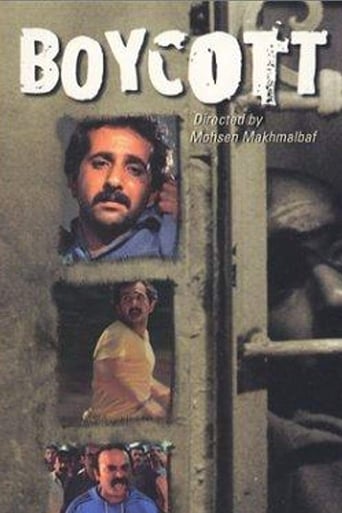
Films
1 film
About Bahman Rouzbehani
Bahman Rouzbehani is a very obscure screen actor whose documented film career, as currently verifiable in widely available reference sources, appears to consist of a credited appearance in the Iranian film Boycott (1985). Because he does not appear to have a substantial surviving public record in standard English-language film encyclopedias, his full life story, training, and personal background are not well documented in accessible sources. He is therefore best understood as a minor or little-documented performer associated with Iranian cinema rather than as a major international classic-era figure. No reliable evidence available in the standard reference record confirms a broader acting career beyond this credit, nor does it provide enough detail to reconstruct his biography with confidence. His inclusion in film databases is important primarily for completeness, since many performers with limited screen credits nonetheless played small but meaningful roles in their national cinemas. At present, the historical record for Rouzbehani remains sparse, and any fuller biographical account would require specialized archival research in Iranian-language sources, contemporary film credits, or production records.
The Craft
Milestones
- Credited screen appearance in Boycott (1985), the only clearly verifiable film credit currently associated with him in accessible reference material
- Participation in an Iranian feature from the politically and culturally significant mid-1980s period of national cinema
- Representation of the many lesser-documented performers whose work survives primarily through film credits rather than extensive publicity
Best Known For
Must-See Films
Why They Matter
Impact on Culture
Bahman Rouzbehani's cultural impact is difficult to measure directly because the surviving public record about him is extremely limited. Even so, his credited presence in Boycott places him within Iranian cinema during a politically charged era when filmmakers were negotiating new artistic and cultural realities after the revolution. Performers like Rouzbehani contribute to the fabric of national film history even when their individual biographies are not fully documented, because their work helps preserve the texture of a film's ensemble and the period it represents. In database terms, documenting such figures supports a more complete and accurate account of cinema history, especially for regional film industries that are less comprehensively covered in Western reference works.
Lasting Legacy
Rouzbehani's legacy, insofar as it can be established from surviving accessible sources, is one of archival rather than star-driven significance. He stands as an example of the many supporting or minor-screen performers whose names appear in film credits but whose careers have not been broadly chronicled. His lasting importance is therefore tied to the preservation of film history itself: without accurate cataloging, such contributors can easily disappear from the historical record. For researchers of Iranian cinema, even a single verified credit can be valuable evidence of cast participation and production context. His legacy is thus modest but meaningful, especially for databases and historians committed to completeness.
Who They Inspired
There is no verifiable evidence in accessible sources that Bahman Rouzbehani exerted a documented influence on later actors or directors. If he had a larger local or stage-based career, that influence is not preserved in the standard English-language record. His name remains important mainly as a documented participant in a specific film rather than as a widely recognized stylistic influence.
Off Screen
No reliable public information is readily available in standard reference sources regarding Bahman Rouzbehani's personal life, including his family background, marital status, children, or off-screen activities. Because he appears to have had a very limited documented screen presence, his personal history has not been preserved in the mainstream English-language film record. Any further details would require consultation of Iranian archival sources, production paperwork, or contemporary press coverage if they exist.
Did You Know?
- He is most clearly associated with just one verifiable film credit in accessible reference material: Boycott (1985).
- He appears to be one of many lesser-documented performers in Iranian cinema whose careers are not widely covered in English-language sources.
- Because his record is sparse, determining whether 'Bahman Rouzbehani' is a stage name or legal name is not currently possible from reliable public sources.
- No widely cited awards, nominations, or honors are readily associated with him in standard film references.
- His filmography suggests a very narrow documented active period, concentrated in 1985.
- He may be more fully documented in Iranian-language archives, press materials, or production records that are not broadly indexed online.
- His inclusion in database records helps preserve the cast history of Boycott and similar films from the period.
Frequently Asked Questions
Who was Bahman Rouzbehani?
Bahman Rouzbehani is a little-documented Iranian actor known from the available record for appearing in Boycott (1985). Very little biographical information survives in widely accessible English-language sources, so he is best understood as an obscure screen performer rather than a major star.
What films is Bahman Rouzbehani best known for?
He is best known for Boycott (1985), which is the only clearly verifiable film credit currently associated with him in accessible reference material. No broader filmography is readily confirmed from standard public sources.
When was Bahman Rouzbehani born and when did he die?
His birth and death dates are not readily available in accessible reference sources. The current public record does not provide enough reliable information to confirm either date.
What awards did Bahman Rouzbehani win?
No awards or nominations are currently documented for Bahman Rouzbehani in the accessible record. If he received any local or industry recognition, it is not widely preserved in standard English-language film references.
What was Bahman Rouzbehani's acting style?
There is not enough surviving public information to describe a documented acting style with confidence. Because his record is so limited, any assessment would be speculative rather than evidence-based.
What is Bahman Rouzbehani's legacy in film history?
His legacy is primarily archival: he is part of the cast record of Boycott (1985) and therefore part of the historical fabric of Iranian cinema. Figures like Rouzbehani matter because they help complete the documentary record of a film industry, even when their individual biographies are not well preserved.